
Brent crude crossed the century mark for the first time in years, Iran's new Supreme Leader made clear Hormuz was staying closed, United States payrolls fell off a cliff, and the AI industry spent most of the week negotiating who was actually allowed to work for the Pentagon. Bonkers.
Move over Jason Vorhees, this Friday the 13th could be the scariest one yet…
All the top moves, shakes, and drone strike wakes from Azzet's editorial team are right here in your weekly business wrap every Friday (13 March 2026).
Monday
The week arrived carrying the weight of a war now entering its second week and a labour market update that made uncomfortable reading for the Fed.
U.S. payrolls fell by 92,000 in February, with unemployment climbing to 4.4% - the softest jobs number in some time and a sharp contrast to the resilience the labour market had been showing through most of 2025.
Whether the conflict in the Gulf was already feeding through to hiring decisions or whether the result reflects deeper pre-existing softness in the U.S. economy is a question nobody can answer cleanly yet.
American consumers pulled back in February as well, with retail sales falling 0.2% - a result that, alongside the payrolls print, suggests the pre-war economy was already cooling before oil crossed triple digits.
Iran's political succession moved faster than analysts had expected. Mojtaba Khamenei - son of the late Supreme Leader - was installed to lead the Islamic Republic, a consolidation of the Khamenei dynasty that landed with surprising speed given the chaos of the preceding week.
On the tariff front, a lawsuit targeting Trump's 10% global tariff plan added to the more than 4,000 legal challenges the administration was already managing through the courts.
China accelerated R&D spending in a push for domestic technology self-reliance - a program already underway before the war, but one the current geopolitical environment has made considerably easier to fund politically.
In this week's Mission Critical column, the Iran war's knock-on effect for critical minerals producers got a close look - specifically the cost crunch now bearing down on mining operations as fuel, freight, and financing all moved simultaneously in the wrong direction.

Tuesday
The Anthropic-Pentagon relationship, which had been deteriorating since Defence Secretary Pete Hegseth flagged the AI company as a potential national security supply chain risk the previous week, reached something of a nadir on Tuesday.
Anthropic confirmed it was actively working to avoid a Pentagon blacklist - a remarkable position for a company that had, until recently, been one of the U.S. government's preferred AI suppliers.
The space it vacated did not stay empty for long… (see: Wednesday's news)
Iran's foreign ministry escalated its maritime posture, warning tanker operators in the Strait of Hormuz of the risks of continuing to transit - a warning the insurance market was already treating as credible, with marine war risk premiums for Hormuz crossings having moved sharply since the previous week.
Trump and Putin spoke about the possibility of ending the Iran war, a conversation that generated considerable diplomatic coverage without producing any discernible movement on the ground.
The G7 energy ministers convened to discuss global supply options as member nations began stress-testing strategic reserve releases against a scenario where the strait closure ran longer than initial optimistic projections.
The Hims & Hers truce with Novo Nordisk formalised what had been building for weeks: Hims & Hers dropping its compounded GLP-1 drugs in exchange for conditions that effectively ended the most aggressive phase of the copycat drug battle.
Novo got more from the settlement than many had expected; Hims & Hers shareholders had a more complicated read on what was given up.
Elsewhere on Tuesday: Live Nation settled with the Department of Justice, closing the long-running antitrust matter; the Greens provided the decisive votes to pass Australia's superannuation tax change into law.
AI infrastructure startup Nscale raised US$2 billion in a funding round that underlines how undimmed investor appetite for compute capacity remains.
South Korea imposed a fuel price cap for the first time in decades as the oil shock began propagating through Asian energy markets.
And OpenAI acquired Promptfoo, an AI security firm whose red-teaming tools are used to test large language models - which, given recent events in the AI-defence space, seems like a sensible thing to own.
Oracle's AI debt structure drew pointed scrutiny, with analysis drawing direct parallels to the leverage-fuelled infrastructure buildout of the late-1990s telecoms boom. The bulls dismiss the comparison; the bears find it uncomfortably specific.
Amazon's Zoox robotaxi programme expanded its U.S. testing footprint - a development that would have attracted considerably more attention in a quieter news week. The UAE property market showed signs of strain as the conflict's proximity and the broader Gulf risk premium filtered through to real estate sentiment.
Wednesday
Pete Hegseth described Tuesday as likely to be the most intense day of strikes in the Iran campaign.
By Thursday, that characterisation looked somewhat optimistic.
Aramco's chief executive offered the week's most direct assessment of where the oil market was heading, describing the war's impact as potentially catastrophic for global supply. Coming from the head of the world's largest oil producer, that word carries weight.
The IEA convened member nations to discuss coordinated stockpile releases - a mechanism last used with real conviction during the COVID demand collapse and briefly during the early stages of the Russia-Ukraine disruption.
The fact the IEA was still discussing rather than deploying told the market something about where policymakers thought the situation was heading.
Pipeline diplomacy got a look-in midweek, with analysis suggesting a contest over alternative pipeline routes could eventually offer a partial bypass around Hormuz - though the infrastructure timelines involved make this a medium-term proposition at best.
Google moved swiftly to fill Anthropic's position at the Pentagon - a redistribution that reflected how quickly the AI defence market can reprice when a major supplier is sidelined.
Oracle delivered exceptional Q3 results, with shares jumping on earnings that validated its aggressive AI infrastructure positioning even as the debt structure funding that ambition was drawing historical comparisons nobody at Oracle's investor relations desk found flattering.
Volkswagen's profit plunged, squeezed between tariff headwinds and accelerating competitive pressure from Chinese manufacturers across both domestic European markets and key export territories.
Lindt beat expectations despite sustained cocoa input cost pressure - a result that speaks to the pricing power luxury confectionery retains even as the underlying commodity environment deteriorates.
U.S. existing home sales rose an unexpected 1.7% in February - a brief positive note in an otherwise difficult week for U.S. economic data.
Meta's acquisition of Moltbook extended its push into agentic AI territory, while Amazon won its copyright case against Perplexity - a verdict that begins to establish the IP boundaries that will shape the AI search market for years.
SuperRatings flagged that superannuation returns for FY26 remain deeply uncertain, a reasonable assessment given the combination of oil shock, equity volatility, and fixed income repricing now working through portfolios simultaneously.
Thursday
Thursday was the day the oil market stopped hedging and started committing.
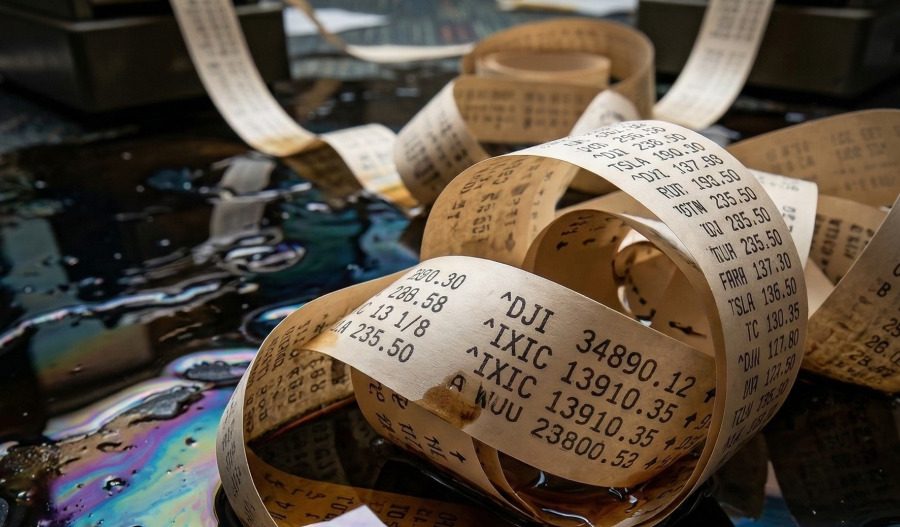
Three more ships were struck by projectiles in the Strait of Hormuz, and Brent crude surged past US$100 a barrel as traders absorbed what the accumulating shipping incidents were telling them about how long this disruption was likely to run. The century mark is as much psychological as it is fundamental - but psychology moves markets.
Iran sharpened the stakes further, warning that oil could reach $200 a barrel if the conflict continued on its current trajectory.
The IEA moved from discussion to action, releasing strategic reserves in a coordinated effort to ease the supply shock - a response that typically provides short-term price relief but rarely shifts the underlying direction when physical flows are genuinely impaired.
The bond market's reaction complicated the usual crisis playbook. The oil shock was eroding bonds' safe-haven status as inflation expectations rose alongside the crude price, leaving fixed income without its traditional defensive appeal precisely when investors most wanted it.
Chubb stepped into the vacuum left by retreating marine underwriters, leading a U.S.-backed insurance facility for vessels prepared to transit Hormuz - the commercial equivalent of hazard pay, structured into an underwriting line.
U.S. inflation held at 2.4% in the most recent print - a reading that predates the oil price breakout and will look increasingly historical by the time the next CPI lands. The U.S. deficit narrowed from a year earlier, a fiscal footnote that would have attracted considerably more attention in a quieter news environment.
Oracle's TikTok stake was confirmed at around US$2 billion, adding another dimension to the company's positioning at the intersection of AI infrastructure and U.S.-China technology politics. Nebius surged after Nvidia committed US$2 billion to the European cloud computing group, extending Nvidia's pattern of strategic investment in infrastructure players positioned to absorb its silicon at scale.
Campbell's missed earnings on soft snack sales, consistent with the broader consumer spending softness visible across the week's macro data.
Long-term research confirmed SMSFs have outperformed APRA-regulated funds - a finding that lands at a politically sensitive moment given the new superannuation tax legislation now on the books.
AeroVironment missed analyst estimates despite a revenue surge, capturing the paradox facing defence contractors winning contracts faster than their cost structures can comfortably absorb the volume.
Friday
The week closed with the conflict's architecture becoming clearer, and not many market participants finding the view especially reassuring.
Iran's newly installed Supreme Leader confirmed the Strait of Hormuz would remain blocked - removing the last residual hope that the leadership transition might soften Tehran's maritime posture.
Australian dollar bond issuance had slowed to a trickle as the war's effect on risk appetite filtered through to the primary market.
Adobe delivered a record first quarter and watched its share price fall anyway, after CEO Shantanu Narayen announced his departure alongside the results - a reminder to us all that in tech stocks, leadership continuity is often priced as an entirely separate risk from earnings performance.
The Australian Senate passed a housing affordability bill including a foreign investor ban, a structural intervention in the property market whose full consequences will be debated long after this particular news week is forgotten.
U.S. regulators moved to scale back bank capital buffers - a deregulatory signal that arrived at an interesting moment given the simultaneous stress the Gulf shipping insurance market was placing on financial institution balance sheets.
Ulta Beauty shed 8.2% on mixed Q4 results, another data point on the patchiness of U.S. consumer spending heading into what is shaping up as a period of sustained oil-driven cost pressure.
U.S. single-family housing starts fell in January, while IEEFA research identified Japan, South Korea, and Thailand as particularly exposed to LNG supply disruption - economies locked into long-term import dependency with few alternatives if Gulf flows tighten further.
The week ends with oil above US$100, a new Iranian leadership line drawn firmly in the water, and the Federal Reserve navigating an inflation shock that arrived in a form it did not see coming.
Next week will not be easier to read…
…and that has nothing to do with this journalist's writing ability.