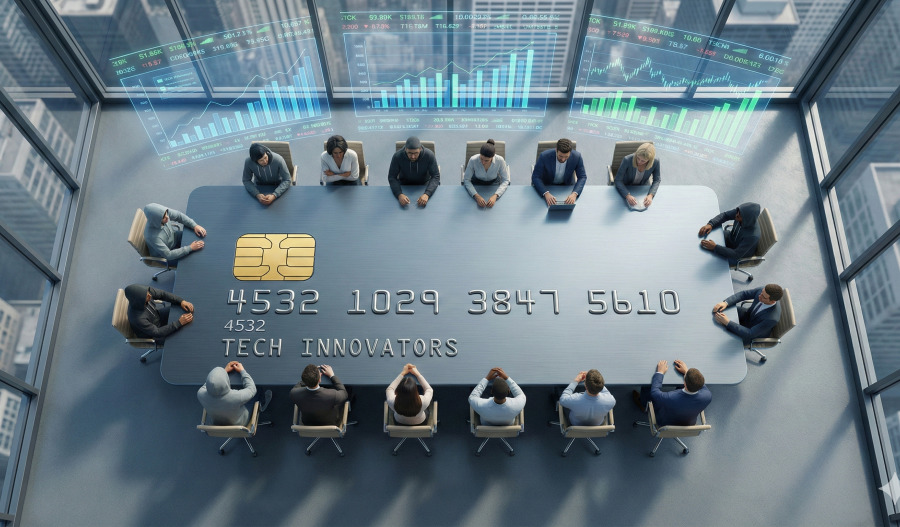

The week that gave investors a Supreme Court ruling, Nvidia's biggest quarter on record, and a global debt figure that would make even the most bullish bond manager check the exits.
All the top moves, shakes, and red-hot takes from Azzet's editorial team are right here in your weekly business wrap every Friday (28 February 2026).
Monday
The week opened with the biggest political and economic story of 2026 so far.
The U.S. Supreme Court delivered a 6-3 ruling finding the International Emergency Economic Powers Act does not authorise import tariffs, with Chief Justice John Roberts writing that the statute cannot bear the weight the White House placed on it.
Before Trump, no president had ever tried.
The court's conservative majority splintered on the question - Roberts was joined by all three liberal justices and two colleagues, with Justices Thomas, Kavanaugh and Alito dissenting.
Markets rallied on the news.
They then watched Trump respond within hours: invoking a separate 1970s statute, a new 10% global tariff was signed effective from 24 February, running for 150 days through to late July.
The refund question on duties already collected under IEEPA - potentially more than $160 billion - was referred to the lower courts, with Treasury Secretary Scott Bessent signalling that process could take months.
The tariff situation, in other words, remained entirely unresolved.
U.S. fourth-quarter GDP disappointed on growth and inflation, compressing the Fed's already narrow window for rate relief.
December new home sales fell as inventory remained constrained.
Australian super funds returned just 0.4% in January per Chant West, reflecting the turbulent start to the calendar year in global equities.
Rio Tinto's expanded scale is being used to push copper to the centre of its long-run growth thesis.
Legal observers are taking agentic AI's liability exposure seriously, as autonomous systems begin making consequential decisions without direct human sign-off - a governance gap that regulators have yet to close.
OpenAI revised its compute target to $600 billion by 2030, halving earlier projections, though still a number that would fund several small countries' infrastructure budgets.
Rolls-Royce shares moved sharply higher on a fresh buyback announcement, underscoring management's confidence in a recovery narrative that has been building for some time.
India rescheduled bilateral trade talks following the ruling, Big Tech flagged AI investment commitments across India, and Warren Buffett's company reached a settlement over wildfire litigation.

Tuesday
Brussels moved to freeze U.S. trade negotiations following the new 10% global tariff, signalling the EU is in no hurry to reward an administration that just replaced one unilateral trade measure with another.
Trump responded by threatening additional tariff action on countries pausing deal discussions - a response that neatly illustrated the circular logic of the current U.S. trade posture.
The U.S. fiscal outlook carries a growing tariff refund liability, with estimates suggesting importers may be owed more than $160 billion in duties.
The Congressional Budget Office had projected IEEPA tariffs generating $1.4 trillion in federal revenue through 2034.
That projection is now void, replaced by a 150-day measure with a sunset clause and a congressional vote in its near future - well-timed for midterm season.
Gilead Sciences confirmed a $7.8 billion Arcellx acquisition, adding a high-potential CAR-T cell therapy programme to its oncology shelf.
Amazon outlined a $12 billion data centre plan, adding another chapter to the hyperscaler capex story that would reach its climax later in the week.
The U.S. also held nuclear talks with Russia and China, a diplomatic development that slipped somewhat beneath the tariff noise.
Westfield parent Scentre posted profit and visitor growth, a result that countered the prevailing narrative about physical retail's structural decline.
ASIC confirmed its corporate collapse investigations are ongoing and far from concluded.
Novo Nordisk's obesity treatment fell short of Eli Lilly's in a head-to-head comparison - a setback that will test the durability of the Danish company's premium valuation in a market where efficacy comparisons now matter considerably.
The comfortable super retirement balance hit a fresh record, and U.S. factory orders fell in December amid a slump in aircraft deliveries.
Wednesday
AMP's Shane Oliver argued the U.S. tech rout was widening the door for ASX outperformance, pointing to relative valuation discounts in Australian equities and the market's lower concentration in high-multiple technology names.
It is a case that has been made before, though the conditions supporting it this time look somewhat more structural.
Federal Reserve officials doubled down on caution around rate cuts, reinforcing that Monday's weak GDP print and rising inflation data will not accelerate the path to easing.
Home Depot posted a profit drop on housing weakness, consistent with the December data from earlier in the week.
Spirit Airlines announced a restructuring to exit bankruptcy, a long-anticipated chapter in the low-cost carrier's prolonged reorganisation.
A wealth advisory firm deepened its Anthropic relationship in financial advice, suggesting large language model deployment in that sector is advancing faster than the surrounding policy framework.
Paramount raised its bid for Warner Bros. Discovery as the Netflix deal framework held - the media consolidation logic is not going away, even if the transaction structures keep shifting.
Thursday
Australian CPI held steady at 3.8% in January, broadly in line with expectations and still above the Reserve Bank's 2-3% target band.
The print keeps the door to further rate relief ajar without opening it any wider.
U.S. consumer confidence edged higher after January's dip, home price growth continued to slow per the S&P Case-Shiller index, and mortgage rates hit a four-year low - relief that may yet stimulate demand if it holds.
The technology capex story gathered further momentum, with Google committing 1.9 gigawatts to grid for a Minnesota data centre, Microsoft formalising a SpaceX partnership despite ongoing litigation between Musk and the company, and AMD securing a Meta chip deal - broadening the GPU supply chain beyond Nvidia's near-monopoly position.
Nvidia posted record quarterly revenue of $68.1 billion, up 73% year-on-year, with full-year fiscal 2026 revenue reaching $215.9 billion.
Data centre revenue alone hit $62.3 billion for the quarter, Q1 guidance came in at $78 billion above consensus, and CEO Jensen Huang declared the "agentic AI inflection point" had arrived - a statement that, attached to those numbers, carries rather more weight than when it appears in a conference deck.
Jamie Dimon signalled that AI will reshape J.P. Morgan's workforce, stopping short of any headcount forecast but making clear the institution is preparing for a materially different composition.
HP beat quarterly expectations following its leadership restructure, while Salesforce beat earnings but guided softly - the familiar enterprise software signal that demand is stable rather than accelerating.
Aston Martin announced plans to cut 20% of staff, a necessary but painful step for a company whose balance sheet has never quite matched its brand.
Woolworths surged 10.9% on growth, signalling the retailer's extended reset may be producing tangible results.
The big four banks continued outrunning earnings growth, a valuation dynamic that a growing number of analysts are flagging as stretched.
Melbourne Airport unveiled a A$4.5 billion terminal expansion, and Air New Zealand posted a half-year loss and launched a business review.
Iran's chief nuclear negotiator expressed optimism from Geneva, a development with implications for global energy markets if it progresses.
In the Mission Critical column, sodium-ion battery technology is rattling lithium market confidence, with cost curves and manufacturing scale beginning to converge in ways the lithium market would prefer to ignore.
Global debt hit a record $348 trillion in 2025 per the Institute of International Finance, with nearly $29 trillion added over the year - the fastest annual accumulation since the pandemic surge.
Governments drove the increase, not households or corporates: sovereign debt globally rose from $96.3 trillion to $106.7 trillion, with the U.S., China and the euro area responsible for roughly three-quarters of the climb.
Emerging markets face more than $9 trillion in debt redemptions in 2026, a record refinancing burden, while mature markets carry over $20 trillion in maturing bonds and loans.
General Atlantic moved to sell a portion of its ByteDance stake, with the transaction valuing the company at $550 billion - a 66% premium to last year's internal share buyback price and the first major secondary transaction since the Trump administration cleared TikTok's U.S. operations restructure in January.
Leonardo's CEO called for EU defence collaboration, reflecting the accelerating push across the continent to consolidate industrial capacity in response to the changed security environment.
The political will is present; the commercial and regulatory obstacles are rather more stubborn.
Friday
The week closed with a reminder that politics and profits rarely travel in the same direction.
New polling signals mounting trouble for the Republican Party ahead of November's midterm elections, with approval of the Trump administration's economic management sliding amid ongoing tariff volatility and cost-of-living pressure.
The results arrive as the White House attempts to reframe the tariff saga - but voters appear less impressed by the narrative than the markets have been this week.
On the supply-chain front, Pentagon-backed MP Materials selected Northlake, Texas for its "10X" rare earth magnet manufacturing campus - a US$1.25 billion project underpinned by a 10-year Pentagon offtake commitment and backed by roughly US$1 billion in debt financing from JPMorgan Chase and Goldman Sachs.
The campus, situated less than 16 kilometres from MP's existing Fort Worth facility, is expected to produce around 10,000 metric tonnes of neodymium-iron-boron magnets annually when it comes online in 2028 - enough, in theory, to replace China's entire current supply of magnets to the U.S. market.
It is the most concrete expression yet of Washington's ambition to build a vertically integrated domestic rare earth supply chain, and a direct response to Beijing's export control escalation from earlier in the week.
Google meanwhile pushed further into the AI image generation race with Nano Banana 2, an update to its Gemini 3.1 Flash model that improves image output speed, world knowledge integration and text rendering precision.
The release is modest by headline standards but strategically pointed - Google continues to close ground on OpenAI's image capabilities at the lower end of the compute spectrum, where consumer volume lives.
In media and sport, Apple and Netflix confirmed a cross-platform deal to share Formula 1 content in the U.S. this season.
Apple - which holds a five-year exclusive U.S. broadcast deal with F1, reportedly worth close to US$150 million annually - will carry Netflix's Drive to Survive season eight, while Netflix subscribers will get live access to the Canadian Grand Prix in May.
Not every corporate story ended well on Friday.
Stellantis reported its first annual net loss since the company was formed in 2021, posting a €22.3 billion (US$26.3 billion) deficit for full-year 2025 after booking €25.4 billion in charges tied to a wholesale reset of its electric vehicle strategy.
The dividend has been suspended for 2026, up to €5 billion in hybrid bonds authorised to shore up the balance sheet, and the company's product roadmap is now heavily weighted back toward Hemi V8 engines, hybrid drivetrains and internal combustion SUVs for North America.
Ford added to the automotive industry's difficult week by announcing a recall of approximately 4.4 million trucks and SUVs across North America.
The affected vehicles - spanning the F-150, F-250 Super Duty, Expedition, Maverick, Ranger, Lincoln Navigator and E-Transit model lines from the 2021 to 2026 model years - carry a software fault in the integrated trailer module that can disable trailer brake lights and turn signals at start-up.
Ford will deliver a fix via over-the-air software update from May, at no charge to owners.
There was better news elsewhere.
Rolls-Royce lifted its 2026 profit outlook and announced a £7 billion to £9 billion share buyback programme running through 2028, sending shares up roughly 6% to a record high.
The company posted underlying operating profit of £3.46 billion for 2025 - up 38% year-on-year on an organic basis - and guided to £4 billion to £4.2 billion in 2026, ahead of analyst forecasts.
Civil aerospace revenue grew approximately 15%, defence around 8%, and the power systems division - increasingly driven by data centre infrastructure demand - expanded 19% organically to £4.89 billion.
Chief executive Tufan Erginbilgic described the results as delivering outcomes "not possible before" under the company's turnaround programme.
Rolls-Royce has now climbed roughly 120% over the past year - the kind of performance that tends to generate both admiration and quiet concern about expectations.
State Farm announced a US$5 billion dividend to its auto insurance policyholders - the largest in the mutual insurer's history - after net income more than doubled to US$12.9 billion in 2025, against total revenue of US$132.3 billion.
Finally, eBay confirmed it will cut around 800 roles - approximately 6% of its workforce - as it realigns headcount around strategic priorities.
The move comes one week after eBay announced the US$1.2 billion acquisition of secondhand clothing platform Depop from Etsy, and follows a quarter in which revenue rose 15% to US$3 billion.
It's the third time in three years that eBay has reduced staff.