A seismic shift in mining economics, a nuclear standoff that briefly shut one of the world's busiest oil arteries, and an AI spending cycle that continues to defy gravity were the flavours of the week in business.
All the top moves, shakes, and mounting stakes from Azzet's editorial team are right here in your weekly business wrap every Friday (13 February, 2026).
Check out the rest of the week's circus below:
Monday
The European Central Bank extended its euro liquidity backstop globally, widening swap lines as a buffer against dollar funding stress - a procedural move, but a telling one for anyone tracking central bank risk appetite.
U.S. consumer prices came in at 2.4%, below forecasts, handing the Fed a touch more room to manoeuvre heading into a data-heavy week.
Australia locked in A$3.9 billion for the AUKUS submarine shipyard - one of the heftiest single defence infrastructure commitments in the country's history.
Baidu folded OpenClaw into its 700 million-user search platform, handing the tool distribution that most Western AI products can only dream about.
Iran put energy and mining concessions on the table ahead of nuclear talks in Geneva - an early read on what Tehran's opening position might look like if diplomacy gets traction.
A dual-class share structure designed to lock in Elon Musk's control resurfaced, while Peter Navarro directed data centre operators to wear tariff costs rather than pass them down the chain - a stance the sector received with predictable hostility.
Ethiopian Airlines flagged Australian routes from 2028, adding another contender to an already congested long-haul corridor.

Tuesday
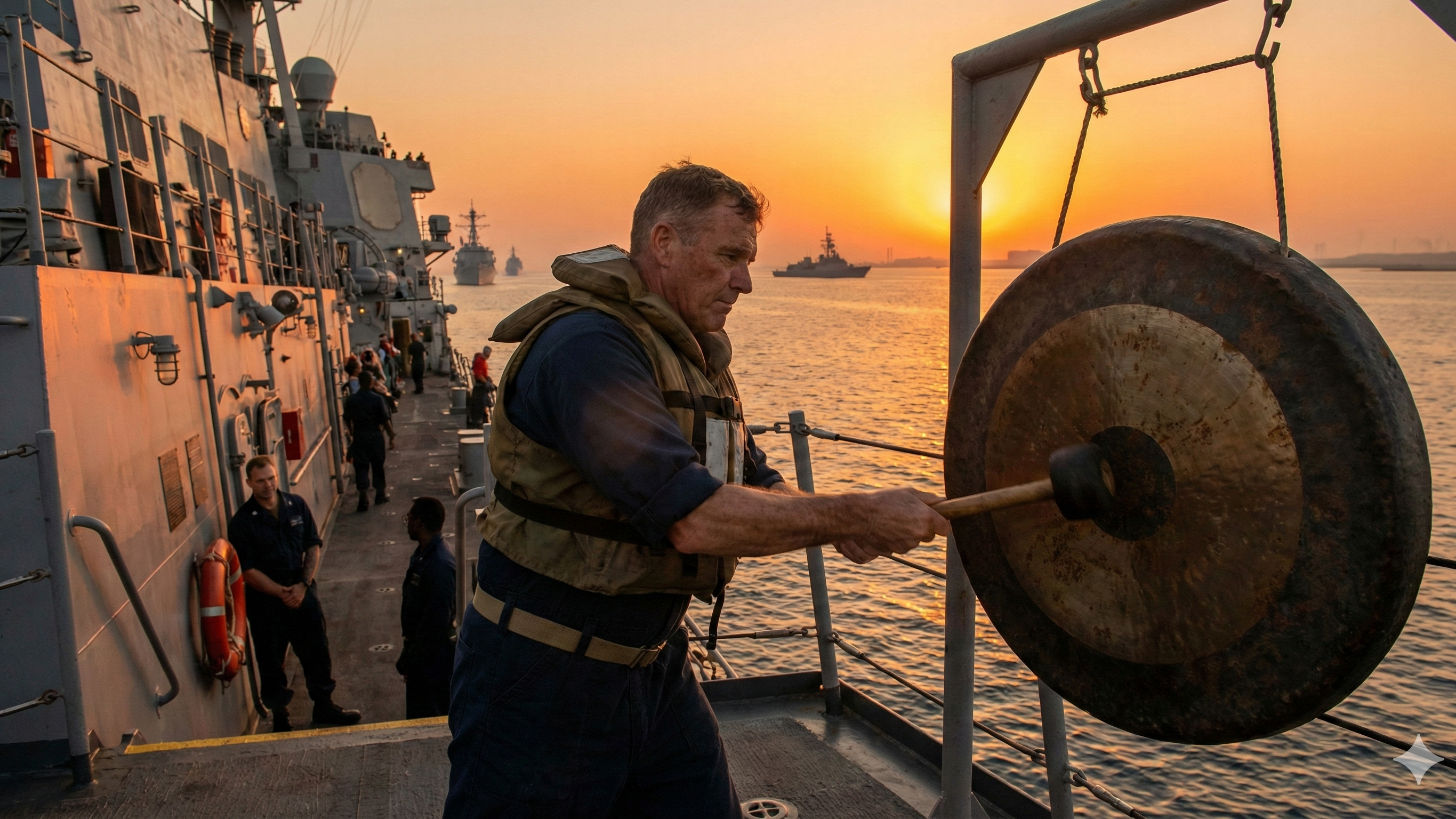
The week's sharpest geopolitical moment landed Tuesday, when Iran partially shut the Strait of Hormuz while its delegation sat across the table from U.S. envoys Steve Witkoff and Jared Kushner in Geneva for a second round of indirect nuclear negotiations.
It marked the first formal closure announcement since Washington began assembling military assets in the region.
Iran's Revolutionary Guard ran live-fire drills under the "Smart Control of the Strait of Hormuz" exercise - missiles fired from coastal positions, electronic warfare components included.
Roughly 13 million barrels per day of crude moved through Hormuz in 2025, accounting for around 31% of global seaborne oil flows, per market intelligence firm Kpler.
Supreme Leader Khamenei put it plainly: a U.S. aircraft carrier is "dangerous," but "more dangerous than the warship is the weapon that can sink the warship into the depths of the sea."
Talks nonetheless produced some traction.
Foreign Minister Abbas Araghchi cited progress on "guiding principles," and a U.S. official said Iran would put more detailed proposals forward within two weeks.
Brent fell 2.3% to US$67.03 a barrel after the Geneva session wrapped.
Araghchi had also met IAEA Director-General Rafael Grossi in Geneva on Monday, a signal that Tehran was at least willing to keep the international nuclear framework in view.
In mining, BHP dropped what may be the result of the reporting season.
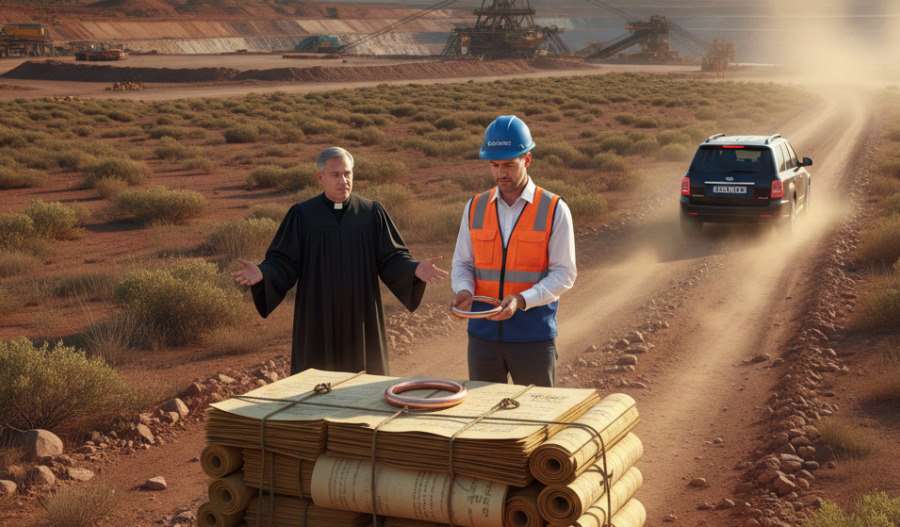
For the first time in the company's 170-year history, copper eclipsed iron ore as its primary earnings engine.
Copper EBITDA landed at $7.95 billion for the six months to 31 December 2025 - a 59% year-on-year jump, underpinned by a 32% surge in average realised prices and record output from Escondida in Chile - clearing iron ore's $7.50 billion and representing 51% of group earnings.
Underlying profit rose 22% to $6.2 billion against a $6 billion consensus.
Shares punched 7% higher to an all-time high of A$53.68.
The interim dividend of 73 US cents per share left the 63-cent consensus in the dust.
"Cu is now the major breadwinner," Macquarie analysts noted.
CEO Mike Henry said there was no pressure to chase M&A for copper exposure, pointing to four organic options across Chile, Argentina, Arizona, and South Australia.
BHP also locked in a US$4.3 billion silver streaming agreement with Wheaton Precious Metals over its 33.75% share of Antamina's silver output - part of a broader $10 billion asset monetisation push.
Coal was the weak spot, with EBITDA of $225 million coming in 27% below consensus on softer met coal prices and cost pressure.
The RBA minutes flagged a tangible shift in inflation risk, cementing expectations of a measured cutting cycle rather than an aggressive one.
SEEK booked a loss after its Zhaopin stake was written down, and the UK government moved to legally rein in AI chatbots - a pointed contrast to the unchecked capital deployment running through the rest of the week's stories.
Canada reframed its tariff bind as an EV manufacturing opportunity, cutting Chinese EV levies from 100% to 6.1% for a capped annual quota of 49,000 vehicles and putting $3 billion into a Strategic Response Fund for domestic auto production.
Chinese firms wanting access to the reduced rate must establish joint ventures on Canadian soil within three years.
The USMCA review due in July is shaping up as the pressure point.
The Mission Critical column this week made the case for rare earths futures contracts as a structural fix for Western supply chain exposure - a case that only strengthens as the diplomatic temperature climbs.
Wednesday
Adani Group put a US$100 billion commitment on the table for renewable-powered AI data centres by 2035, positioning the Indian conglomerate as a serious contender in the global infrastructure land grab.
The plan scales AdaniConnex from 2 gigawatts to 5 GW of data centre capacity, drawing power from the group's 30 GW Khavda renewable project in Gujarat - of which more than 10 GW is already operational.
A separate $55 billion is pencilled in for renewable generation and grid-scale battery storage.
Adani says the outlay will pull in an additional $150 billion across server manufacturing and sovereign cloud build-out, adding up to a projected $250 billion AI ecosystem in India by 2035.
Google and Microsoft partnerships are already in motion, with campus developments confirmed in Visakhapatnam, Noida, Hyderabad, and Pune.
Adani did not field questions on how much of the $100 billion is contracted versus aspirational - a distinction that matters considerably when the SEC is actively pursuing fraud charges against chairman Gautam Adani.
Worth keeping an eye on.
NAB delivered a clean December quarter with shares closing at a record.
UK unemployment hit a five-year high, and regional Australian home prices kept running ahead of capital cities as affordability pressures drive buyers further from the CBDs.
A piece on how high-frequency traders extract returns from market turbulence landed at a well-chosen moment, while cloud provider Render secured funding at a US$1.5 billion valuation in a raise that barely registered against the week's larger numbers.
Anthropic's Claude Sonnet 4.6 drew attention for what it means for legacy SaaS economics - further evidence that AI-native tooling is cutting into the software subscription model from underneath.
Thursday
Geneva delivered the verdict markets had been bracing for.
U.S.-Iran nuclear talks broke down without resolution, with Tehran pushing to limit the agenda strictly to its nuclear programme while Washington held firm on including ballistic missiles and proxy group activity.
Neither side moved.
Rio Tinto took majority control of Nemaska Lithium in Quebec, pushing its stake to 53.9% after a series of equity injections since acquiring a 50% position through its $6.7 billion Arcadium Lithium purchase in March 2025.
Rio is putting more than $300 million into Nemaska in 2026 alone.
The Bécancour lithium hydroxide plant - 60% complete at December 2025 - is due to begin commissioning this year, with first production targeted for 2028 at 32,000 tonnes per annum.
Quebec's government retains 46.1% and has committed up to $200 million in equity.
Rio's full-year underlying earnings of $10.87 billion fell short of the $11.03 billion consensus, dragged by softer iron ore prices - context that makes the lithium pivot look less like ambition and more like necessity.
The Fed minutes laid bare a divided committee on the rate outlook, with no clear consensus on timing or pace of future cuts.
U.S. credit spreads tightened while Australian bond yields pushed higher - a divergence that complicates the RBA's next move.
The ABS confirmed January's unemployment rate held steady, keeping the domestic labour market narrative intact for now.
Ford put a multi-billion dollar commitment behind new EV technology without attaching much in the way of detail to the announcement.
Figma's Q4 numbers topped estimates and sent the stock up, though questions around its path to durable profitability remain unresolved.
Friday
Walmart beat the street on both revenue and earnings in its Q4 FY2026 result, posting revenue of $190.7 billion - up 5.6% year-on-year - against a $190.43 billion consensus.
Adjusted EPS came in at 74 cents against the 73-cent forecast.
U.S. e-commerce grew 27% - the retailer's 15th straight quarter of double-digit digital growth - with the segment crossing into standalone profitability for the first time.
The qualifier: FY2027 adjusted EPS guidance of $2.75-$2.85 landed well short of the $2.96 analysts had pencilled in.
CFO John David Rainey pointed to mounting stress among lower-income households as a drag on the outlook.
Shares fell 1.38% to $124.87 on the day despite the earnings beat.
New CEO John Furner, installed on 1 February, told analysts "Agentic Commerce is gonna be great for our customers" - a line that will either age well or serve as an awkward clip in a future earnings post-mortem.
A $30 billion share buyback authorisation - the company's largest on record - was also announced, replacing the remaining balance of a $20 billion programme from 2022.
Telstra crossed A$1 billion in profit for H1 FY26, a steady result from a company that rarely makes noise but consistently delivers.
The U.S. trade deficit widened - an inconvenient data point for an administration that has staked considerable political capital on tariffs as a corrective.
The White House sharpened its language toward Tehran, warning Iran to reach agreement or face the consequences.
The week's two Friday reads were worth sitting with.
The argument for reweighting into Asian equities via ETFs gained credibility as regional bourses reasserted themselves against a softer U.S. backdrop.
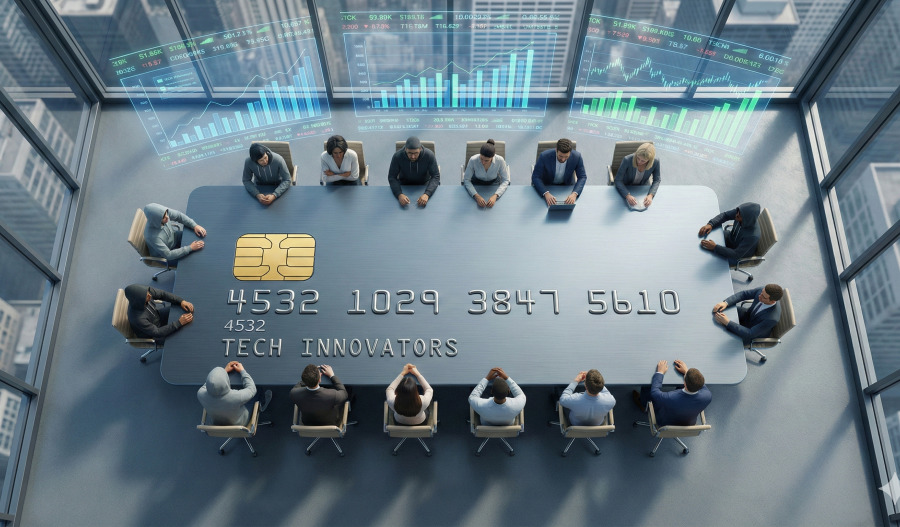
And the piece on how big tech is bankrolling the very AI companies likely to cannibalise its core business put a sharp frame on the week's dominant contradiction: Microsoft and Nvidia are among Anthropic's largest backers, while Anthropic's products are steadily eroding the software markets both companies depend on.
One week closer to a world where copper sets the agenda, Hormuz doubles as a firing range, and the AI invoice keeps compounding.