Big Tech earnings: AI spending boom, cash flow pressure
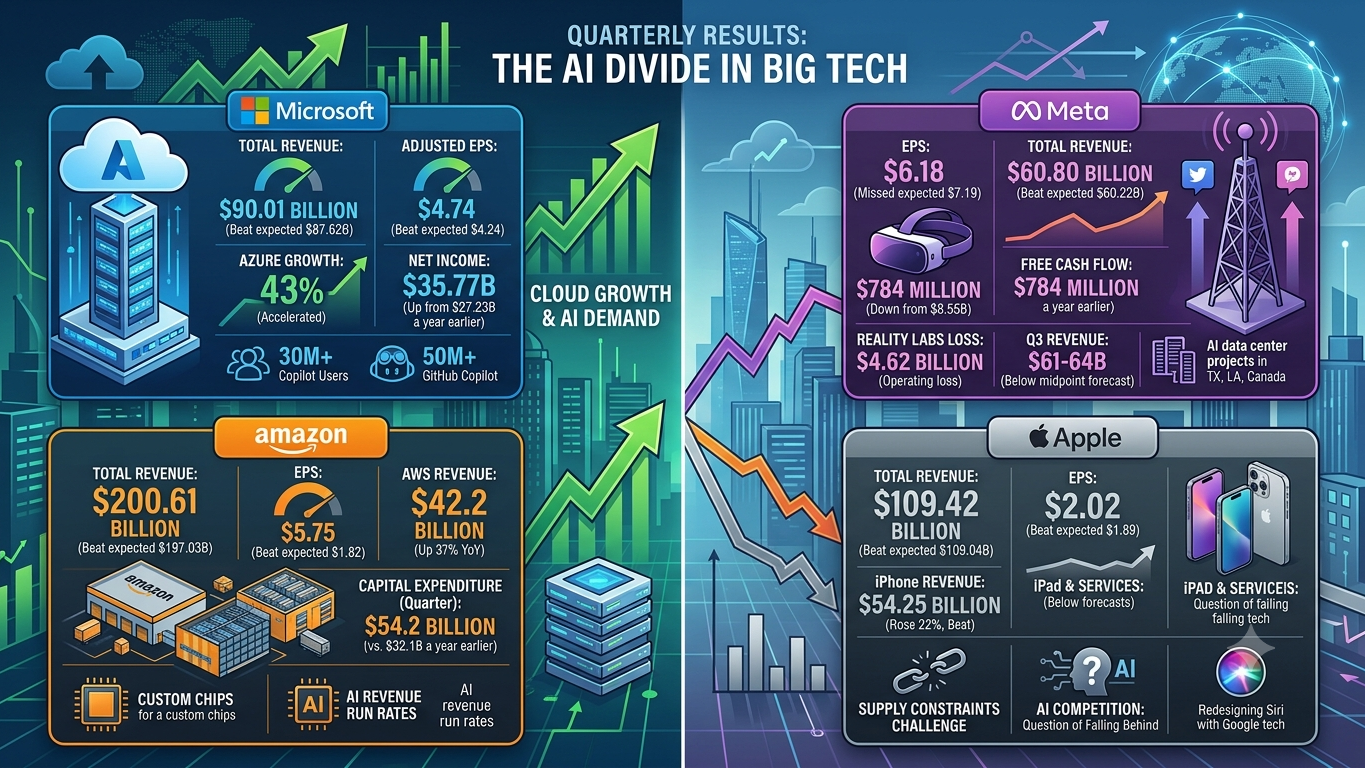
The latest round of Big Tech earnings this week reinforced a widening divide in the artificial intelligence race, with Microsoft and Amazon benefiting from strong cloud demand while Meta faced questions over the returns from its massive AI spending programme. Microsoft: Azure growth fuels AI optimismMicrosoft shares jumped 18.2% for the week after the software giant reported stronger-than-expected fiscal fourth-quarter results, with growth in its Azure cloud business and gains from its Anthropic investment supporting results. The company reported adjusted earnings per share (EPS) of US$4.74, beating expectations of $4.24, while revenue came in at $90.01 billion compared with forecasts of $87.62 billion. Revenue increased approximately 18% year over year in the quarter ended 30 June, while net income rose to $35.77 billion from $27.23 billion a year earlier. Microsoft said results included a $3.2 billion gain from its investment in artificial intelligence company Anthropic, while lower-than-expected costs from its first voluntary retirement programme also boosted earnings. The company maintained its 2026 capital spending plans but indicated investment would continue rising as demand for AI infrastructure remains strong.