
A fragile Iran ceasefire crashed oil 16% in a single session, the IMF downgraded global growth, AI deals kept flowing through the wreckage, and private credit reminded everyone it can, in fact, lose money.
All the top moves, shakes, and Hormuz Strait's from Azzet's editorial team are right here in your weekly business wrap every Friday (10 April 2026).
Oil markets spent the first half of the week grinding higher on war premium and Hormuz anxiety, only to surrender the lot - and then some - when Washington and Tehran agreed to a two-week ceasefire on Wednesday night.
West Texas Intermediate cratered more than 16% to US$94.41 a barrel, its steepest single-day drop since April 2020, and Brent followed with a 14% plunge.
Yet by Thursday morning, Iran was already accusing the U.S. of breaching the terms.
Markets that had priced in months of supply dislocation were forced to reprice in hours, and the whiplash left commodity desks, airlines, and bond strategists all scrambling to recalibrate.
Away from the barrel, the IMF formally abandoned its growth upgrade and replaced it with a downgrade, U.S. Q4 GDP was revised down to a limp 0.5%, and Carlyle joined Blackstone in reminding investors that private credit can gate your money when you most want it back.
On the brighter side of the ledger, CoreWeave and Meta (NASDAQ:META) inked a $21 billion AI compute agreement, Broadcom (NASDAQ: AVGO) landed chip and cloud deals with Google and Anthropic, and U.S. payrolls added 178,000 jobs in March - three times what anyone expected.
Whether that strength survives an oil shock and a war-inflation impulse is another question entirely.
Tuesday
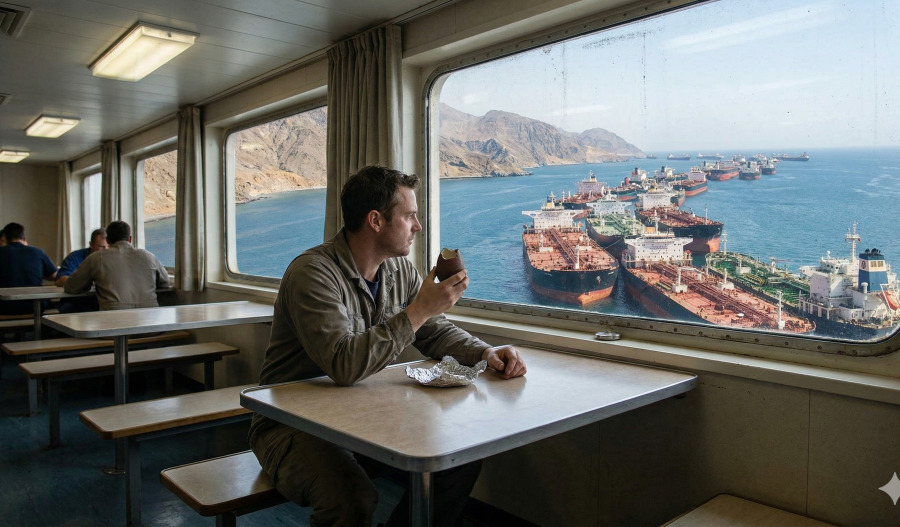
EU gas storage sat at roughly 28% capacity in early April - its lowest seasonal level since the 2022 supply crunch - as the Hormuz blockade continued to lock Western commercial shipping out of the strait.
Qatar's damaged Ras Laffan complex, which handles about a fifth of all seaborne LNG, remained partially offline after Iranian missile strikes knocked an estimated 17% of liquefaction capacity out of commission.
Fitch placed Qatar's AA sovereign rating on watch negative, and daily injection forecasts for European storage in April ran roughly 77% below the same period last year.
Even hitting a relaxed 80% refill target before winter would require a restocking rate roughly double what the continent managed through 2025.
Country Garden (HKEX: 02007) flagged patchy signs of recovery in China's property sector, posting a return to profit, while HSBC noted a modest pickup in secondary home sales in cities such as Shanghai.
Analysts cautioned that the improvement remained heavily dependent on continued policy support, and the broader market is still far from a sustained recovery.
U.S. payrolls delivered a sharp upside surprise, with 178,000 jobs added in March against a consensus estimate of just 59,000.
Healthcare, construction, and transportation led gains, rebounding from a loss of 133,000 positions in February.
Federal government employment continued to decline, a pattern consistent with the administration's ongoing workforce reduction agenda.
IMF managing director Kristalina Georgieva warned Reuters that the Middle East conflict had forced the Fund to replace its expected growth upgrade with a downgrade, paired with a higher inflation outlook.
Energy supply dislocation, freight costs, and second-round price effects were all cited as transmission channels.
JPMorgan (NYSE: JPM) chief executive Jamie Dimon weighed in on the conflict, defence spending, and the economic outlook in a wide-ranging interview, while the Trump administration considered cutting TSA workers as part of its broader federal workforce reduction drive.
Amazon (NASDAQ: AMZN) struck a new package delivery deal with USPS, providing the postal service with a revenue lifeline.
NASA's Artemis II crew broke the record for distance from Earth, surpassing the mark set by Apollo 13 more than half a century ago.

Wednesday
U.S. services sector growth slowed in March, with the ISM Services PMI declining to 54% from 56.1% in February, below the Reuters consensus of 54.9%.
Input prices surged on energy costs linked to the Iran war, adding to the stagflationary cocktail that has kept the Fed cautious on rate cuts.
Nvidia (NASDAQ:NVDA)-backed data centre operator Firmus raised capital at a valuation near US$4.8 billion, as demand for AI compute infrastructure continued to attract investment despite broader market uncertainty.
Broadcom landed a dual deal to manufacture custom chips for Google and provide compute for Anthropic, further entrenching the chipmaker in the AI supply chain.
India purchased oil from Iran for the first time in seven years, a geopolitical signal as telling as any UN vote.
New Delhi's willingness to defy U.S. sanctions pressure reflected the practical reality of oil at US$110-plus a barrel and a two-tier transit system through Hormuz that rewards non-Western buyers.
Electric vehicle sales doubled to reach record market share, driven by Chinese demand and accelerated by fuel prices that have made the petrol-versus-plug maths considerably more favourable.
Mercedes-Benz U.S. chief executive set ambitious sales targets for the American market, though the timing - with consumer confidence rattled and fuel costs elevated - raised eyebrows.
A court ruling against Meta (NASDAQ: META) in a data privacy case raised concerns about corners being cut on AI safety, with analysts noting the financial pressure could push the company to deprioritise safety testing in favour of speed-to-market on its generative AI products.
Oil markets and commodity desks absorbed two seismic developments in a single session.
Aluminium prices climbed 10-15% as the war's impact spread beyond oil and LNG into fertilisers, high-tech gases, and industrial metals, with Gulf production sites suffering Iranian strike damage.
Physical commodity markets remained tight across the board, with oil premiums elevated and supply chains under pressure.
Then, late in the session, the U.S. and Iran agreed to a two-week ceasefire after Trump threatened that "a whole civilisation will die tonight."
Iran's Supreme National Security Council accepted the deal and agreed to direct negotiations in Islamabad on Friday, though Tehran characterised the ceasefire as a victory and stressed it did not end the war.
Analysts warned that fuel prices would stay elevated even if Hormuz reopens, with damaged infrastructure, depleted reserves, and rerouted supply chains creating structural cost pressures that a temporary truce cannot reverse overnight.
China and Russia vetoed a UN Security Council resolution demanding the Strait of Hormuz be reopened to all commercial shipping, cementing the diplomatic impasse at the multilateral level.
Gilead Sciences (NASDAQ: GILD) acquired German biotech Tubulis for up to US$5 billion, extending its antibody-drug conjugate acquisition spree.
Levi Strauss (NYSE: LEVI) surged 7.3% after beating earnings and revenue estimates, one of the few consumer names to deliver unambiguously good news in a week dominated by macro anxiety.
Apple's (NASDAQ: AAPL) first foldable iPhone faced potential delays, and ASIC opened an investigation into the sale of Shield, a firm linked to First Guardian.
Thursday
Crude prices recorded their sharpest single-day fall since 2020 as the ceasefire took hold.
WTI plunged more than 16% to settle at $94.41 a barrel, and Brent dropped roughly 14%.
An analysis of Iran's broader oil strategy argued the conflict had accidentally elevated Tehran's global economic leverage through its control of Hormuz, with security expert Robert A. Pape contending that U.S. and Israeli actions had backfired.
The optimism only lasted a handful of hours…
Iran accused the U.S. of ceasefire breaches, and Washington demanded Tehran open the Strait of Hormuz without tolls - a condition Iran had not agreed to.
Trump announced 50% tariffs on any country supplying weapons to Iran, widening the trade and sanctions front.
Fed minutes signalled officials still expected to lower interest rates this year, even as geopolitical uncertainty clouded the inflation outlook.
Delta Air Lines (NYSE: DAL) pulled back on its growth plans, citing elevated fuel costs from the conflict.
U.S. mortgage applications fell year-on-year as economic turmoil and rate uncertainty weighed on housing demand.
Former Rio Tinto chief executive backed a US$1 billion ocean floor mining venture, a bet on deep-sea critical minerals that remains as controversial as it is capital-intensive.
Meta's new AI model lifted investor sentiment in the tech giant's shares, while Anthropic lost its bid to block a Pentagon blacklisting, a decision that could constrain the AI company's access to federal contracts.
Jeff Shell exited Paramount amid an ongoing lawsuit.
Friday
War-driven inflation pressures continued to reshape bond strategy, with fixed income investors rethinking duration and inflation-linked allocations as energy costs fed through to price expectations.
U.S. Q4 GDP was revised down to 0.5%, painting a weaker picture of the economy heading into a conflict-induced supply shock.
CoreWeave and Meta extended their AI compute agreement to US$21 billion, one of the largest infrastructure deals in the sector's short history.
OpenAI launched a US$200 monthly ChatGPT subscription aimed at researchers and power users, testing how much consumers will pay for premium AI access.
Carlyle limited withdrawals from its private credit fund, following Blackstone's own redemption pressures in recent weeks and adding to evidence that the $1.8 trillion private credit sector is facing its first real liquidity stress test.
A multibillion-dollar merger was proposed to Universal Music, and Israel pushed Lebanon peace talks forward as the broader Iran ceasefire raised questions about how long the regional truce architecture would hold.