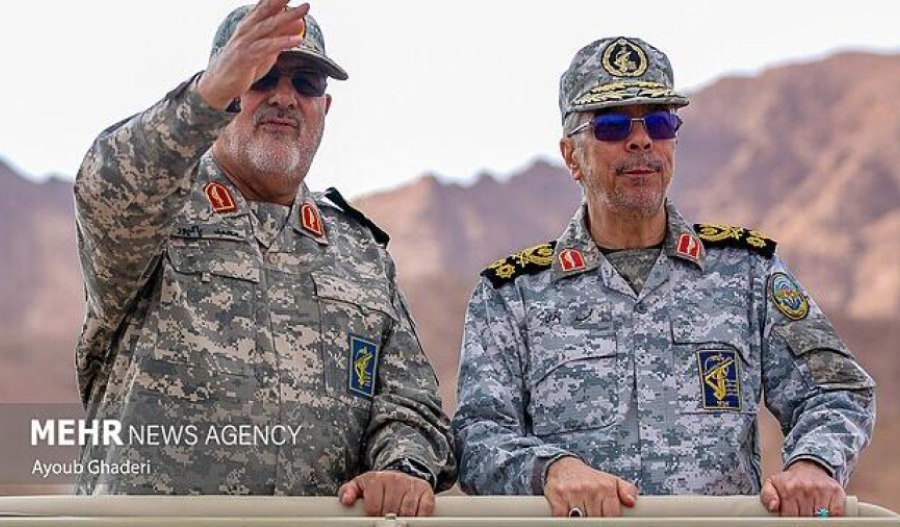
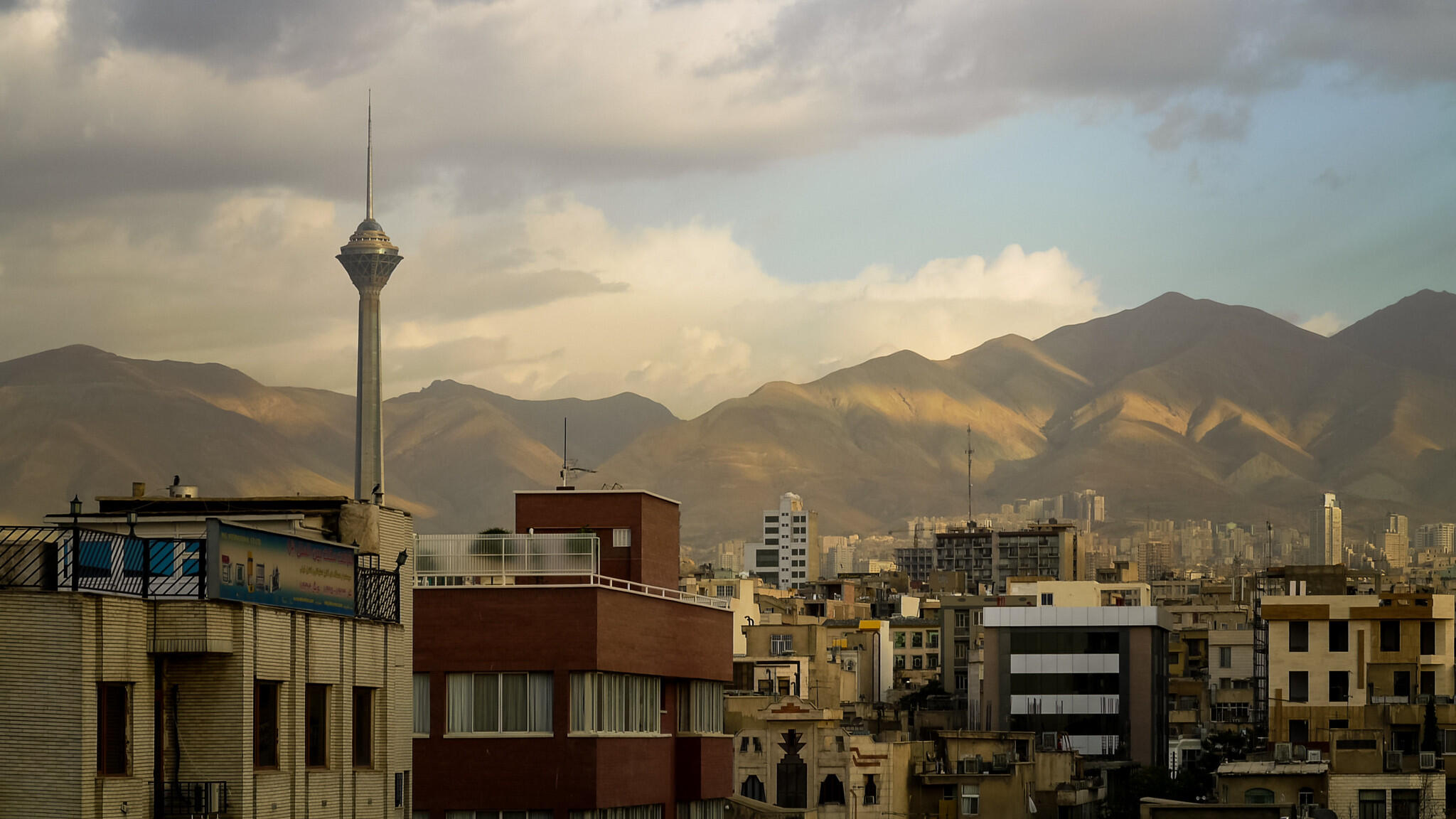
Not by any measure could Iran be framed as winning the war against the United States and Israel, now well into its second month. However, its control over the flow of oil, which has far-reaching consequences for the global economy, has potentially elevated the worldwide gravitas of the Persian state to a level it could only have imagined a few weeks ago.
So much so that Robert A Pape, a military and international security expert, believes actions by the U.S. and Israel have not only ingloriously backfired but accidentally gifted Iran the economic leverage to become a major world power.
Underpinning Iran’s ascent to a centre stage of global power is, of course, its ability to preside over the Strait of Hormuz.
Assuming Iran’s control over the passage of ships through the Strait persists for months or even years, Pape foresees a drastic reshaping of the global order, much to the detriment of the U.S., which has struggled to maintain its status as a global superpower since the early 1990s.
Clearly, much of this speculation is contingent on how long Iran’s grip on the Strait – which accounts for a fifth of world’s oil supply – can last.
A strait controlled without being closed
While there’s a widespread expectation that U.S. and [possibly] allied naval forces will soon stabilise the situation – leading to the resumption of regular oil flows – Pape claims that this outcome is flawed.
“It assumes that to continue to control the Strait, Iran must physically close it off,” said Pape, a professor of political science at the University of Chicago.
“But as we have already seen, you can control the Strait without closing it.”
In practice, Pape is right; today, the Strait remains open to tankers but on a selective "pay-to-pass" corridor rather than an open waterway.
While the dual-corridor system [under Iranian and Omani control] is "effectively closed" to the U.S., Israel, and its Western allies, ships from so-called friendly nations - China, Russia, India, Pakistan, Iraq, Malaysia, Thailand, and the Philippines – have been granted explicit safe-passage exemptions.
Pape reminds the market that while shipping traffic through the Strait has dropped off by over 90% since the war started, it has less to do with Iran sinking every vessel.
It’s more about insurers withdrawing or repricing war-risk coverage due to the credible fear of attack, with hits on cargo ships every few days making the risk unacceptable.
“When that reliability breaks down, insurance markets tighten, freight rates spike, and governments begin to look at energy access as a complex strategic challenge rather than a simple market transaction,” said Pape.

Energy shock risks a new global order
Iran’s ability to cast permanent uncertainty over the safety of oil shipments – through indiscriminate hits on oil tankers - has created a major headache for the U.S.
This realisation triggered a frank admission from the French president Emmanuel Macron, who reminded the world that it was unrealistic to expect the Strait to be reopened by brute force alone.
Macron’s conclusion that the Strait can only be opened in concert with Iran is clearly at odds with how things have happened in the past.
For decades, the peaceful passage of oil through the Persian Gulf has been based on a number of safe assumptions; Oil producers exported, markets priced, and the good old U.S. of A secured the route.
Trouble is, through America’s own meddling, the system that allowed rivalry without instability has fallen apart and now looks irreparable.
Assuming that uncertainty persists, Pape expects the Gulf arrangement to inevitably change - giving way to a new-look regional order.
Much to the horror of Trump, the new regional order will be one within which Gulf states look away from the U.S. towards the actor that can most directly influence the reliability of their exports: That actor is now Iran.
While the global consequences will be most pronounced in Asia – with Japan, South Korea and India heavily dependent on Gulf energy - Pape also reminds the market that China, though more diversified, also depends on the region for a large share of its energy imports.
Those dependencies are embedded in infrastructure, notably refineries, shipping routes and storage systems that cannot be quickly reconfigured.
“If disruption to the energy supply persists, the effects will be widespread. Higher insurance and freight costs will raise prices. Trade balances will worsen. Currencies will weaken. Inflation will rise,” concludes Pape.
He expects Iran to gain further global leverage along with the inevitable reshaping of policy around energy dependence.
Return of 70s-style energy shock
With governments reprioritising access to energy, Pape fears that a 1970s world in which oil shocks lead to years of stagflation will no longer be a distant memory but a nearing reality.
“China depends on Gulf energy to sustain growth. Russia benefits from higher and more volatile energy prices. Iran gains leverage from its position at the Hormuz choke point,” Pape noted.
"Each of these three nations has incentives that run counter to the economic stability of the United States and its allies.”
While three nations don’t need to coordinate in a formal way, Pape expects the structure of a new global setup to push them in the same direction.
Without putting too fine a point on it, Pape concludes that this is how a new order emerges — not through a formal alliance (at least not at first) but through converging incentives that reinforce one another over time.
“The United States faces a difficult choice: either commit to a long-term effort to reassert control over the Strait of Hormuz or accept a new global energy arrangement in which U.S. control is no longer assured,” Pape said.
“If it chooses acceptance, the outcome is clear: The international system will reorganise with Iran as a fourth centre of global power. Yet if the United States chooses to reassert military control, it is in for a long battle, one it could well lose.”