Minutes from the Federal Reserve’s March policy meeting released on Wednesday (Thursday AEST) indicate officials still expect to lower interest rates this year, even as uncertainty linked to geopolitical tensions and trade policy clouds the economic outlook.
Members of the rate-setting Federal Open Market Committee acknowledged that the ongoing conflict involving Iran and rising tariffs could complicate the path for monetary policy, particularly if higher energy costs begin to weigh on households and employment.
Most participants suggested that escalating fuel prices could ultimately justify a more accommodative stance if they materially impact consumer spending and labour market conditions.
Policymakers emphasised the need to remain “nimble” as they assess how these dynamics influence inflation, which continues to run above the central bank’s 2% target, and employment growth, which has remained largely stagnant over the past year.
“Many participants judged that, in time, it would likely become appropriate to lower the target range for the federal funds rate if inflation were to decline in line with their expectations,” the minutes said.
The committee’s central expectation remained for one rate cut in 2026, unchanged from projections issued in December.
However, officials flagged growing concern over potential downside risks to the labour market, warning that weaker employment conditions could warrant additional easing.
The minutes flagged "a further softening in labour market conditions, which could warrant additional rate cuts, as substantially higher oil prices could reduce households’ purchasing power, tighten financial conditions, and reduce growth abroad".
Fed staff revised their inflation outlook slightly higher compared with January, reflecting recent data and a surge in crude oil prices:
"The staff's inflation forecast for this year was slightly higher, on balance, than the one prepared for the January meeting, primarily reflecting incoming data and an expected boost to consumer energy prices given the recent run-up in crude oil prices.
"With the effects of higher crude oil prices and tariffs on inflation expected to wane later this year, inflation was projected to return to its previous disinflationary trend and to be close to 2 percent by the end of next year."
Despite that expectation, inflation remains a central concern among policymakers.
"Participants generally observed that overall inflation remained above the Committee's 2 percent longer-run goal. Some participants remarked that further progress in reducing inflation had been absent in recent months.
"Some participants noted that the rate of increase in core goods prices remained well above the pace likely to be consistent with the sustainable achievement of the Committee's inflation objective, at least in part reflecting the effects of tariffs.

"In addition, some participants commented that, although price increases in the housing services category had slowed considerably over the past year and were now close to their pre-pandemic pace, increases in nonhousing core services prices had continued to be elevated relative to their pre-pandemic pace."
The outlook remains highly uncertain, with officials citing geopolitical developments, government policy changes and the adoption of artificial intelligence as key variables influencing forecasts.
"The staff continued to view the uncertainty around the forecast as elevated considering the potential economic effects of developments in the Middle East, government policy changes, and the adoption of AI.
"Risks to the forecasts of employment and real GDP growth were seen as tilted to the downside.
"Risks to the inflation projection were viewed as a little more skewed to the upside than at the time of the January meeting. With inflation having remained above 2 percent since early 2021, along with the potential effects of Middle East developments, a salient risk was that inflation could prove to be more persistent than the staff anticipated."
At the conclusion of the 17–18 March meeting, the Federal Open Market Committee voted 11–1 to hold the benchmark federal funds rate within a target range of 3.5% to 3.75%.
Policymakers also acknowledged the possibility that prolonged Middle East tensions could sustain inflationary pressures, potentially requiring tighter policy rather than easing.
“Most participants commented that it was too early to know how developments in the Middle East would affect the U.S. economy and judged it prudent to continue to monitor the situation and assess the implications for the appropriate stance of monetary policy,” the minutes said.
The meeting took place shortly after the United States and Israel launched strikes on Iran, triggering a sharp rise in energy prices and renewed fears of inflation. While a subsequent ceasefire has led to a decline in oil prices, its durability remains uncertain.
In evaluating current conditions, participants said they still expect inflation to gradually return toward target, with tariff-related pressures likely to prove temporary.
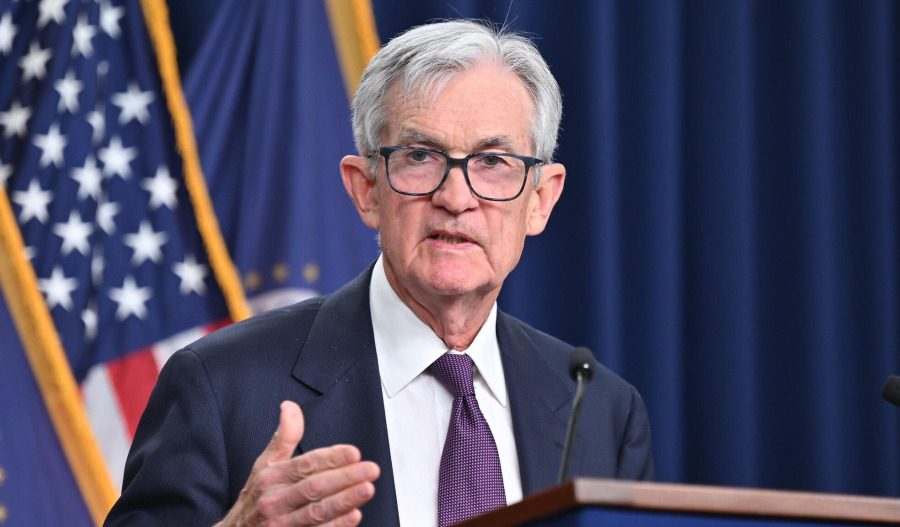
Federal Reserve Chair Jerome Powell recently cautioned that pre-emptive rate increases to counter inflation could carry unintended long-term consequences due to the lagged effects of monetary policy.
Meanwhile, concerns about the labour market persist. Although employment levels have remained relatively stable, job creation has been narrowly concentrated in healthcare-related sectors, raising questions about the broader resilience of the economy.
“The vast majority of participants judged that risks to the employment side of the mandate were skewed to the downside,” the minutes said. “In particular, many participants cautioned that, in the current situation of low rates of net job creation, labour market conditions appeared vulnerable to adverse shocks.“
Financial markets broadly expect the Fed to keep rates unchanged through much of the year. However, the recent ceasefire has prompted traders to modestly increase expectations for a potential rate cut.
The broader economic backdrop has shown signs of slowing. U.S. gross domestic product (GDP) expanded at an annualised pace of 0.7% in the fourth quarter of 2025 and is projected to grow by around 1.3% in the first quarter of 2026, fuelling concerns among some investors about the risk of a recession.