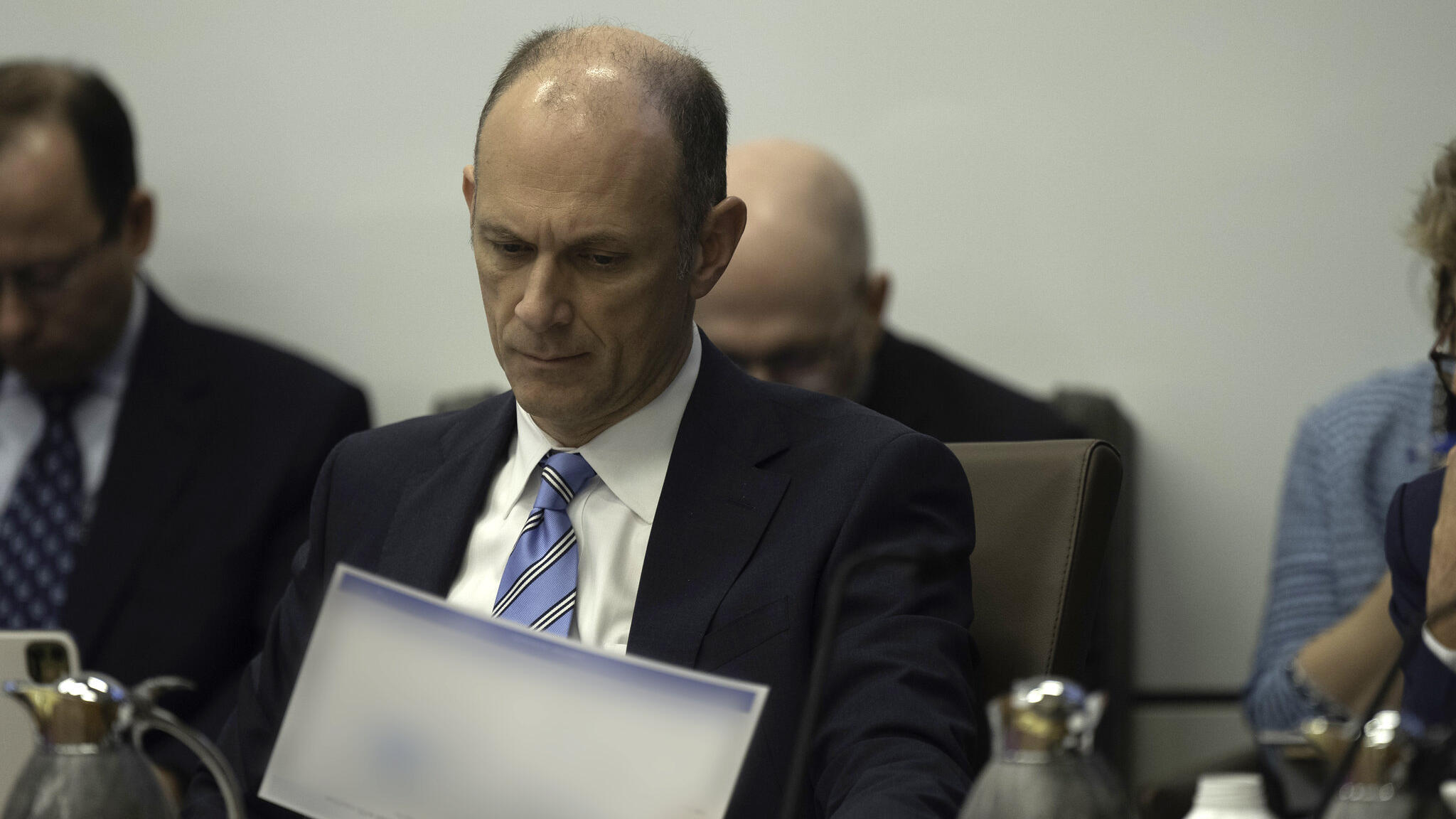
The United States Federal Reserve should refrain from cutting interest rates until there is clearer evidence that inflation is moving sustainably back towards target, Chicago Fed President Austan Goolsbee said, warning that price pressures remain uncomfortably high.
Speaking at the National Association for Business Economics annual conference in Washington, Goolsbee stressed that policymakers must avoid repeating past mistakes by easing too quickly. Inflation has retreated significantly from its peak but remains above the central bank’s 2% objective.
“We have been burned by assuming transitory inflation” in the past, Goolsbee said, cautioning against complacency. “I feel that front-loading too many rate cuts is not prudent in that circumstance,” he added.
“People express that prices are one of their most pressing concerns. Let’s pay attention. Before we cut rates more to stimulate the economy, let’s be sure inflation is heading back to 2%.”
The latest data for December showed core inflation, which strips out volatile food and energy components, running at 3% under the personal consumption expenditures index, the Fed’s preferred gauge. That marked a 0.2 percentage point rise from November.
While some of the increase was attributed to tariffs, which are generally viewed as temporary, Goolsbee pointed to more persistent pressures, particularly in the services sector.
Housing inflation, in particular, remains elevated and is not driven by trade measures.
A 3% inflation rate “is not good enough — and it’s not what we promised when the Federal Reserve committed to the 2% target,” Goolsbee said. “Stalling out at 3% is not a safe place to be for a myriad of reasons we know all too well.”
Although he has previously indicated that rate reductions may be possible later in the year, Goolsbee signalled that further evidence of disinflation is required before any move. He is a voting member of the Federal Open Market Committee this year.
Financial markets currently expect the FOMC to remain on hold until at least mid-year. According to the CME Group FedWatch Tool, pricing suggests roughly even odds of a rate cut in June and a stronger probability of easing in July.
The Fed implemented three quarter-point cuts in the latter part of 2025 as inflation moderated from earlier highs.
Fed Governor Christopher Waller, who has previously expressed support for lower rates, struck a more cautious tone in separate remarks.
While he reiterated that “appropriate policy should look through tariff effects on inflation", he noted that recent labour market data indicate greater resilience than earlier thought.
If employment conditions continue to improve, that would further reduce the urgency for additional easing, Waller said.
However, he added that he remains uncertain whether January’s nonfarm payrolls report was “more noise than signal”.

AI-driven labour shift raises new concerns
In a separate address, Fed Governor Lisa Cook focused on longer-term structural changes stemming from artificial intelligence, warning that the technology could complicate the central bank’s policy trade-offs.
Artificial intelligence has triggered a generational shift in the U.S. labour market and may cause a temporary rise in unemployment that monetary policy cannot easily offset, she said.
"We appear to be approaching the most significant reorganization of work in generations," Cook told the conference, citing disruption in computer coding occupations and growing challenges for entry-level job seekers as early signs of transition.
Although AI is expected to generate “new opportunities”, she warned that the adjustment phase may be painful.
“Job displacement may precede job creation such that the unemployment rate may rise and participation in the labour force may decline as the economy transitions,” she said.
In such a scenario, unemployment could rise for structural rather than cyclical reasons. That distinction is crucial for policymakers, as cutting interest rates to stimulate demand could risk reigniting inflation without materially improving job prospects.
"In a productivity boom such as this, a rise in unemployment may not indicate increased slack. As such, our normal demand-side monetary policy may not be able to ameliorate an AI-caused unemployment spell without also increasing inflationary pressure," Cook said.
"Monetary policymakers would face tradeoffs between unemployment and inflation ... Education, workforce, and other policy that is non-monetary may be better suited to address these challenges in a more targeted way."
Cook also noted that an AI-driven investment surge could temporarily push up the neutral rate of interest — the level that neither stimulates nor restrains the economy — potentially implying tighter policy in the near term.
Over time, however, the neutral rate could fall if AI-related gains are unevenly distributed or exacerbate income inequality.