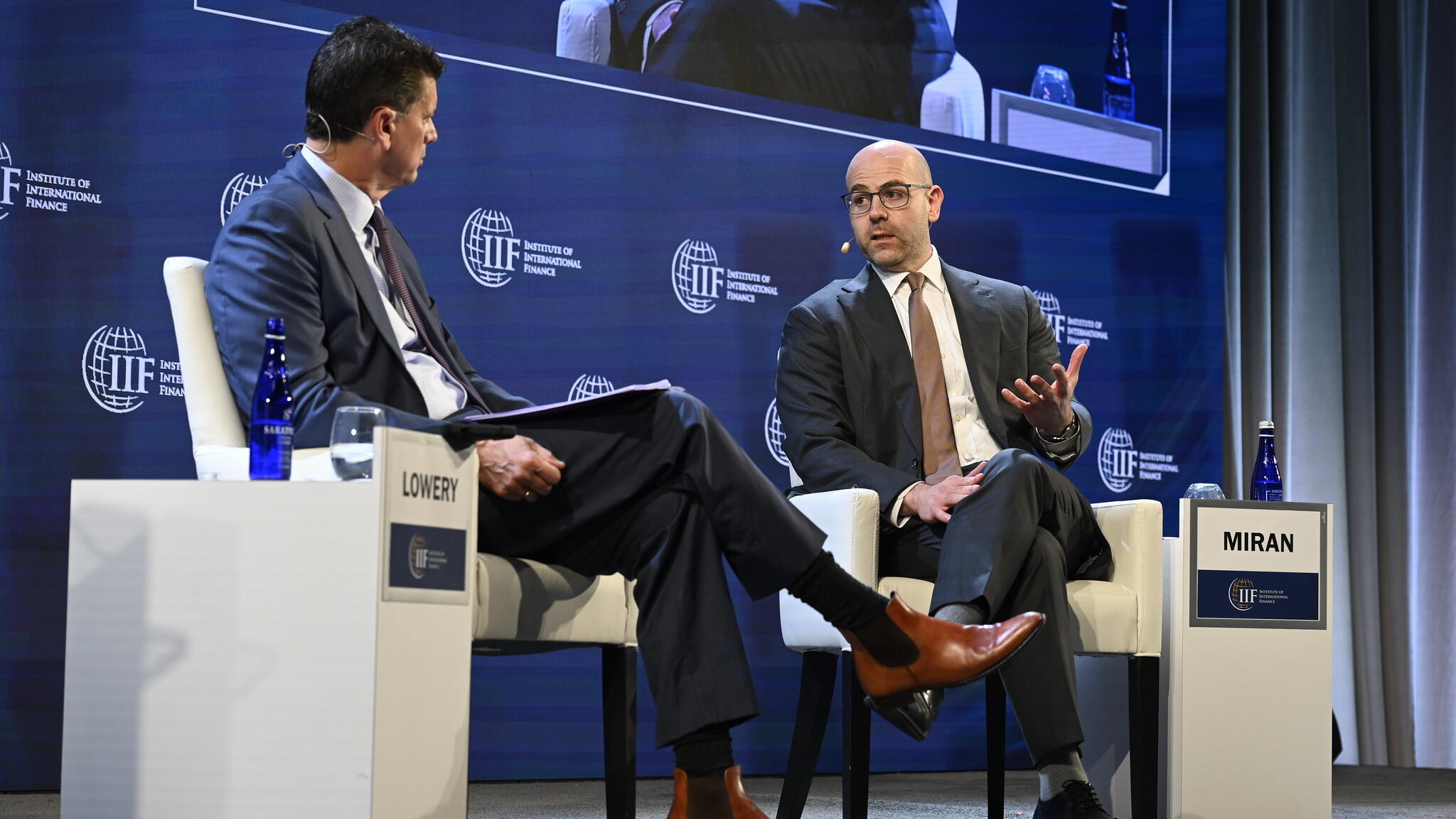
Federal Reserve Governor Stephen Miran has defended the Trump administration’s trade tariff policy, arguing the economic impact has been less severe than widely feared and that foreign firms, rather than American consumers, are bearing much of the cost.
Speaking on Monday at the Boston University Questrom School of Business, Miran said concerns that the surge in import taxes at the start of President Donald Trump’s second term would significantly damage the United States economy have not materialised.
“I think the world has been coming in my direction on a number of issues,” Miran said, referring to earlier warnings about the potential fallout from the administration’s trade actions.
He noted that, at the outset of the second Trump administration, there were widespread expectations that the escalation in tariffs would weigh heavily on growth. However, he argued that assessments have shifted over time.
Miran’s comments appeared to diverge from a substantial body of economic research indicating that U.S. consumers have absorbed much of the cost of higher tariffs through elevated prices.
A central criticism of the policy has been that tariffs function as a tax on imports that is ultimately passed on to American households.
That view contrasts with the Trump administration’s long-standing claim that foreign exporters would shoulder the burden through reduced profit margins. The administration made that argument a cornerstone of its aggressive trade measures, which targeted a wide range of countries, including key US allies.

President Trump himself acknowledged late last year that Americans were experiencing higher prices as a result of the tariff increases, while maintaining the overall economic benefits of the policy. “I think that they might be paying something,” he said at the time.
The Federal Reserve has also indicated that tariff-related pressures have contributed to inflation exceeding its 2% target this year. At the same time, many policymakers have described the impact as more muted than initially feared and characterised it as a one-off increase in the price level, rather than a source of persistent inflation.
Independent research, however, has suggested a more tangible hit to household finances. The Yale Budget Lab said in a report published late last month that the annual median cost of tariffs amounts to around $1,400 per household.
Miran contended that official data may obscure who ultimately bears the burden of the taxes. In recorded trade and pricing data, “it looks like a U.S. entity is bearing the burden, but it's actually just the U.S. subsidiary of a foreign company,” Miran said.
“It's entirely inappropriate to say, to say that we can conclude from those data…that U.S. agents are bearing the burden of the tariff, because some of those companies are actually subsidiaries of foreign companies," he said.
Before joining the Federal Reserve’s Board of Governors, Miran served as a senior economic adviser in the Trump administration. His transition to the central bank drew scrutiny, and until recently, he had been on leave from the White House while serving at the Fed.
Beyond the inflation debate, Miran argued that tariffs, alongside broader policy changes, are strengthening the long-term fiscal outlook.
"Tariff revenues are going to be significant in terms of reducing the primary deficit," he said.