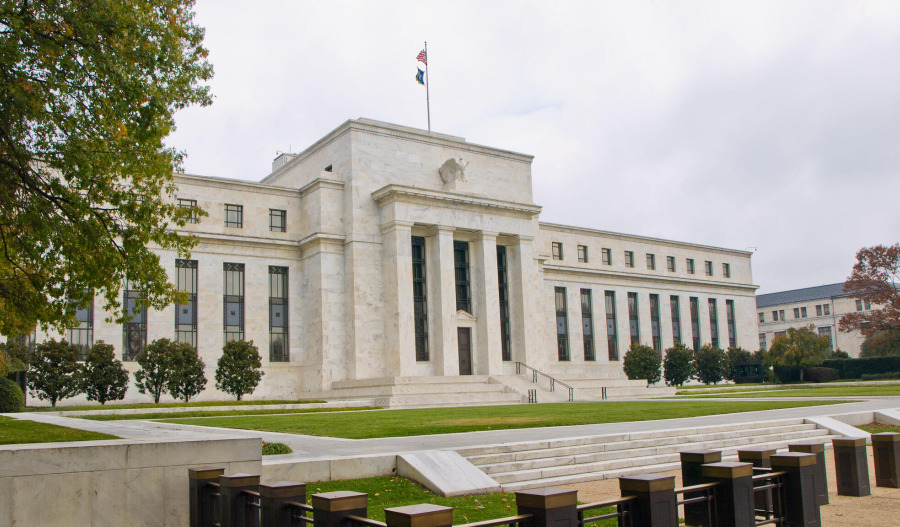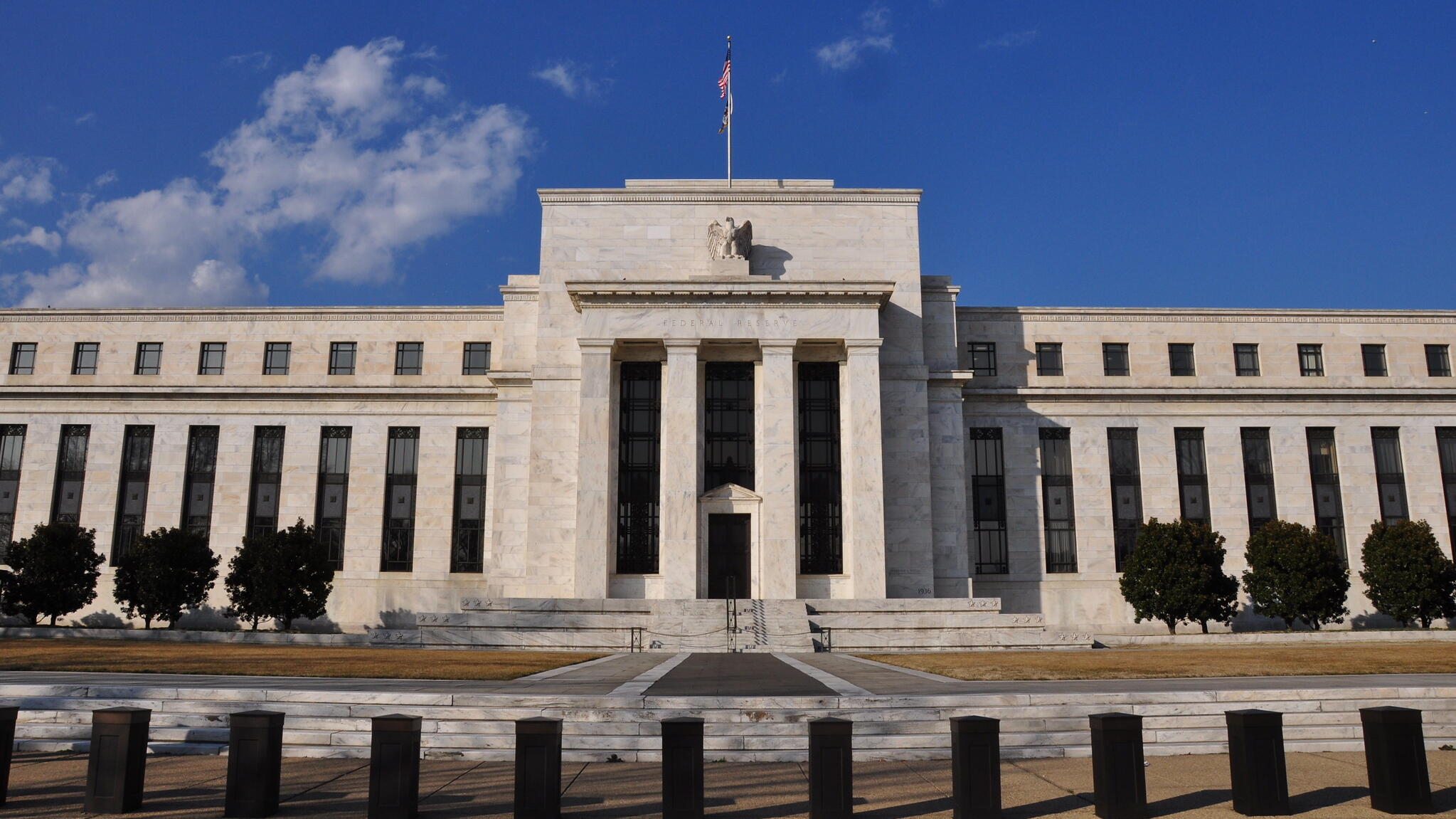
The United States Federal Reserve signalled deep divisions over the future direction of interest rates at its January policy meeting, with officials broadly agreeing to hold rates steady but split over what should come next.
Minutes from the 27–28 January meeting of the Federal Open Market Committee (FOMC) showed policymakers were united in keeping the benchmark rate unchanged, but differed sharply on whether further cuts, a prolonged pause, or even rate hikes could be warranted depending on inflation and labour market developments.
“In considering the outlook for monetary policy, several participants commented that further downward adjustments to the target range for the federal funds rate would likely be appropriate if inflation were to decline in line with their expectations,” the meeting summary said.
However, that conditional support for easing was counterbalanced by caution among others who argued the central bank should remain on hold until clearer evidence emerged that inflation was firmly returning to target.
“Some participants commented that it would likely be appropriate to hold the policy rate steady for some time as the Committee carefully assesses incoming data, and a number of these participants judged that additional policy easing may not be warranted until there was clear indication that the progress of disinflation was firmly back on track,” the minutes said.
Notably, some officials went further, raising the prospect that rate increases could still be necessary if inflation proves persistent.
According to the minutes, several policymakers wanted the post-meeting statement to reflect “a two-sided description of the Committee’s future interest rate decisions”, and acknowledging “the possibility that upward adjustments to the target range for the federal funds rate could be appropriate if inflation remains at above-target levels“.
The Fed has already reduced its benchmark borrowing rate by 0.75 percentage points across consecutive cuts in September, October and December, leaving the federal funds rate in a target range of 3.5% to 3.75%.
The January gathering marked the first meeting with a new rotation of regional Federal Reserve Bank presidents holding voting rights.
At least two, Dallas Fed President Lorie Logan and Cleveland Fed President Beth Hammack, have publicly advocated for holding rates steady indefinitely, citing inflation as an ongoing threat that should remain the central focus of policy.
The policy debate could intensify in coming months amid potential leadership changes. Former Fed Governor Kevin Warsh is widely seen as a possible successor to current Chair Jerome Powell, whose term expires in May.
Warsh has spoken in favour of lower interest rates, a view shared by current Governors Stephen Miran and Christopher Waller.

Both Waller and Miran dissented at the January meeting, preferring an additional quarter-point cut rather than holding rates steady.
On the inflation front, policymakers broadly expect price pressures to ease over the course of the year, though uncertainty remains over the speed and durability of that progress.
Participants acknowledged that tariffs were contributing to elevated prices but anticipated that their effects would diminish as the year progresses.
“Most participants, however, cautioned that progress toward the Committee’s 2 percent objective might be slower and more uneven than generally expected and judged that the risk of inflation running persistently above the Committee’s objective was meaningful,” the document said.
The Fed’s preferred inflation gauge, the personal consumption expenditures (PCE) price index, has been hovering around 3%, remaining above the central bank’s 2% target.
However, a recent consumer price index reading excluding food and energy showed underlying inflation at its lowest level in nearly five years, offering some encouragement.
The Committee also adjusted language in its post-meeting statement to reflect that risks to inflation and employment have become more balanced, a shift from previous communications that highlighted concerns about labour market weakness.
Recent employment data has presented a mixed picture. Private sector job growth appears to be slowing, with much of the modest gains concentrated in the health-care sector.
Nevertheless, the unemployment rate fell to 4.3% in January, and overall nonfarm payroll growth exceeded expectations.
The tension between easing price pressures and signs of softening job creation highlights the Fed’s dilemma - cutting too soon could reignite inflation, while holding too long could risk undermining the labour market.
Meanwhile, financial markets are currently pricing in a strong likelihood that the next rate cut will come in June, with a further reduction potentially in September or October, according to the CME Group FedWatch Tool.
However, the January minutes suggest policymakers remain far from consensus. While many see room for further easing if inflation continues to moderate, others are prepared to maintain restrictive settings — or even tighten further — should price pressures stall above target.