Wall Street rewrote its highs on a ceasefire extension that Iran's navy promptly tested with two container ship seizures, Tim Cook's successor was named at Apple, and more than US$5 billion of Western capital landed on Australian critical minerals projects.
All the top moves, shakes and cooked market takes from Azzet's editorial team, every Friday (24 April 2026).
Hold on tight.
Monday
The week opened with a reminder that the Iran war's supply shock has barely started to feed through, after analysts warned markets were still under-pricing the risk of prolonged Hormuz disruption.
Tehran spent the day dismissing Washington's overtures, with state broadcaster IRNA confirming Iran had rejected the latest U.S. peace talks proposal before shuttering the Strait again in response to the ongoing American naval blockade.
Canadian Prime Minister Mark Carney added another fissure to the Western bloc, stating publicly that Canada's ties to the U.S. had become a structural weakness - an unusually blunt framing from the head of a G7 ally.
Base metals managed to hold their ground against a firmer greenback, while Australia and Japan signed a deal to deliver joint warship construction that deepens Indo-Pacific defence-industrial ties at a moment when the region's insurance premium is rising fast.
UK-US relations soured awkwardly ahead of King Charles's royal visit, global leaders were reported as leaning on Washington to absorb most of the war's fallout, and Energy Secretary Chris Wright conceded U.S. gas prices may not drop below $3 per gallon until 2027.
Viva Energy (ASX: VEA) warned on output after a Geelong refinery fire, while National Australia Bank (ASX: NAB) booked an A$706 million hit to half-year earnings from Iran-related credit provisions.
European EV sales kept climbing across key markets, underscoring the rare earth and critical minerals demand backdrop that will still be in place long after the Hormuz headlines fade.

Tuesday
Kevin Warsh, a longtime contender for the Fed chair, used a public address to back the central bank's independence while arguing it should narrow its focus - political positioning that landed as a signal about what a post-Powell Fed might prioritise.
Amazon (NASDAQ: AMZN) confirmed it would invest up to US$25 billion in Anthropic, extending a partnership that has already made AWS the preferred cloud provider for the Claude developer and tightening the capital relationship between hyperscalers and frontier model builders.
Washington confirmed it would host Israel-Lebanon peace talks on Thursday, while Iran signalled it was considering attending fresh talks - a small thaw after Monday's blunt refusal.
USA Rare Earth (NASDAQ: USAR) unveiled a $2.8 billion magnet chain bet that would take the company from mine to magnet on U.S. soil, landing just as the Australian critical minerals pipeline crossed the five-billion mark.
Australian dwelling rents rose 2.1% as supply tightened further, Amazon also faced fresh price-fixing accusations across its e-commerce marketplace, and the Trump administration began rolling out tariff refunds following this month's Supreme Court ruling.
Lynas Rare Earths (ASX: LYC) posted A$265 million in Q3 revenue, up 115% on the prior year, with neodymium-praseodymium prices rising 25% quarter-on-quarter and CEO Amanda Lacaze flagging strong customer demand for outside-China supply.
Apple confirmed hardware engineering chief John Ternus would take over from Tim Cook as chief executive, setting up the biggest leadership change at the Cupertino giant since Cook himself replaced Steve Jobs in 2011.
The day closed with the U.S. Labor Secretary resigning amid an ongoing investigation - political noise that a week earlier would have been a lead story.
Wednesday
President Trump extended the Iran ceasefire on an open-ended basis until Tehran submits a unified proposal, after telling CNBC earlier the same day he did not wish to do so, and citing divisions within Iran's leadership plus a direct request from Pakistan's Prime Minister Shehbaz Sharif.
Markets took the extension as a risk-on cue even as the naval blockade remained fully in place, with U.S. Central Command confirming 29 vessels had been turned back since the operation began.
UnitedHealth (NYSE: UNH) cleared earnings estimates as the health insurer's cost-streamlining drive finally delivered meaningful operating leverage.
United Airlines (NASDAQ: UAL) took a harder line, cutting full-year guidance as jet fuel costs tied to the Hormuz disruption fed directly into unit economics - the first major U.S. carrier to concede the war is no longer a second-half problem.
GE Aerospace's (NYSE: GE) order book jumped on aircraft demand, though management reduced the fleet departures forecast to reflect schedule cuts already announced by airlines - a useful second-order read-through.
U.S. pending home sales ticked modestly higher in March, offering a mildly constructive data point for a market running well below historical turnover averages since mortgage rates broke above 6% in late 2022.
Capital One (NYSE: COF) missed consensus as Discover-related integration charges continued to drag on the reported result, while Trump floated the prospect of a deal between Anthropic and Dow - a corporate pairing that would have seemed implausible a year ago.
Super fund researcher Chant West used the market's recovery from the war-driven March low to underline the virtue of patience for long-duration investors, Rugby Australia returned to the black on a Lions windfall, and Cochlear (ASX: COH) plunged 40.4% after slashing FY26 guidance in one of the sharpest single-session declines on the ASX this cycle.
Thursday
U.S. equities refreshed record highs on the ceasefire extension, even as Iran's Revolutionary Guard Navy was seizing two container ships in the Strait of Hormuz and reportedly firing on a third, sending Brent crude futures 3.5% higher to US$101.91 per barrel and WTI 3.7% higher to $92.96.
The gap between equity market behaviour and physical maritime reality has become one of the defining features of this cycle, with positioning-driven flows and AI-concentrated earnings enough to absorb a tanker attack that in any previous cycle would have forced a material drawdown.
Tesla (NASDAQ: TSLA) delivered a mixed first-quarter print, with revenue climbing 16% to $22.39 billion but missing the LSEG-compiled estimate of $22.64 billion, while earnings per share of $0.41 came in ahead of the $0.37 consensus and automotive gross margins expanded to 19.2% from 12.5% a year earlier.
The quarter also marked the formal wind-down of the Model S and Model X, with those production lines being repurposed for Optimus - a genuine shift from carmaker to robotics platform, or a distraction from decelerating vehicle demand, depending on which side of the Musk debate the reader sits.
Mission Critical this week documented the US$5 billion Australia-U.S. gamble that committed capital to Tronox (NYSE: TROX), Ardea Resources (ASX: ARL), Arafura Rare Earths (ASX: ARU) and the Alcoa-Sojitz Wagerup gallium venture, all pinned to two geopolitical deadlines that may or may not hold.
Southwest Airlines (NYSE: LUV) missed Q2 forecasts on the same fuel-cost pressure that broke United a day earlier, while Texas Instruments (NASDAQ: TXN) beat estimates on strong data centre demand that has continued to defy the macro headwinds analysts have thrown at it.
U.S. mortgage rates fell for a third consecutive week as Treasury yields softened, and Lululemon (NASDAQ: LULU) confirmed Heidi O'Neill would take over as chief executive at a moment when the athleisure brand is working through a sharper competitive set than at any point in its listed history.
IBM (NYSE: IBM) beat consensus and held guidance amid the broader economic turmoil, the kind of steady cash generation that has kept the stock a defensive favourite through the war-driven volatility of the past five weeks.
Friday
President Trump closed the week with a hardening of tone, threatening Iranian mine-laying vessels should Tehran attempt to obstruct the waterway further - a ratchet upward in the military rhetoric that did not move Brent materially, testifying to how much escalation risk is already sitting in the curve.
American Express (NYSE: AXP) beat estimates and maintained outlook, reinforcing the thesis that premium card-holder spending has remained durable even through the broader consumer slowdown.
American Airlines (NASDAQ: AAL) moved the other way, cutting guidance and reporting a net loss as fuel costs collided with softer demand on price-sensitive leisure routes - the third major U.S. carrier this week to concede the war's transmission into airline profit and loss.
Warner Bros. Discovery (NASDAQ: WBD) shareholders voted in favour of the Paramount deal, clearing one of the largest media consolidations of the decade to proceed to regulatory review.
Nasdaq (NASDAQ: NDAQ) beat expectations with broad-based revenue growth across index licensing, market services and capital access platforms - the exchange operator monetising volatility with the patience of a toll road.
The week's big read
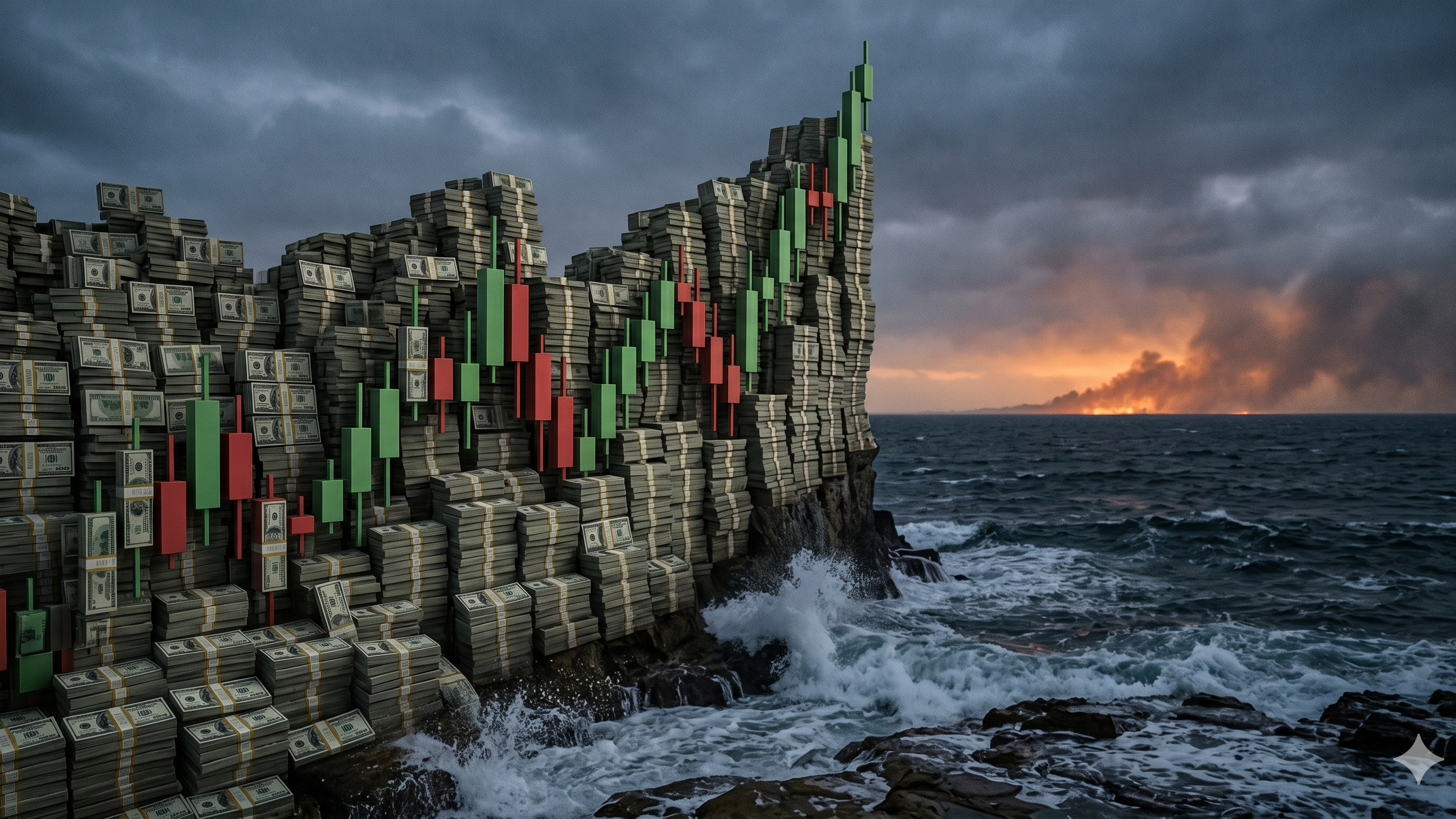
Wall Street printed a record on a ceasefire that Iran's navy spent half the week violating - and barely blinked.
That is the story of this cycle in one line: geopolitics does not register at the index level until it shows up in a P&L.
It took three airlines to finally translate Hormuz into something Wall Street would price, with United, Southwest and American all cutting guidance inside five trading sessions as jet fuel refining margins refused to normalise.
A Geelong refinery fire and an A$706 million NAB provision were the other visible transmission points, though neither moved the broader tape.
Beneath the headline noise, the structural shift is moving in silence.
Five billion U.S. dollars landed on Australia-U.S. critical minerals projects in a single week, USA Rare Earth staked $2.8 billion on a domestic mine-to-magnet chain, and Lacaze flagged customer demand running hard for outside-China supply - the quarterly readout of a decade-long decoupling that the current Trump-Xi détente has done nothing to slow.
The earnings scorecard gave the bulls enough to work with, with UnitedHealth, Texas Instruments, IBM, American Express and Nasdaq all clearing consensus on durable end markets.
Tesla's mixed print was messier, with the Model S and X wind-down confirming management is now leaning hard on Optimus, while Cochlear's 40.4% single-session collapse was the reminder that any non-tech guidance cut still gets dealt with summarily.
The second quarter question is whether Q1 earnings reflect conditions before fuel-cost transmission, airline guidance drag and consumer-exposed credit stress fully feed through to the tape.
Thursday's record close says the market is not yet worried.
Friday's Trump mine-laying threat says the risk premium still is.
Base case: Ceasefire holds, Hormuz stays partially disrupted, equity markets grind higher on Q1 earnings beats while airlines, refiners and consumer-exposed banks continue absorbing the fuel-cost and credit tail.
Bull case: A genuine Iran-U.S. deal reopens the Strait, Brent retraces towards $70, airline guidance rebuilds, and the rare earths capital commitments from this week become the cheap option on a Western supply chain rebuild that never gets tested.
Bear case: Tehran-Washington talks collapse, a mine-laying incident forces a military response, Brent pushes through $110, and the gap between the AI earnings narrative and the consumer-industrial tape finally closes the wrong way.