Iran has rejected plans for a renewed round of peace talks with the United States, according to state media, casting doubt over diplomatic efforts to resolve escalating tensions in the Middle East.
The development came hours after United States President Donald Trump said American negotiators would travel to Pakistan to resume discussions with Iranian counterparts following an inconclusive first round of talks last weekend.
Iran’s official IRNA news agency reported that Tehran would not participate in the proposed negotiations, although it did not cite a specific source for the decision.
“The reports circulating about a second round of negotiations in Islamabad are false.” IRNA wrote in a post on X.
“U.S. excessive demands, unreasonable and unrealistic expectations, frequent shifts in positions, continuous contradictions, and the so-called naval blockade which violates ceasefire understanding along with threatening rhetoric, have so far hindered progress in the negotiations.” IRNA wrote in a separate post.
The refusal to engage in further talks comes amid heightened tensions over the U.S. naval blockade of Iranian ports, which Tehran has identified as a key obstacle to negotiations.
Iran’s decision to walk away from negotiations — specifically citing its demand to end the U.S. blockade of Iranian ports — came as Trump said in a Truth Social post that the U.S. had intercepted a ship called the TOUSKA in the Gulf of Oman, warning it to stop.
When it did not, the U.S. Navy fired upon it and the vessel was seized. The U.S. has been operating a naval blockade of ships entering and exiting Iranian ports since last week.
“Under these conditions, the outlook for constructive talks remains bleak,” state news agency IRNA added in a post on X.
Earlier, Trump said that U.S. officials were en route to Pakistan for a second round of negotiations scheduled for Monday. The delegation was expected to be led by Vice President JD Vance, alongside envoys Steve Witkoff and Jared Kushner, according to U.S. officials.
The diplomatic impasse comes as uncertainty persists over the status of the Strait of Hormuz, a critical global energy chokepoint. Iran had initially announced it would reopen the waterway, which carries roughly a fifth of the world’s crude supply, before reversing the decision after the U.S. declined to lift its blockade.
“Iran decided to fire bullets yesterday in the Strait of Hormuz — A Total Violation of our Ceasefire Agreement!” Trump wrote in Sunday’s post on Truth Social. “That wasn’t nice, was it?”
Iranian officials have maintained a defiant stance, warning that military readiness remains intact despite ongoing negotiations.

“It is not the case that we think just because we are negotiating, the armed forces are not ready,” Iran’s parliament speaker and chief negotiator Mohammad Bagher Ghalibaf said in televised remarks.
“Rather, just as the people are in the streets, our armed forces are also ready.”
Ghalibaf also reiterated Tehran’s position on restricting access to the strategic waterway.
“It is impossible for others to pass through the Strait of Hormuz while we cannot,” he added.
Reports of renewed hostilities have added to market uncertainty. The United Kingdom Maritime Trade Operations said Iranian Revolutionary Guard vessels opened fire on a tanker transiting the Strait, although no injuries or damage were reported.
Shipping sources indicated that at least two additional vessels had come under fire.
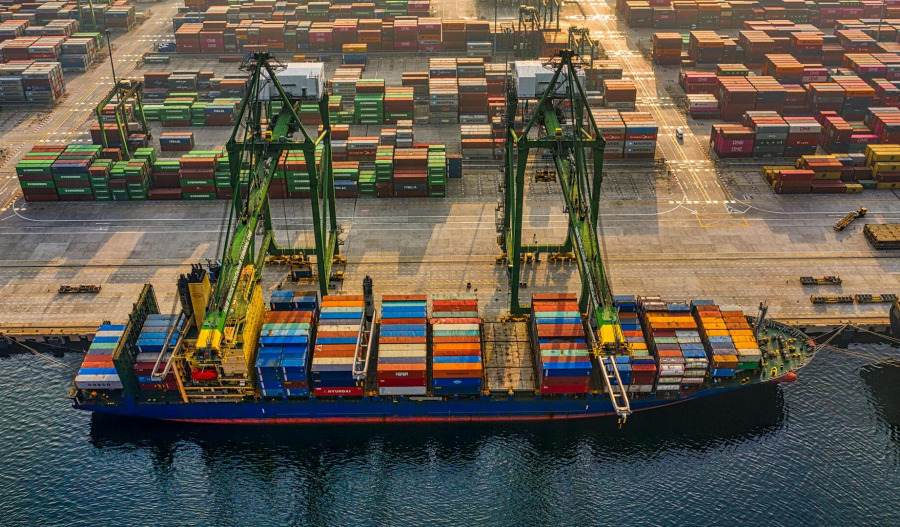
The evolving situation has left global shipping operators in limbo, with some tankers reportedly turning back after attempting to transit the waterway.
Oil markets have reacted sharply to the developments. Prices fell more than 10% on Friday on hopes of a reopening of supply routes, before surging over 5% in early Asian deals on Monday.
Beyond the immediate conflict, Iran signalled it is rebuilding its military capabilities as the current ceasefire approaches its expiration.
“Our speed in updating and refilling missile and drone launch platforms is even greater than before the war,” said Brigadier General Seyed Majid Mousavi of the Revolutionary Guard’s Aerospace Force, according to state broadcaster reports.
At the same time, tensions over Iran’s nuclear programme remain unresolved. Iranian President Masoud Pezeshkian said the United States has no authority to deny Iran its nuclear rights.
“Trump says Iran cannot make use of its nuclear rights but doesn’t say for what crime. Who is he to deprive a nation of its rights?” he said, according to Iranian media.
The latest setback follows a failed round of talks in Islamabad, where negotiators from both sides were unable to reach an agreement to end hostilities. Iranian officials indicated that future engagement would depend on Washington scaling back its demands and lifting the naval blockade.
While Iran’s foreign minister had earlier signalled a temporary reopening of the Strait of Hormuz during the ceasefire, restrictions on transit routes and uncertainty over enforcement measures remain unresolved.