The global interest rate outlook is being rapidly reshaped by a new wave of inflationary pressures, as policymakers and financial leaders warn that the economic fallout from the Iran war could mark the beginning of a more volatile and prolonged period of elevated borrowing costs.
What had been a gradual path towards lower inflation and policy normalisation has been disrupted by surging energy prices, supply chain fragmentation and rising geopolitical tensions.
Together, these forces are raising the prospect that interest rates will remain higher for longer, and may even face further upward shocks.
Central banks brace for repeated inflation shocks
Warnings from policymakers suggest inflation is no longer a one-cycle problem. In a recent address, Chicago Federal Reserve President Austan Goolsbee cautioned that economies could face successive inflationary shocks rather than a smooth return to price stability.
"The prices spiked from tariffs and they were supposed to go away, and this is now hitting before that went away," Goolsbee said at the Detroit Economic Club.
"The possibility of a stagflationary outbreak coming from high oil prices before the tariff inflation went away, leading to the main engine of growth - the U.S. consumer - just giving up and saying we don't have confidence, we're going to start hoarding our money, and sending us into a stagflationary recession - that'd be the worst outcome," Goolsbee added.
Of the national economy, Goolsbee said, "I'm cautious - slash nervous - about it in the moment."
This shift reflects a broader concern that inflation is becoming more persistent due to repeated external disruptions, particularly those linked to energy markets and geopolitics.

Bank of England highlights inflation risks
Minutes from the latest Bank of England policy meeting also illustrate how central banks are grappling with the renewed inflation shock.
“Conflict in the Middle East has caused a significant increase in global energy and other commodity prices, which will affect households’ fuel and utility prices and have indirect effects via businesses’ costs. Prior to this, there had been continued disinflation in domestic prices and wages. CPI inflation will be higher in the near term as a result of the new shock to the economy.”
The Bank made clear that while monetary policy cannot directly offset energy price spikes, it must manage the broader inflationary consequences.
“Monetary policy cannot influence global energy prices but aims to ensure that the economic adjustment to them occurs in a way that achieves the 2% target sustainably. The MPC is alert to the increased risk of domestic inflationary pressures through second-round effects in wage and price-setting, the risk of which will be greater the longer higher energy prices persist.”
Policymakers also acknowledged the trade-off between inflation control and growth.
“The MPC is also assessing the implications for inflation of the weakening in economic activity that is likely to result from higher energy costs.”
The Committee signalled it remains ready to act.
“The Committee will continue to monitor closely the situation in the Middle East and its impact on global energy supply and energy prices. It stands ready to act as necessary to ensure that CPI inflation remains on track to meet the 2% target in the medium term.”
Financial markets have already adjusted to this outlook. The Bank noted that expectations for interest rates have shifted higher.
“The market-implied path for Bank Rate had increased significantly since the February Report… Beyond the near term, the latest market-implied path for Bank Rate sloped slightly upwards over 2026.”
It added that investors are reassessing risks.
“Market intelligence gathered by Bank staff emphasised that market participants were recalibrating the balance of risks to the path for Bank Rate in light of the rise in energy prices.”
Dimon warns of “significant” rate shocks
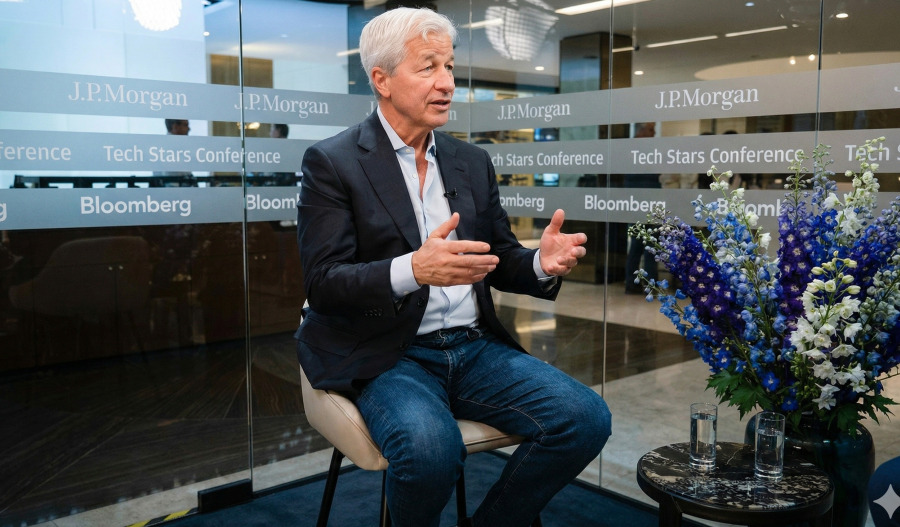
The most direct warning has come from JPMorgan Chase chief executive Jamie Dimon, who said the Iran war could trigger “significant” global interest rate shocks.
In his annual letter to shareholders, Dimon pointed to spiralling oil and gas prices following Iran’s blockade of the Strait of Hormuz and attacks on regional energy infrastructure as key drivers of inflation.
He said these developments could lead to more persistent price pressures across the global economy.
“Now, because of the war in Iran, we additionally face the potential for significant ongoing oil and commodity price shocks, along with the reshaping of global supply chains, which may lead to stickier inflation and ultimately higher interest rates than markets currently expect.
“Nations that are heavily dependent upon imported energy are already seeing the effects. And it’s not just energy, it’s commodity products that are byproducts of oil and gas, like fertiliser and helium.
“Given our complex global supply chains, countries are experiencing disruptions in shipbuilding, food and farming, among others.
“The outcome of current geopolitical events may very well be the defining factor in how the future global economic order unfolds – then again, it may not.”
Dimon also warned that geopolitical fragmentation could have deeper long-term consequences for global economic stability.
“Economic weakening of the world’s democracies or a fragmentation of their economic bonds could lead to truly adverse consequences. This is precisely what some of our adversaries and many autocratic nations want – it is their stated objective,” he said.
“They would like to see all of our allies far less dependent on the United States and therefore far more dependent on them. In this scenario, many countries would be compelled to seek deeper economic bonds with some possible bad actors – over time, they could become vassals of these countries and unable to avoid coercion from them.”
A structural shift towards higher rates
Economists increasingly argue that the current inflation environment is structurally different from previous cycles. Rather than being driven primarily by demand, inflation is now being fuelled by supply-side shocks — including energy disruptions, trade fragmentation and rising defence spending.
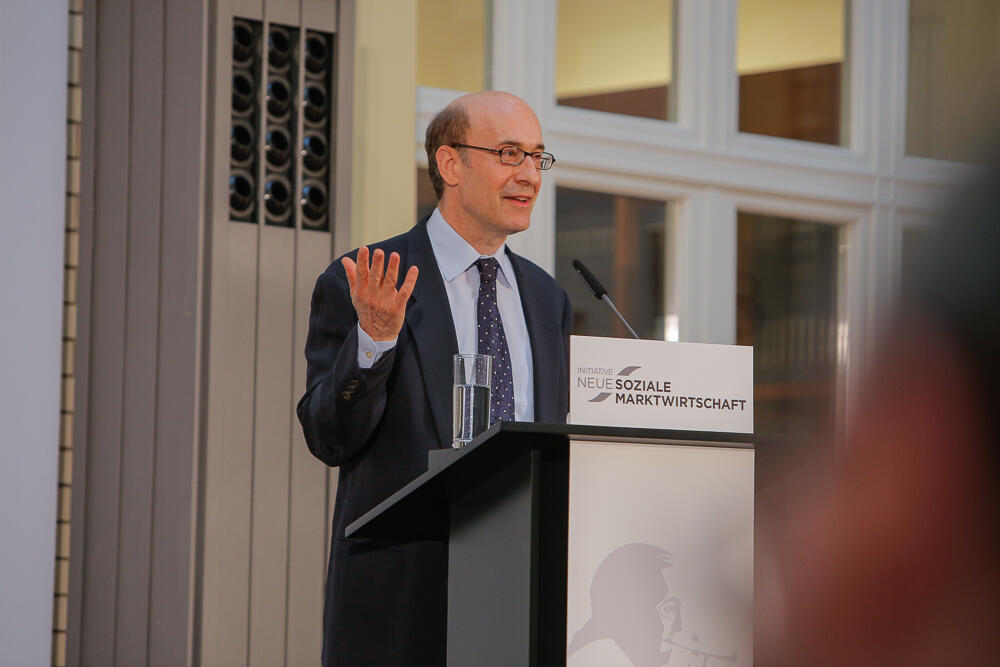
Harvard economist Kenneth Rogoff said the result could be a sustained period of elevated interest rates.
“I think the big thing is that interest rates are going to be higher,” Rogoff said. “I think they're going to stay higher and it's painful.”
He added: “There's more uncertainty because everybody sees that a lot of money has to go into military spending. That's certainly going to be a lasting effect of this.”
Rogoff also highlighted the broader shift in global trade dynamics.
“We end up in a world where we're more split up and interest rates are going to be higher.”
Rising bond yields and mortgage rates in recent weeks reflect this shift, as markets price in a more persistent inflation outlook driven by higher oil prices and geopolitical uncertainty.
Australia faces renewed rate pressure
Australia is not immune to these global forces. Economists say rising energy prices and supply disruptions are feeding directly into the domestic inflation outlook, complicating the Reserve Bank of Australia’s policy path.
At a recent Commonwealth Bank event, economist Harry Ottley said the global backdrop is becoming increasingly volatile.
“Obviously, the environment is very fluid at the moment with what is going on around the world,” he said.
“We think the RBA will have to increase interest rates this year again. Inflation in Australia is a little bit too high and we’ve got an economy that’s actually performing quite well.”
Australia’s economy has remained resilient, supported by strong consumer spending and rising incomes. However, that strength has collided with supply constraints, including weak productivity and a tight labour market.
“The improvement in the economy is hitting up against these capacity constraints and unfortunately that does mean high interest rates,” Ottley said.
Energy shock complicates the outlook
Commonwealth Bank economists warn that the latest energy shock has materially shifted Australia’s economic outlook, with higher inflation, slower growth and elevated interest rates now expected.
Belinda Allen, Head of Australian Economics at Commonwealth Bank, said the situation presents a complex policy challenge.
“Prior to the conflict, the Australian economy was operating above its supply capacity and inflation was proving stubborn. The latest energy shock adds a new layer of complexity, lifting inflation further while also weighing on growth,” she said.
“The RBA is likely to prioritise inflation control in the near term, particularly given the risk that higher energy prices feed into inflation expectations.”
Under current projections, inflation could rise sharply in the near term before easing in 2027, with interest rates expected to remain elevated until price pressures are brought under control.
Housing markets begin to adjust
Higher interest rates are already impacting Australia’s housing market, with signs of moderation emerging in major cities.
Cotality’s Tim Lawless said affordability constraints are beginning to weigh on prices.
“Clearly the market’s starting to slow down a little bit, a few cracks emerging on the back of affordability and serviceability challenges,” he said.
At the same time, supply constraints continue to support underlying demand, suggesting the housing market is entering a more balanced phase rather than a sharp downturn.
Global growth outlook weakens
The Organisation for Economic Co-operation and Development (OECD) has warned that the energy shock could push inflation across G20 economies to around 4% in 2026, while also weighing on global growth.
According to the OECD Economic Outlook, Interim Report March 2026, rising fuel prices and supply disruptions are testing the resilience of the global economy and prompting downward revisions to growth forecasts.
Economists say the combination of higher inflation and slower growth presents a difficult environment for policymakers, with limited tools to address supply-driven price pressures.
Debate grows over effectiveness of rate hikes
The renewed inflation shock has also reignited debate over whether interest rates are the appropriate tool to address supply-side inflation.
In an opinion piece written by The Guardian's Josh Ryan-Collins, he argues that raising borrowing costs may do little to address energy-driven inflation and could instead dampen investment and growth.
Critics suggest alternative measures, such as targeted fiscal support or price controls, may be more effective in addressing specific supply shocks.
However, most central banks remain focused on preventing inflation expectations from becoming entrenched, even at the cost of slower economic growth.
A more volatile path ahead
The trajectory of global interest rates now depends heavily on the evolution of geopolitical events and energy markets. A rapid de-escalation in the Middle East could ease inflation pressures, while a prolonged or escalating conflict could trigger further price shocks.
For now, the balance of risks points towards a higher-for-longer interest rate environment.
As economies adjust to this new reality, households and businesses are likely to face sustained pressure from elevated borrowing costs, while policymakers grapple with one of the most complex inflation environments in decades.
The era of ultra-low interest rates appears firmly behind, replaced by a more uncertain and structurally inflationary global landscape.