
Two of three United States benchmark averages closed at record highs on Wednesday (Thursday AEST), supported by an extension of the ceasefire between the United States and Iran and a strong start to the corporate earnings season.
The Dow Jones Industrial Average rose 340.7 points, or 0.7%, to 49,490.0, the S&P 500 advanced 73.9 points, or 1.1%, to finish at a fresh record high of 7,137.9, while the Nasdaq Composite climbed 397.6 points, or 1.6%, also notching a record high at 24,657.6.
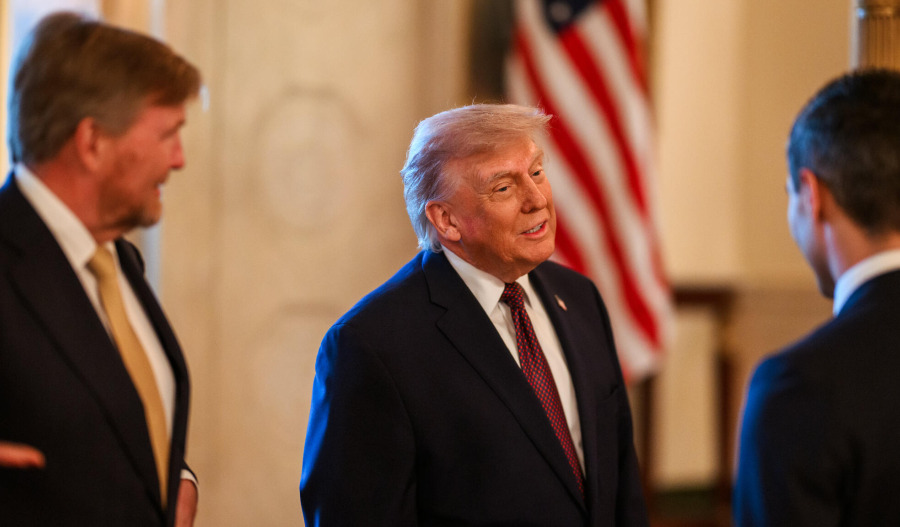
Market sentiment was buoyed after President Donald Trump extended a two-week ceasefire with Iran shortly after Tuesday’s market close, citing instability within Tehran’s leadership.
“Based on the fact that the Government of Iran is seriously fractured, not unexpectedly so and, upon the request of Field Marshal Asim Munir, and Prime Minister Shehbaz Sharif, of Pakistan, we have been asked to hold our Attack on the Country of Iran until such time as their leaders and representatives can come up with a unified proposal,” the president said in a Truth Social post.
“I have therefore directed our Military to continue the Blockade and, in all other respects, remain ready and able, and will therefore extend the Ceasefire until such time as their proposal is submitted, and discussions are concluded, one way or the other,” he added.
Despite the extension, uncertainty around the timeline for diplomatic progress persists.
Reports indicated that a lack of commitment from Tehran led to a pause in Vice President JD Vance’s planned trip to join peace negotiations.
Iranian state media also suggested that officials viewed talks with the United States as a “waste of time”.
Tensions in the region remained elevated, with Iran’s navy reportedly seizing two container ships in the Strait of Hormuz, a critical global energy route that remains effectively closed.
Oil prices responded to the disruption, with Brent crude futures settling 3.5% higher at US$101.91 per barrel.

ANZ analysts cautioned that market optimism may be premature, noting: "An indefinite extension to the Middle East ceasefire is positive and indicates that a re-escalation of the conflict appears less likely. But there has been little to suggest the U.S. and Iran are moving closer to an enduring resolution in the near term, and the Strait of Hormuz remains closed.
"Under such conditions, markets continue to appear overly sanguine, though trading volumes have fallen. With both Iran and the U.S. blocking the strait, it appears to be a case of brinksmanship.
"However, for every day that the strait remains closed, the risks of energy shortages and inflation intensify. In that regard, the relative calm in markets can’t last indefinitely."
Corporate earnings also provided a strong tailwind for equities, with 88% of S&P 500 companies reporting results so far exceeding earnings expectations, according to FactSet Earnings Insight.
GE Vernova surged 13.8% to lead gains on the S&P 500 after the power equipment maker raised its full-year revenue forecast.
Boeing shares rose 5.5%, providing the largest boost to the Dow Jones index, after reporting a smaller-than-expected quarterly loss.
Boston Scientific also advanced 9.0% following better-than-expected first-quarter results, while Tesla added 4.6% in after-hours trading after reporting a surprise positive free cash flow for the first quarter.
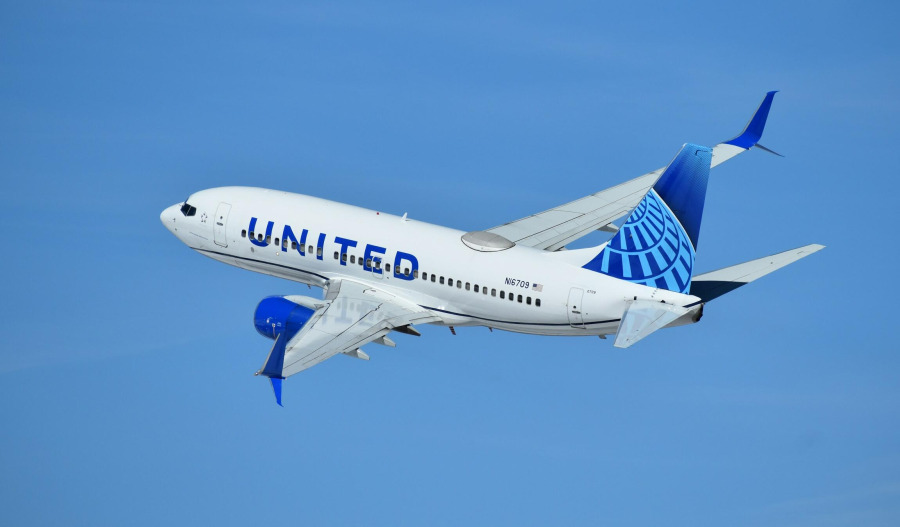
In contrast, United Airlines fell 5.6% after forecasting second-quarter and full-year profits below market expectations, citing higher jet fuel costs as a key pressure on margins.
Elsewhere, shares of Spirit Airlines, which trades over the counter, popped 150% to $1.50 following a Wall Street Journal report indicating that the Trump administration was nearing a deal to support the struggling low-cost carrier.
On the bond markets, U.S. Treasury yields moved higher, with the 10-year yield rising 0.1% to 4.305% and the 2-year yield climbing 0.5% to 3.804%.