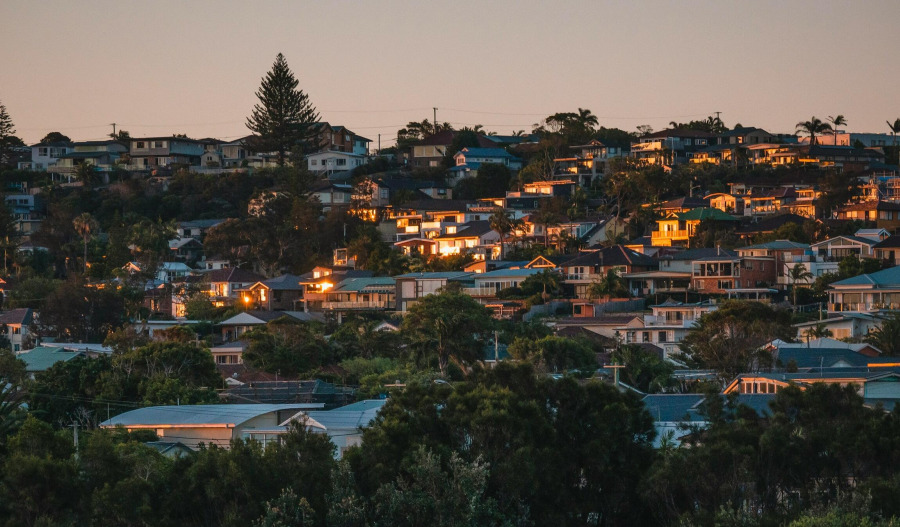
Regional dwellings have surpassed capital cities, with dwelling values growing 3.2% in the three months to January compared to a 2.1% rise across the combined capitals.
The results mark a shift in market momentum as affordability, renewed internal migration and competitive conditions direct more buyers towards regional areas.
According to Cotality, regional value growth has gathered pace since the previous quarter, while capital city markets have slowed from 3.3%
Almost three in five of the country’s largest regional Significant Urban Areas (SUAs) recorded a faster pace of growth than the October reading, underscoring the breadth of the upswing.
Cotality head of research for Australia, Gerard Burg, said the results indicate a deepening divergence between city and regional markets.
He also said that affordability remains a key driver of buyer behaviour.
“With capital city prices still near record highs and stock levels tight, many households are once again looking to regional Australia for greater value and liveability,” Burg said.
“We’re seeing momentum build across a wide range of regional markets, from inland hubs to coastal centres and mining adjacent regions.”
“This reflects a renewed movement of people and capital into areas where buyers’ budgets stretch further, and competition for available homes is strong.”
Western Australia led with the strongest uplift of any state as values rose 6.1% over the three months to January, up from 4.9% previously.
Albany (7.7%), Kalgoorlie‑Boulder (7.6%) and Busselton (7.0%) were standout performers, with Bunbury and Geraldton also exceeding the average rate of growth
Wagga was the strongest individual performer in the country, with an 8.1% rise in values over the quarter.

Queensland and South Australia also recorded stronger conditions in October.
New South Wales and Victoria have more subdued growth of 2.5% and 2.3% respectively, and showed little change from the previous quarter and were the only states with localised declines.
“Selling conditions in the two NSW markets were relatively weak, with time on market close to 70 days,” Burg said.
“This suggests that the local supply-demand balance was looser than in most other regional localities.”
Selling conditions remained most competitive in WA and Queensland, with median time on market at 20 and 24 days respectively and vendor discounting averaging 3.3% in both states.
Regional rents rose 1.6%, which is higher than that of rents in capital cities, which grew 1.4%.
However, regional rents have surged 41.9% over the past five years, far outpacing wage growth of 17.5% and reinforcing mountain affordability pressures.
“As with their city counterparts, rental affordability has deteriorated for residents in the regions,” Burg said.
“Cost pressures and labour shortages have held back supply across the country, and the stock of regional homes hasn’t expanded fast enough to absorb the added demand from internal migration away from the capitals.”
Only four of the 50 regional markets recorded a fall in rents in the quarter, led by Harvey, which dropped by 0.5%.
The fastest increases were seen in Tasmania, with Devonport (5.0%), Launceston (4.3%) and Burnie‑Somerset (3.2%) all posting strong gains.
Albany (16.9%) and Devonport (11.8%) led annual rental growth.