United States President Donald Trump has said the U.S. will impose even higher tariffs on countries that seek to exit trade deals they set out before the Supreme Court struck down many of Trump’s tariff policies.
The Supreme Court ruled on Friday (Saturday AEDT) that the tariffs Trump added under the International Emergency Economic Powers Act were unlawful, as only Congress holds the power to tax. The European Union paused the ratification of its trade agreement with the U.S. today, and India’s trade negotiators have deferred this week's planned talks.
“Any Country that wants to “play games” with the ridiculous supreme court decision, especially those that have “Ripped Off” the U.S.A. for years, and even decades, will be met with a much higher Tariff, and worse, than that which they just recently agreed to,” Trump wrote on Truth Social.
Trump did not mention how he would seek to impose these tariffs.
After the Supreme Court’s decision eliminated Trump’s previous blanket tariffs, the administration added a new slate of 15% tariffs on all countries under section 122 of the U.S. Trade Act.

These tariffs would legally expire after 150 days if not reauthorised by Congress, and Senate Democrats have committed to blocking attempts to extend them.
The U.S.-EU trade deal struck last year would also cap tariffs on EU goods at 15%, but includes zero-tariff exemptions on products like aircraft parts. It is unclear if the section 122 tariffs would override these exemptions.
The European Parliament today postponed its vote to end import duties on U.S. industrial products, one of its commitments under the deal. The European Commission has said it cannot progress with ratification until the U.S. clarifies its tariff policies.
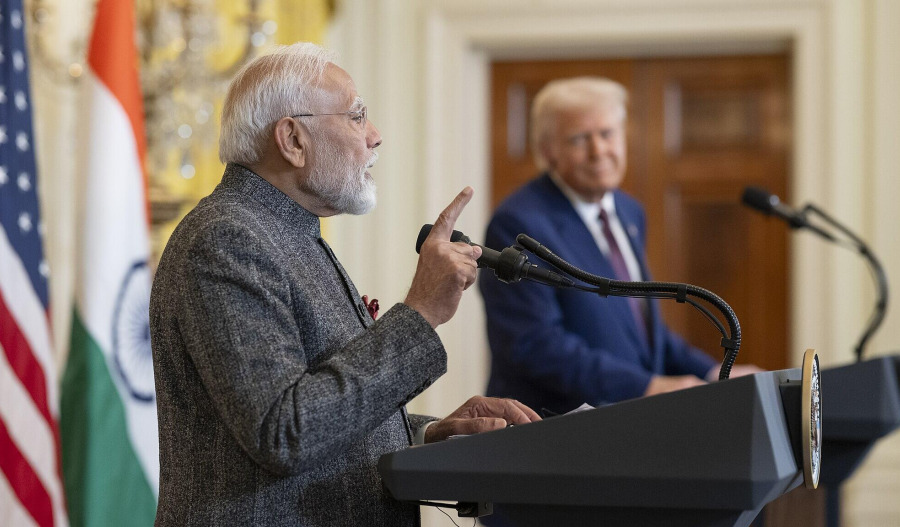
Meanwhile, India has indefinitely postponed its trade negotiators’ visit to the U.S. that was planned for this week. India’s delegation had sought to finalise an interim deal that the two countries announced earlier in February.
The agreement with India would have cut tariffs on Indian imports to 18%, a higher rate than the section 122 tariffs that are now in effect.