While United States President Donald Trump continues to peddle the line that ‘affordability’ is a con job conjured up by the Democrats, recent polls make it abundantly clear that, despite his economic growth claims, the gap between what Americans earn and their cost of living is widening.
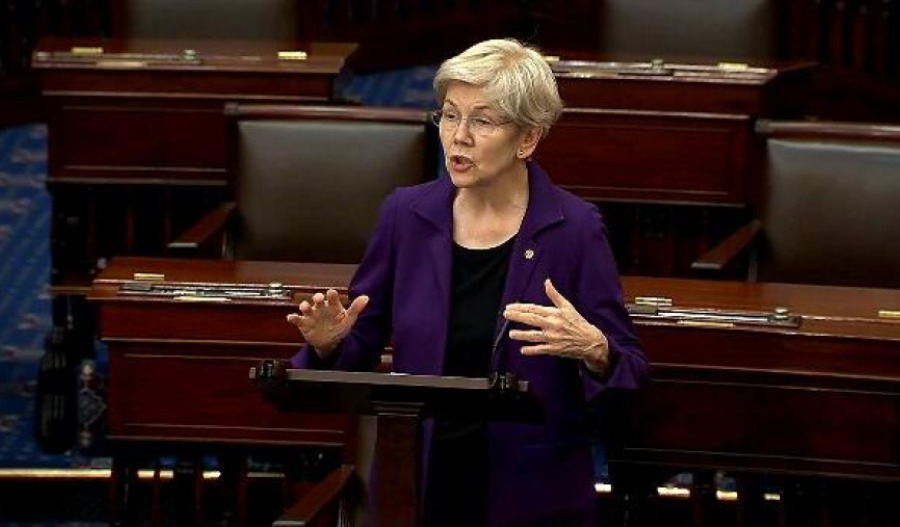
While touting the narrative that the nation is back: Bigger, richer and stronger than ever before, Trump’s one-hour and 48-minute State of the Union address on Wednesday conveniently avoided a material reference to the squeeze on middle America’s household budgets.
While Trump’s messages were clearly meant for this political base, which has slumped to 36%–37% after peaking at around 50% after his 2025 inauguration, it did little to win over independents that Republicans are going to need in the upcoming 3 November midterm elections.
Turnaround for the ages
Trump spoke of what was described as a “turnaround for the ages” with inflation under control, jobs being created in a reindustrialising economy stoked by low taxes and trillions in foreign investment.
Trouble is, while Trump’s State of the Union address resembled a victory lap to celebrate his self-acclaimed economic turnaround, it seems to have passed middle America by.
While unemployment stood at around 4.3% in January, and inflation slowed to an annual rate of 2.4% - down from 2.7% in December - Americans have not seen their personal finances improve significantly, and the elevated prices of groceries, healthcare and housing remain a sore point.
What’s more troubling for the Republicans, especially given the need to shore up legislative support to push through Trump’s political agenda, is their rapidly declining popularity.
According to a Pew Center poll of 8,512 U.S. adults conducted from 20 to 26 January, by more than two to one, Americans believe his administration’s actions have been worse than expected (50%), while only 21% perceive them to be better.
Given that only around a quarter of Americans (27%) claim to support all or most of Trump’s policies and plans - down from 35% when he returned to office in 2025 - the Republicans are expected to struggle in the midterms when middle-American votes with its wallet.

Republicans turn
What’s causing Trump a lot of angst are worrying revelations within recent polling that suggest a "softening" of Republican loyalty due to concerns over ethics, his mental fitness, and economic performance.
While a vast majority of Republicans (84%–86%) still support Trump, "strong" approval has dipped, while dissatisfaction with his handling of the federal government shutdown, healthcare cuts, and the release of Jeffrey Epstein files is on the rise.
The Cook Political Report, which tracks Trump’s base of white, non-college voters, found that his 13-point net approval in early 2025 had slumped to a 3.5-point lead as of 23 February.
Equally damning, an AP-NORC poll conducted from Feb 5 to 8 among 1,156 adults found that only 39% approve of his handling of the economy.
The trouble for Trump is that while his talking points on crime and immigration may galvanise his support base, it’s done nothing to shore up either independent voters or Democrats.
Meantime, immigration is no longer a safe bet for Trump, with polls showing a fall in support following aggressive deportations and two deaths at the hands of ICE agents.
Independents and swing voters on the rise
Independents and swing voters are understood to have witnessed the most dramatic withdrawal of support for Trump, with approval plummeting from 43% in early 2025 to 25%–26% by early 2026.
To put the significance of this growing cohort in context, recent Gallup data suggests that a whopping 45% of Americans now identify as independents, with especially strong growth among under-30s.
The rest of the voters are equally split among the two major parties, at around 27% a piece.
Unsurprisingly, since economic realignment was once a core Trump strength, his approval on the economy has flipped to a majority disapproval (56%).
The coalition of young and Hispanic voters who helped Trump win in 2024 is also unravelling, with approval among adults aged 18–34 dropping 16 points (to 25%), while Hispanic favourability fell from 44% to 25% over the same period.
Why are the midterm elections so important?
For those of you playing along at home, it is important to remember that Republicans only hold a wafer-thin four-seat majority in the House of Representatives.
If Trump’s approval ratings do not improve, Republicans risk relinquishing control in the midterm elections, now less than nine months away.
The net effect of Republicans losing control of either or both chambers of Congress in the 2026 midterm elections would be a significant shift in U.S. governance, effectively ending the legislative phase of Donald Trump’s second presidency.
In other words, losing either the House or Senate would stall major Republican-sponsored legislation, such as further tax cuts or social spending reductions.
A Democratic-led House could also block funding for certain executive initiatives.
Then there’s the likelihood that a Democratic majority in the House would likely launch a "stream of oversight hearings - using subpoena power to investigate the Trump administration - which could lead to a third impeachment or proceedings against Cabinet members.