A coalition comprising over 20 U.S. states is seeking court action to block President Donald Trump’s latest global tariffs, arguing that the White House is attempting to side-step a recent Supreme Court ruling that invalidates most of the administration’s earlier import duties.
The lawsuit, filed last Thursday in the U.S. Court of International Trade by 22 states and two Democratic governors, seeks to halt a 10% global tariff imposed under Section 122 of the Trade Act of 1974 and to secure refunds for duties already collected.
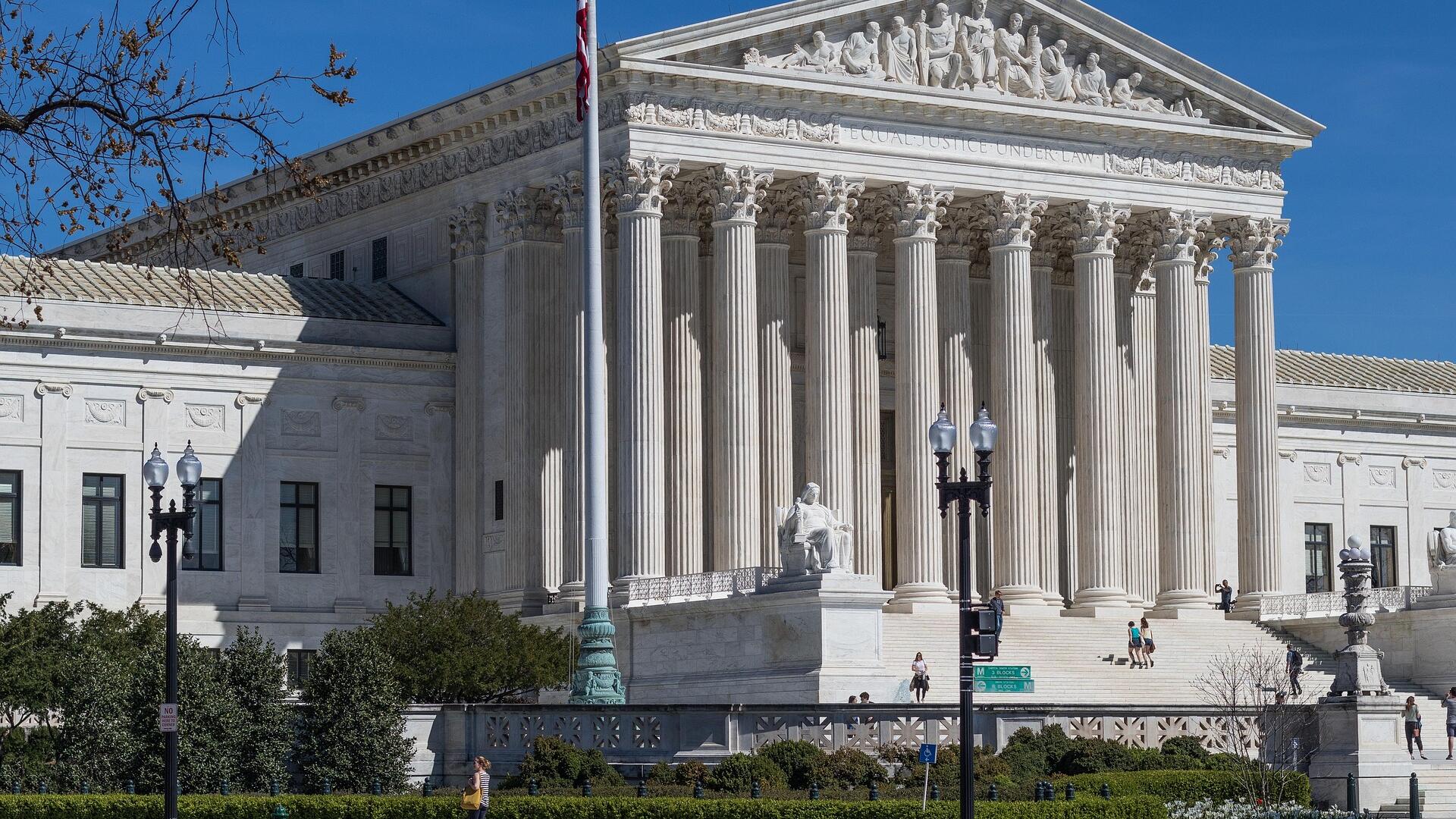
The legal challenge comes less than two weeks after the U.S. Supreme Court struck down a sweeping set of tariffs Trump imposed last year under the International Emergency Economic Powers Act (IEEPA).
Underpinning the dispute are doubts over whether the president can rely on Section 122 - an emergency trade provision never previously been used to impose tariffs - to revive a key element of his trade policy after the court tossed out the earlier framework.
The statute allows the president to levy tariffs of up to 15% for up to 150 days to address what the law describes as “fundamental international payments problems”.
The Trump administration imposed the new 10% global tariff four days after the Supreme Court’s 20 February ruling.
Treasury Secretary Scott Bessent told CNBC late last week that the White House wants to increase the rate to the law’s 15% limit.
New York Attorney General Letitia James, whose office is leading the case together with counterparts in California, Oregon and Arizona, claims the move is an attempt to evade the court’s decision.
“After the Supreme Court rejected his first attempt to impose sweeping tariffs, the president is causing more economic chaos and expecting Americans to foot the bill,” James said in a statement.
Rather than address trade deficits, the lawsuit argues that Section 122 was designed for narrow monetary emergencies linked to international payment imbalances that existed when the U.S. dollar was tied to gold.
Given that the U.S. abandoned the gold standard in the 1970s, critics of the policy believe the provision is now obsolete.
Meanwhile, state officials also accuse the tariffs of violating the U.S. Constitution’s separation-of-powers doctrine by allowing the executive branch to impose broad import taxes, a power traditionally reserved for Congress.
The complaint also asserts that tariffs fail to meet statutory requirements for consistent application across countries because certain goods - including those compliant with the U.S.–Mexico–Canada Agreement - are exempt.
Arizona Attorney General Kris Mayes cited research from the Federal Reserve Bank of New York estimating tariffs imposed during Trump’s earlier trade measures cost U.S. households roughly US$1,200 a year.
“That is money out of the pockets of American families trying to buy groceries, pay rent and keep their small businesses afloat,” Mayes said.
However, the White House remains adamant that these tariffs fall within the president’s authority.
Spokesman Kush Desai told the media that Trump was acting under powers granted by Congress to address “large and serious balance-of-payments deficits” and that the administration would “vigorously defend the president’s action in court”.
The legal challenge follows another court order issued last Wednesday which directs U.S. Customs and Border Protection to start processing refunds to companies that paid tariffs imposed under the now-invalidated IEEPA framework, potentially returning billions of dollars to importers.