Amazon’s autonomous vehicle subsidiary Zoox will begin testing self-driving vehicles in Dallas and Phoenix, expanding the company’s robotaxi development programme as competition intensifies in the emerging United States autonomous ride-hailing market.
The company told the market on Monday it plans to deploy a small number of retrofitted Toyota Highlander sport utility vehicles equipped with its autonomous driving system, with a human safety driver behind the wheel.
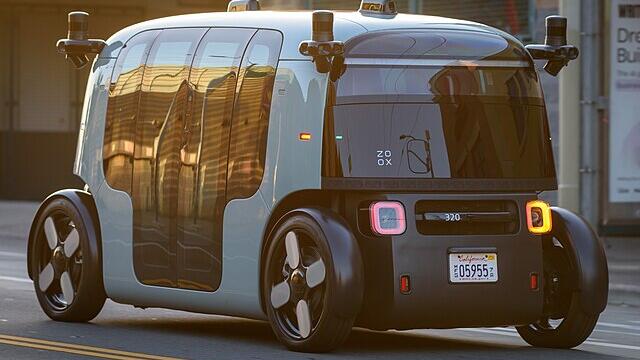
The vehicles will map local roads before Zoox introduces its purpose-built driverless robotaxis; a bidirectional electric vehicle designed without a steering wheel or pedals.
The expansion will bring Zoox’s testing footprint to 10 U.S. markets and marks the latest step by Amazon in scaling its autonomous mobility ambitions after acquiring the startup for US$1.3 billion (A$1.852 billion) in 2020.
Zoox plans to accelerate development of its artificial intelligence and vehicle systems under a broader range of environmental conditions.
Dallas and Phoenix present “diverse weather and complex road networks” compared with the dense urban environments where the company has conducted much of its testing, Zoox said in a company blog post.
Phoenix will allow engineers to evaluate sensor and battery performance in extreme desert heat, dust and high-speed roads, while Dallas offers varied weather patterns and expansive suburban road layouts.
Zoox also plans to open depots in both cities and establish a “fusion centre” in Scottsdale, Arizona, which will provide teleguidance, mission control and rider support for its fleet.
The company already operates command centres in Las Vegas and the San Francisco Bay Area.
The company's vehicles have logged more than one million autonomous miles and carried more than 300,000 riders to date.
Zoox launched limited public rides in Las Vegas in 2023 and began offering free rides in parts of San Francisco in late 2024.
The move comes as competition accelerates among companies seeking to commercialise autonomous ride-hailing services.
Alphabet subsidiary Waymo has established a lead in the U.S. market with commercial robotaxi operations in several cities, including Phoenix and San Francisco.
Electric vehicle manufacturer Tesla has also been testing limited robotaxi services in Austin, Texas, while Chinese developers such as Baidu’s Apollo Go, Pony.ai and WeRide continue to expand autonomous taxi fleets in China.
Zoox’s strategy differs from some competitors by developing a purpose-built robotaxi rather than adapting existing vehicles.
Its shuttle-style vehicle features carriage-style seating for passengers and is designed to operate without traditional driving controls.
Amazon has also begun expanding production capacity to support that design.
Zoox opened a 220,000-square-foot manufacturing facility in the San Francisco Bay Area, intended to eventually produce up to 10,000 robotaxis annually once fully operational.
The company’s expansion coincides with increasing scrutiny of autonomous vehicle safety and regulation in the U.S.
The U.S. Department of Transportation’s National Highway Traffic Safety Administration is hosting a national forum on autonomous vehicle safety this week, with executives from Zoox, Waymo and self-driving technology company Aurora Innovation expected to attend.
Autonomous vehicles remain under active regulatory review as companies test the technology on public roads.
Safety incidents involving driverless systems in recent years - including collisions and vehicles interfering with emergency responses - have prompted calls for clearer federal oversight and standards governing deployment.