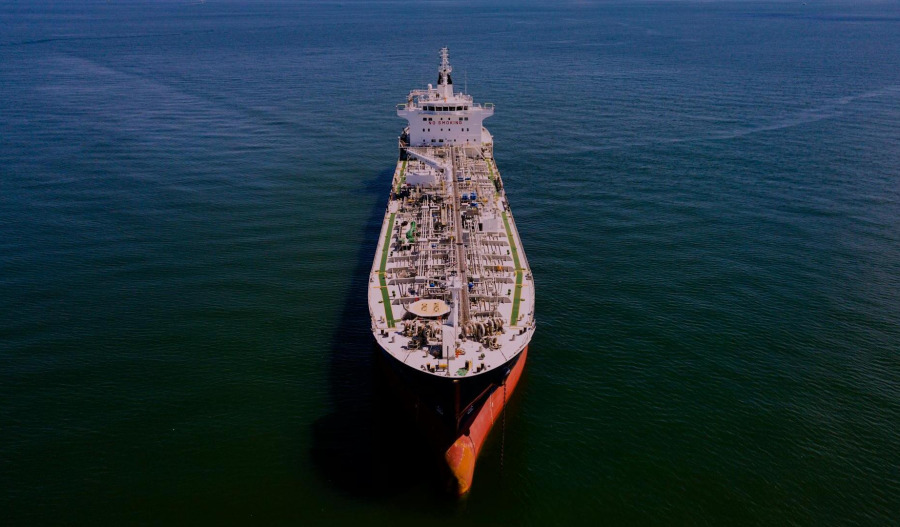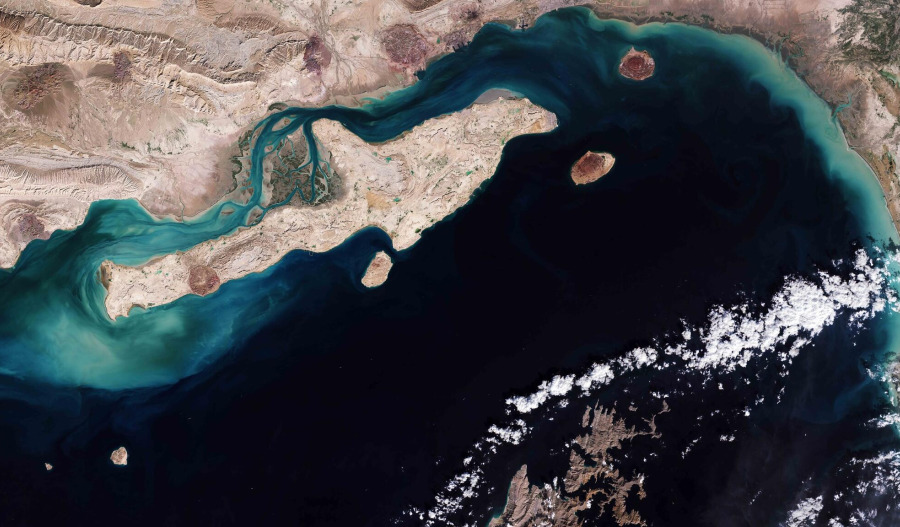
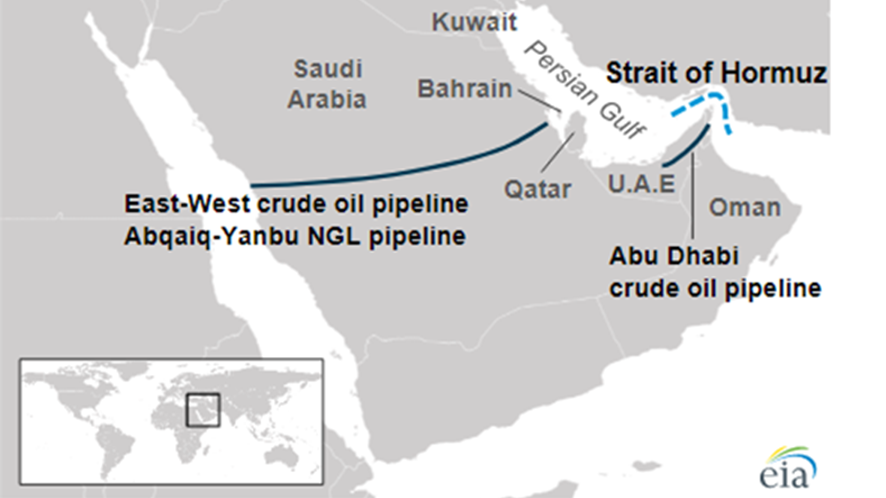
With shipments of around 20 million barrels a day of crude and refined oil products through the narrow Strait of Hormuz waterway – which accounts for a fifth of the global consumption - at a choke point, two lesser-known pipelines in the region could end up derailing Iran’s plans to disrupt the global economy.
There’s nothing like a good old-fashioned war to remind us that, despite the lurch towards renewables in recent years, the global economy still remains far too reliant on oil.
Admittedly, there’s no immediate sign that the U.S.-Israel war with Iran will create the kind of economic pain experienced back in the early 70s.
Due to the rapid expansion of renewables, oil now only meets around 34% of global energy demand compared with around half 50 years ago.
Iran’s 70’s playbook
Nevertheless, by cutting supply through the Strait of Hormuz, Iran expects the strain on economies around the world to limit U.S. President Donald Trump’s appetite for a protracted war.
However, what could undermine Iran’s deployment of its 1970s playbook to inflict pain on the global economy is the potential for Saudi and United Arab Emirates (UAE) pipelines to ramp up supply to provide a potentially softer landing to runaway oil prices.
The loss of supply since the first strikes by the U.S. on Iran saw oil prices rise 20% - well above US$100/barrel – only seconds after the energy market opened on Sunday night.
The first of these pipelines is the East-West pipeline, a 1,200-kilometre (746-mile) conduit across the Arabian Peninsula from the Persian Gulf to the Red Sea, which the Saudis built 45 years ago.


Quick-fix will help
While the Saudi pipeline won’t come anywhere near offsetting the 20 million barrel Strait of Hormuz shortfall, Bloomberg commentator Javier Blas suspects it can provide a quick fix for as much as 5 million daily barrels.
Then there’s the other pipeline, owned by the UAE, which offers a separate bypass option to the Gulf of Oman for 1.5 million barrels.
In an emergency, Blas suspects the UAE can probably push it close to 2 million barrels.
“So together these pipelines can slow, though not stop, runaway petroleum prices if both countries can get enough tankers into the loading ports where the oil ends up,” said Blas.
It’s understood that there are currently around 25 supertankers - each capable of loading about 2 million barrels - headed toward the new pickup points.
However, what’s unclear is how these ports will cope with this unprecedented flotilla all at once.
Trump changes narrative
Meantime, while the White House appears fully invested in scuppering the war before the petroleum pressure becomes unbearable, pipeline bypasses may end up buying Trump the extra time he may need.
“We figured oil prices would go up, which they will,” Trump told reporters on Saturday night.“
“They will also come down. They’ll come down very fast. And we will have gotten rid of a major, major cancer on the face of the Earth.”
However, while Trump initially described the 10-day-old conflict – dubbed Operation Epic Fury as a "short-term excursion" – rhetoric by Iran suggests that it’s all-in for a longer war if necessary.
The prospect of a longer war means Trump could be even more reliant on the Saudi-UAE bypass pipelines making a difference.
However, Blas reminds the market that pipelines are only temporary cushions, with Trump still needing to either end the war in days rather than weeks or, at the very least, get some supertankers in and out of the Strait of Hormuz in that timeframe.
“Finally, he needs the region’s oil production, refining and loading facilities to emerge from the war relatively unscathed, allowing for a rapid resumption of exports,” said Blas.
“All are enormous wagers, now we know the inadequacy of the walk-in-the-park assumptions that Washington made ahead of the war.”
Diversion beyond Hormuz
Meanwhile, last Sunday saw state-owned Saudi Aramco simultaneously loading three huge crude carriers at its Yanbu and Al Muajjiz terminals on the Red Sea.
Adnoc, Abu Dhabi’s state producer, was loading another VLCC at Fujairah, outside the strait.
While this is clear evidence of an unprecedented amount of oil being diverted away from the Hormuz route, the jury’s out on whether this plan will work.
So far, so good; oil is still well below previous spikes.
The US$139-a-barrel reached in March 2022 after Russia invaded Ukraine is about US$157 in today’s terms.
The US$147.50-a-barrel in July 2008 is equivalent to about US$205 a barrel now.
Plus, the price impact has been short-lived so far, measured in days, rather than months or quarters.
“For an oil spike to become a full-blown crisis, the price needs to move higher and stay there for a time," said Blas.
‘But as the days of bombings and counter-attacks turn into weeks, it will start to hurt the market. The pipeline bypasses buy time, but nothing can replace reopening the Strait of Hormuz.”