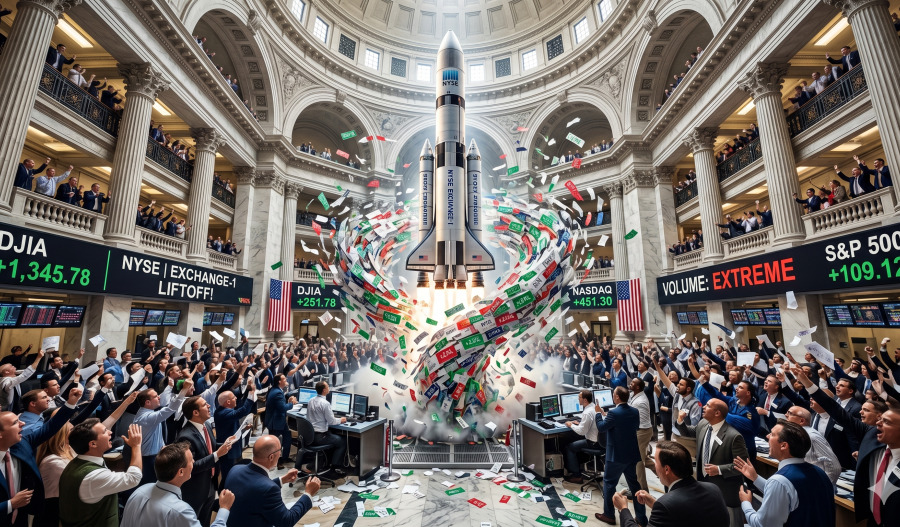
Markets were told the Middle East was on the brink of peace, then of nothing, then back again - and bought every dip regardless. Oil lurched from a 5% Monday faceplant to a Friday spike, equities treated a fragile U.S.-Iran ceasefire as background noise, and three firms strolled up to a trillion-dollar valuation.
Kevin Warsh took the Fed with inflation still loitering, China yanked the rare-earth handbrake again, and the Pope asked everyone to please disarm the robots.
All the top moves, shakes, and billion-dollar stakes from Azzet's editorial team unpacked right here in your weekly business wrap every Friday (29 May, 2026).
Monday
Traders opened the week gleefully buying reports that Washington and Tehran had edged closer to peace, a brave thing to price given the cast involved.
Crude obliged the optimists, shedding 5% as the war premium unwound on one upbeat headline and the collective decision to believe it.
Wall Street, never one to overthink a good mood, drove the Dow to a record as de-escalation hopes coaxed money back into cyclicals.
In the less giddy corner, Kevin Warsh was sworn in as Fed chair, inheriting a central bank where inflation never quite agreed to leave.
NVIDIA's Jensen Huang floated a China CPU play while conceding H200 shipments to the country sit at zero, which is one way to grow a market.
DeepSeek did what DeepSeek does and slashed pricing on its newest model, putting every well-funded incumbent on notice that someone will always undercut them.
In dealmaking, activists moved to set the price as Uber circled Delivery Hero, because no takeover is complete without someone insisting it is worth more.
And lest anyone get comfortable, Russia launched a hypersonic missile at Kyiv, a blunt reminder that the world's other war never got the peace memo.

Tuesday
Tuesday spoiled the party, with Washington and Tehran tempering hopes of a swift deal, ceasefires being far easier to rally than to actually sign.
Israel underlined the point, intensifying strikes on Lebanon despite a so-called ceasefire that clearly means something different to everyone holding a weapon.
In the U.S., consumer sentiment sank to a new low, a detail the record-chasing equity market decided was someone else's problem.
The IMF warned the European Union must reform as it piles on joint debt, advice Brussels will file alongside the last decade's worth.
Guzman y Gomez left a sour taste stateside, exiting the U.S. as fast-food workers reached for lawyers, a tidy summary of the American expansion dream.
In lighter news, Tennis Australia set its sights on the NRL boss for its top job, a cross-code raid that tells you where the smart money in sport sits.
Wednesday
Wednesday's truce update was that there might not be one, with Iran claiming U.S. strikes had breached it and nudging the arrangement towards the off position again.
Markets barely blinked, finishing mixed while the S&P and Nasdaq carved out record highs, the tech bid refusing all week to read the room.
Memory maker Micron cracked US$1 trillion on a broker upgrade, the first of several names to gate-crash four-comma territory.
Qualcomm inked a deal with ByteDance for AI data-centre chips, a not-so-subtle attempt to be more than the company living inside your phone.
On the critical minerals desk, Japan copped it as China tightened rare-earth exports, the pressure point Beijing leans on whenever the West forgets who controls supply.
Ferrari's first EV, the Luce, sent shares tumbling 8% on debut, badge prestige no match for investor doubts about an electric grand tourer.
On home soil, inflation eased to 4.2% in April, cool enough to keep the rate-cut hopefuls talking, though not enough to make anyone commit.
The super industry exhaled after the budget, relieved that the Treasurer left its honey pot alone, at least until the books next need balancing.
And in the week's strangest cameo, the Pope called for artificial intelligence to be disarmed, either the most sensible take of the week or the least heeded.
Thursday
Thursday's diplomacy ran on vapour, with Trump calling the Iran talks negotiating on fumes even as further strikes were reported, a generous use of the word negotiating.
Equities renewed records even as the tech rally paused for air, the first hint all week that gravity applies after all.
South Korea's SK Hynix punched past $1 trillion on red-hot memory demand, the week's second chipmaker to join a club that barely existed a decade ago.
Salesforce grew revenue 13% but the backlog missed, the sort of half-good print that lets bulls and bears both go home convinced.
HP beat second-quarter estimates and watched shares slip 0.9% anyway, a lesson that clearing the bar counts for nothing when it was already low.
At home, superannuation assets slipped to $4.4 trillion, a rare reversal that says more about soft markets than anything wrong with the national nest egg.
Friday
The week's main act limped to a close with a draft ceasefire extension on Trump's desk awaiting signature, the truce alive but visibly on life support.
Markets, predictably, powered back to records on the détente and a relentless tech run, having spent five days shrugging off everything thrown at them.
Costco's demand surged in its earnings even as oil spiked again, because nothing says confident consumer like stockpiling bulk goods before an energy scare.
In commodities, silver's 140% rally began eating its own demand, a textbook case of the old commodity adage that the cure for high prices is high prices.
And to close, AI developer Anthropic neared a $ 1trillion valuation in its latest round, the week's third trillion-dollar milestone and, at this rate, the going rate.