
Australian consumer prices rose slightly less than expected in April, largely due to a temporary tax-related reduction in fuel prices, while underlying inflation measures edged higher, reinforcing expectations that interest rates may need to remain elevated.
Data from the Australian Bureau of Statistics (ABS) showed the monthly Consumer Price Index (CPI) rose 0.4% in April, below forecasts of a 0.6% increase.
On an annual basis, inflation slowed to 4.2% from 4.6%, also below the expected 4.4%.
However, the trimmed mean measure of core inflation increased 0.3% in the month, in line with expectations, pushing the annual rate up to 3.4%, its highest level since late 2024.
The ABS said the main drivers of annual inflation were Transport, Housing, and Food and non-alcoholic beverages, up 6.6%, 6.3%, and 2.8%, respectively.
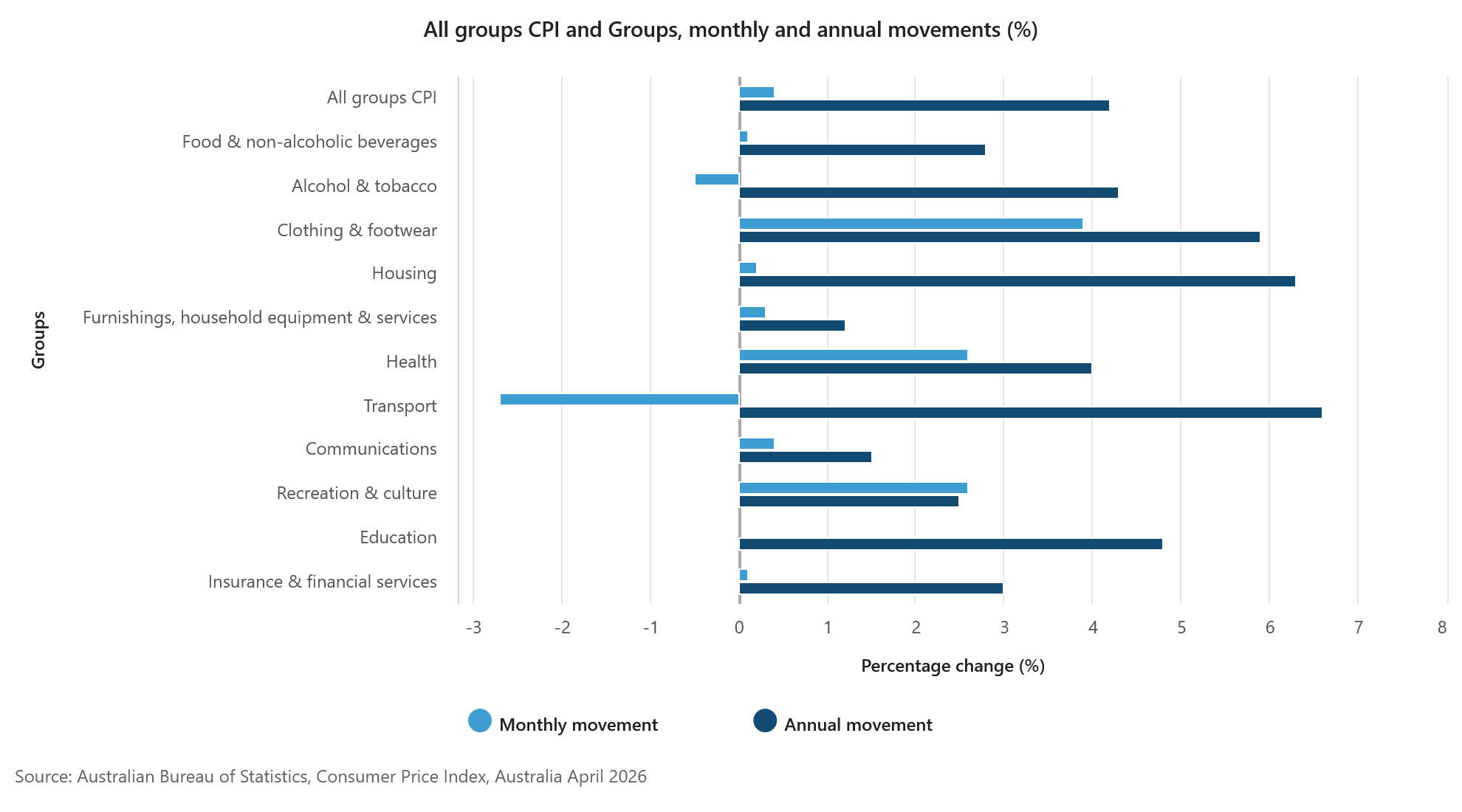
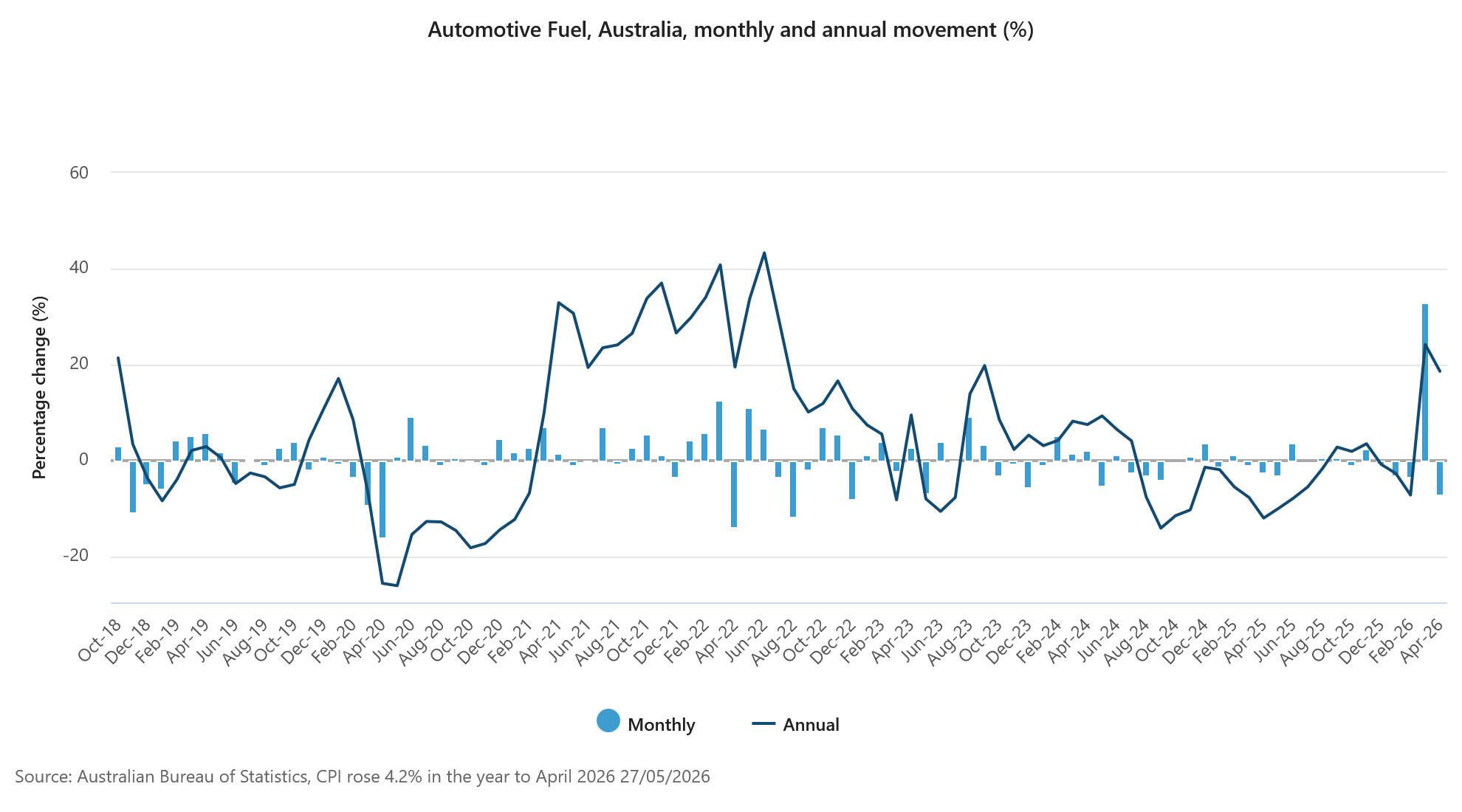
Transport inflation eased from 8.9% in the year to March to 6.6% in April, with automotive fuel a key contributor, rising 18.6% over the year.
ABS head of prices statistics Sue-Ellen Luke said: "Automotive fuel prices fell 7.0% from March to April, after rising by 32.8% in the previous month.
"The fall this month includes the halving of the fuel excise on 1 April. Automotive fuel prices are still 23.5% higher compared to February and before the impact of the Middle East conflict.
"The impact of higher oil prices has also been seen in products and services with high freight and logistics costs, such as parcel delivery and building materials.

"This is reflected in price increases of 12.4% for Postal services and 4.7% for New dwelling construction compared to 12 months ago."
Within transport, average petrol prices fell 10% in April, while diesel prices rose 14% following a sharp 41% increase in March.
Housing costs rose 6.3% over the year, down slightly from 6.5% in March. Electricity prices surged 22.5% annually, driven primarily by the withdrawal of government rebates.
Excluding rebates, electricity prices rose 3.1% over the year, reflecting regulated price adjustments and retailer reviews.
New dwelling prices increased 4.7% annually, as builders passed through higher labour and materials costs, while rents rose 3.5%, supported by persistently low vacancy rates across major cities.
Rental inflation rose 0.2% in April, with Commonwealth Rent Assistance indexation helping to partially offset increases.
Food and non-alcoholic beverage prices rose 2.8% over the year, the slowest pace since December 2021.
Meal prices increased 3.7%, while meat and seafood rose 5.0%, driven by strong global demand for Australian beef and lamb.
Fruit and vegetable prices were broadly flat over the year, rising just 0.1%, as declines in tropical fruit prices helped offset earlier gains.