The ceasefire held up about as well as you'd expect when one side was lobbing missiles at the other's airport.
Wall Street ignored all of it, setting fresh records for a third straight session as money poured into anything GPU-adjacent, with every major tech company racing to announce it was building more compute than the last.
SpaceX set the price on the largest IPO in history, Anthropic filed confidentially for a potential trillion-dollar listing, and Berkshire's Greg Abel marked the post-Buffett era with a US$8.5 billion homebuilder deal.
Aluminium hit a four-year high, Australia printed below-consensus GDP growth of 0.3% for the March quarter, and Washington dressed up its latest tariff salvo as a forced-labour enforcement action.
All the top moves, shakes, and IPO takes from Azzet's editorial team unpacked right here in your weekly business wrap every Friday (5 June, 2026).
Monday
Dell closed up 32.8% - its best session on record - after Q1 revenue of $43.84 billion, an 88% jump driven by a 757% spike in AI server sales to $16.1 billion.
Talks between the U.S. and Iran continued through intermediaries even as Tehran's state media claimed comms had gone dark, with Trump pushing back on Truth Social while Brent crude hit $94.98.
Greg Abel agreed to acquire homebuilder Taylor Morrison for $72.50 per share - a 24% premium - valuing the business at $8.5 billion, the clearest signal yet that Berkshire's near-$400 billion cash hoard is on the move.
The EU moved to negotiate access to advanced U.S. AI models, treating secure supply as a strategic priority on par with energy security as the compute gap between the two blocs widens.
SoftBank pledged €45 billion ($52.4 billion) for French AI data centre capacity over five years - part of a €75 billion program targeting 5 gigawatts across the Hauts-de-France region - the biggest private AI bet in Europe to date.
Analysts at ART warned that while markets had absorbed the Iran shock, supply chain pressures and inflation remained underpriced, with more volatility ahead.

Tuesday
The S&P 500 added 19.9 points to 7,600.0 and the Nasdaq advanced 0.4% to 27,086.8, as Nvidia surged 6.3% on a new AI-capable PC chip built with Microsoft and Micron crossed $1,000 per share for the first time.
London aluminium hit a four-year high at $3,769.50/t as cancelled LME warrants spiked 6.38%, pushing spot prices into backwardation, with most other metals lower on dollar strength and rising yields.
Trump said a deal was within reach even as Tehran reviewed a fresh U.S. proposal and Israel kept up operations in Lebanon, with Tehran warning further strikes risked the ceasefire.
Anthropic filed a confidential S-1 with the SEC ahead of an IPO that, at its latest private valuation of $965 billion from a $65 billion Series H, could open north of a trillion dollars.
Hewlett Packard Enterprise moved its long-term targets forward by two years on AI server demand, closing up 19.5% and confirming what Dell had established the prior Friday.
The ISM manufacturing PMI hit a four-year high of 54.0 in May - the sector's nineteenth straight month of expansion - though 42% of respondents cited the Iran war and 57% flagged cost volatility.
Tesla's European numbers moved higher for the month, reversing a prolonged soft patch as premium EV demand showed tentative signs of stabilising across the region.
The Australian government launched proceedings against 3M in the Federal Court, seeking more than A$2 billion over PFAS contamination from firefighting foam supplied to Defence bases over several decades.
Wednesday
The Dow Jones added 228.9 points to 51,307.8 as the Russell 2000 climbed 0.9%, while Marvell Technology soared 32.5% after Jensen Huang anointed it the next "trillion-dollar company" at Computex in Taipei.
Anthropic's frontier AI program Glasswing - currently limited to a small cohort of trusted partners - expanded fourfold as Trump signed an order clearing the path for broader government and enterprise model deployment.
Rubio told the Senate Iran had agreed to discuss nuclear aspects it had previously refused to mention; CENTCOM separately disclosed it had fired a Hellfire missile to disable a tanker bound for Kharg Island.
Alphabet announced an $80 billion capital raise - including a $10 billion placement to Berkshire Hathaway - with full-year capex guidance between $180 billion and $190 billion; the stock fell 3.9% on dilution.
U.S. vacancies hit 7.6 million in April - a two-year high - led by a 668,000 jump in business services, though the hire rate fell and the quit rate hit its lowest since August 2020.
NdPr oxide is sitting at $102-105/kg, Beijing's export controls resume around 10 November, and the $110/kg floor in Pentagon and Lynas (ASX: LYC) offtakes has stopped looking like insurance and started looking like a taxpayer cheque.
Australia's GDP missed forecasts at 0.3% for the March quarter and 2.5% year-on-year - both below consensus of 0.5% and 2.7% - as Cyclone Koji hit coal exports, household spending stayed soft and data centre equipment imports chewed into the trade balance.
Thursday
Iran struck Kuwait's international airport with missiles and drones, killing one and injuring 63 - the most direct attack on a Gulf state since the four-month-old war began - with Tehran citing retaliation for prior U.S. strikes on Qeshm Island.
TransAlta agreed to acquire gas generation assets from Blackstone for $1 billion, adding dispatchable capacity as grid operators lean harder on gas to backstop intermittent renewables.
The ISM services PMI for May beat expectations, pointing to broader economic acceleration, though the prices-paid component jumped sharply as Iran-linked energy costs and sticky wages drove input inflation to multi-month highs.
The U.S. Trade Representative proposed duties of 10-12.5% on imports from 60 economies - including Australia, the EU, China, Japan and the UK - citing failures to enforce forced-labour prohibitions, with hearings on 7 July.
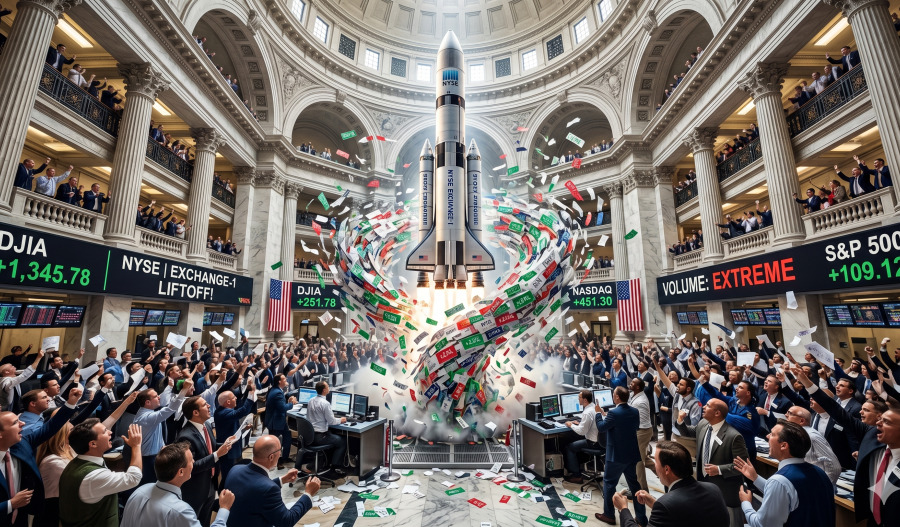
SpaceX set its IPO price at $135 per share, targeting a $75 billion raise at a $1.77 trillion valuation - the largest listing on record - with Nasdaq trading under SPCX set to begin 12 June.
Ulta Beauty beat analyst estimates and raised its full-year guidance, citing resilient consumer spending across its categories despite the broader softness in U.S. discretionary retail.
Friday
Hezbollah formally rejected a ceasefire renewal with Israel, adding another fracture line to a conflict already active across Iran, Kuwait and the Strait of Hormuz - making Washington's "deal this weekend" optimism look increasingly aspirational.
Initial jobless claims rose to a four-month high, with most economists putting the move down to Memorial Day distortions, though Pantheon Macroeconomics cautioned against an all-clear given mounting Iran-linked uncertainty.
Honeywell's quantum computing arm, Quantinuum, raised $1.68 billion in a heavily upsized IPO priced at $60 before opening at $68 on Nasdaq under QNT, with books covered more than 20 times.
Week ahead
- U.S. non-farm payrolls, May - consensus at 85,000 versus 115,000 in April, unemployment expected at 4.3%; the most consequential print before the Fed's June meeting.
- SpaceX Nasdaq debut (SPCX) - trading expected to begin 12 June; roadshow underway from the week of 8 June.
- Anthropic IPO timeline - confidential S-1 filed; October-November listing window being priced into private secondary markets alongside OpenAI's expected response raise.
- Iran ceasefire talks - Trump flagged another potential window "this weekend"; the Kuwait strike and Hezbollah's rejection of the Lebanon framework have complicated the timeline considerably.
- USTR Section 301 forced-labour hearings - comment period closes 6 July, hearings on 7 July; Australian exporters are caught at the 12.5% rate.
- China mid-year MIIT rare earths quota - due around June; the first hard read on Beijing's supply intentions ahead of the November export control deadline.
- Broadcom quarterly earnings - the last major semiconductor print of the current cycle and a gauge of whether AI demand is showing any fatigue.