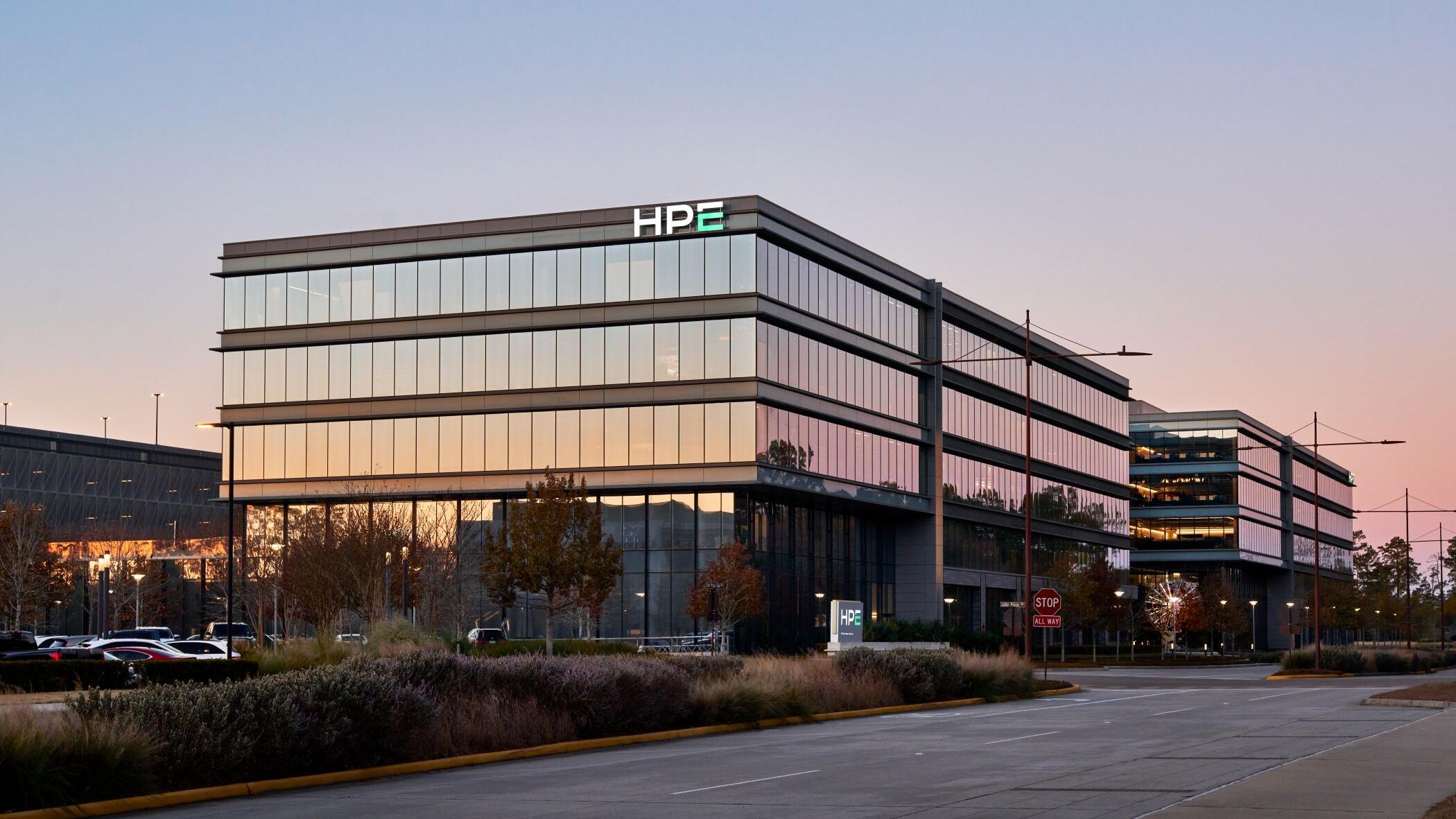
Hewlett Packard Enterprise (NYSE: HPE) reported a Q2 revenue of US$10.7 billion, a 40% jump year-on-year and the company's strongest top-line result since spinning out of Hewlett-Packard in 2015.
Earnings beats were realised across every key financial metric:
- GAAP diluted EPS swung to $0.44 from a loss of $0.82 in the prior corresponding period
- Non-GAAP diluted EPS came in at $0.79, above prior guidance
- GAAP gross margin reached 36.5%, up 810 basis points year-on-year and 60 basis points sequentially, with non-GAAP gross margin at 36.9%
- Free cash flow was $915 million for the quarter, a $1.76 billion improvement from the negative $847 million posted in Q2 FY25, with the six-month position swinging from negative $1.72 billion to positive $1.62 billion year-on-year
"HPE delivered an exceptional quarter with record-breaking revenue, higher-than-anticipated profitability, and increased free cash flow, reflecting strong execution and healthy demand across the business," President and CEO Antonio Neri said.
Networking, cloud restructure the drivers
The Networking division posted $2.7 billion in revenue for the quarter, up 148% year-on-year, with every sub-line expanding: Data Center Networking surged 233% to $320 million, Security rose 155% to $273 million, Campus & Branch grew 50% to $1.32 billion, and Routing contributed $775 million following Juniper Networks, which HPE acquired last year for $14 billion.
Networking represented close to 30% of total revenue and more than half of non-GAAP operating profit for the quarter, with segment operating margin at 21.6%.
HPE raised its FY26 target for cumulative Networks for AI orders to $1.7 billion to $1.9 billion, and the AI backlog held above $5 billion heading into the second half, with 64% of that order mix weighted toward enterprise and sovereign customers.
Order growth was described by management as record-level, driven by wireless, data-centre switching, and routing demand, with Juniper QFX data-centre switches and Juniper PTX and MX routing products cited as primary contributors.
Networking segment operating margin came in at 21.6%, down 340 basis points from the prior corresponding period.
The Cloud & AI segment - restructured at the start of FY26 to consolidate Server, Hybrid Cloud, and Financial Services into a single reporting line - posted $7.7 billion in revenue, up 22.9% year-on-year and 21.7% sequentially.
Server revenue was $5.45 billion, up 32.7% year-on-year and 28.9% sequentially, with deployments including systems built around NVIDIA's Blackwell architecture across enterprise and hyperscale customers.
Storage revenue grew 2.4% year-on-year to $1.18 billion, Financial Services contributed $904 million, up 5.6%, and Cloud & AI segment operating margin expanded to 12.4% - up 580 basis points year-on-year and 220 basis points sequentially.
"We drove high profitability and cash generation this quarter through continued operational discipline as well as executing ahead of schedule against Juniper Networks and Catalyst cost synergies," HPE exec VP and CFO Marie Myers said.

Balance sheet and H3C exit
HPE completed the divestiture of its remaining 19% stake in H3C Technologies on 28 May, receiving approximately $1.357 billion in cash proceeds and total pretax consideration of roughly $3.5 billion across the full exit since announcing its intention to leave the JV.
Management had flagged the H3C exit as a lever for reducing the leverage taken on to fund the Juniper acquisition, with the proceeds directed toward debt reduction alongside ongoing capital returns.
HPE deployed $343 million in capital returns during the quarter through buybacks and dividends, and declared a quarterly common dividend of $0.1425 per share payable in July 2026.
The company appointed Christopher Hsu of Elliott Management to the board and key committees under an amended cooperation agreement, effective immediately.
Guidance raised
HPE's revised FY26 guidance calls for revenue growth of 29% to 33%, GAAP EPS of $2.42 to $2.52, non-GAAP EPS of $3.35 to $3.45, and free cash flow of at least $3.5 billion - all of which exceed targets HPE had set for 2028 in its prior long-term financial plan.
For Q3 FY26, the company guided revenue of $11.5 billion to $12.1 billion, above the $10.9 billion analyst consensus at the time of reporting.
HPE introduced an FY27 framework targeting revenue growth of 8% to 12%, non-GAAP diluted EPS growth of 12% to 16%, non-GAAP operating margin of 12% to 16%, and free cash flow of at least $4.5 billion.
HPE shares rose 37% in after-hours trading to a record high of $64.64 following the release, putting the stock up more than 80% year-to-date at that level.
What to watch
- Networking margin trajectory: Segment operating margin contracted 340 basis points year-on-year despite the 148% revenue surge, with Juniper integration costs the primary cited driver
- AI backlog conversion: With the order book above $5 billion and 64% weighted toward enterprise and sovereign customers, the pace of order-to-revenue conversion is the key forward demand signal for the Cloud & AI segment in H2 FY26
- Memory cost pressure: Management flagged elevated DRAM and NAND pricing as a persistent headwind on server bill-of-materials costs through at least mid-FY27
- FY27 growth framework: The 8% to 12% revenue growth target for FY27 represents a deceleration against the 29% to 33% FY26 base, with the company set to provide further detail on the assumptions underpinning that range
- Capital allocation: With the H3C exit complete and the Elliott cooperation agreement formalised, debt reduction cadence and shareholder return priorities heading into FY27 are the key balance sheet variables to monitor