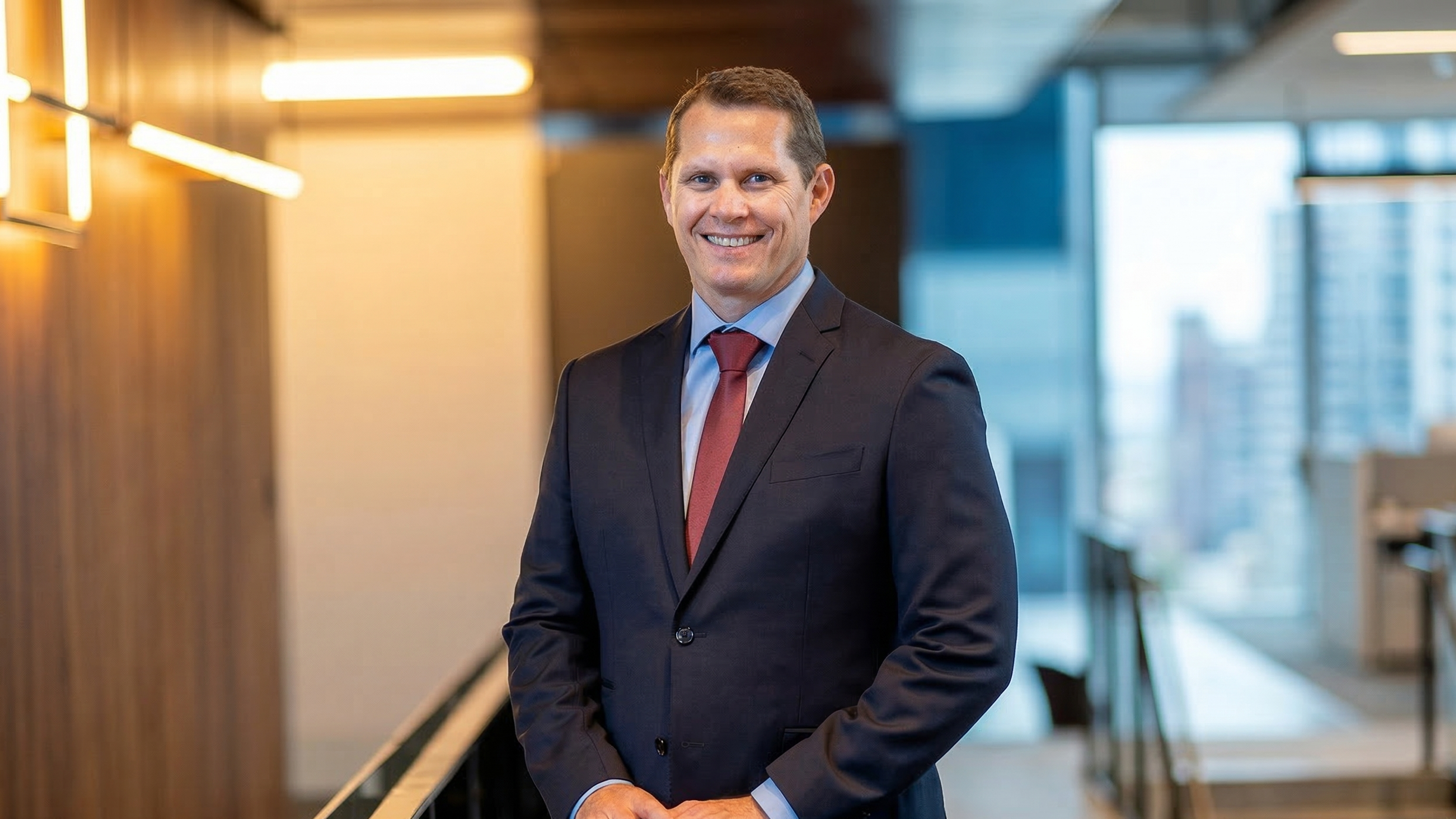
Brandon Craig, the 25-year company veteran who runs BHP's Americas copper-heavy growth engine, will replace Mike Henry as chief executive on 1 July.
BHP Group (ASX: BHP) has named Brandon Craig as its next chief executive, effective 1 July, drawing a line under Mike Henry's six-and-a-half-year tenure atop the world's largest listed miner.
Craig, who has been with the company since 1999 and currently serves as President Americas, was selected through a formal board-led succession process overseen by Chairman Ross McEwan.
The appointment passed over several publicly tipped candidates - including Australian operations chief Geraldine Slattery, chief financial officer Vandita Pant, and commercial head Ragnar Udd - and landed on the executive most directly responsible for BHP's copper and potash development slate.
Craig ran Western Australia Iron Ore before shifting to the Americas in March 2024, where he has overseen the Escondida expansion, advanced the Vicuña copper-gold joint venture in Argentina, and steered the Jansen potash project in Saskatchewan toward its mid-2027 commissioning date.
Under his leadership, the resources group lifted red metal guidance for FY2026 and FY2027, targeting around 2.5 million tonnes (t) of copper equivalent production a year by the mid-2030s.
"We view the appointment as incrementally positive and supportive of strategy continuity," RBC Capital Markets analyst Kaan Peker said.
"Craig is a long-tenured BHP executive with deep operational experience across both iron ore and copper, and has played a central role in advancing BHP's current growth pipeline."
Shares in the Big Australian last traded at A$49.74, roughly 16% below their all-time high of A$59.39 set earlier this month.
Henry will remain CEO until 30 June and provide transition support through to November.
What Henry leaves behind…
Mike Henry took the top job in January 2020 and inherited a sprawling, still-complicated conglomerate - what he leaves behind is a materially different company.
The petroleum division was demerged to Woodside Energy, the dual-listed London structure was collapsed into a single ASX listing, and the coal book was high-graded.
The Big Australian pivoted hard into the commodities underpinning the energy transition - copper and potash, principally - while maintaining the Pilbara iron ore cash engine that bankrolls everything else.
Average total shareholder returns clocked roughly 17% per annum under Henry's watch, and the group returned approximately US$80 billion to shareholders throughout the period.
Henry's tenure also included BHP's two failed tilts at Anglo American - first in mid-2024, and again in a last-ditch effort in November 2025.
Anglo's board rejected both approaches, and the London-listed miner subsequently merged with Teck Resources to form Anglo Teck - a red metal-heavy rival that now competes directly with BHP spanning several key commodities.
"It wasn't meant to be, and so that's in the rearview mirror," Henry told BNN Bloomberg in December.
Reuters Breakingviews described the second approach as a failed final act, noting Henry's legacy would likely include the inability to land a marquee acquisition.

…what Craig walks into
Chief among the incoming CEO's challenges is the escalating iron ore contract dispute with China Mineral Resources Group, Beijing's state-run purchasing entity.
CMRG has progressively tightened restrictions on Chinese steel mills and traders buying BHP iron ore since September 2025, starting with Jimblebar fines and expanding to most of the miner's key grades by mid-March 2026.
A brief one-week easing was granted to allow delivery of Jimblebar stocks banked at Chinese ports - a move that followed a sharp price rally the ban itself had triggered.
BHP has redirected some cargoes to buyers in Malaysia and Vietnam, but the standoff remains unresolved.
Iron ore still generates the free cash flow that underwrites every project in the copper growth book, and any prolonged disruption would directly affect spending capacity throughout the development queue.
Beyond China, Craig takes over a balance sheet trending toward the upper end of the company's self-imposed US$5 billion to $15 billion net debt target range as the Jansen build and Escondida expansion costs mount.
Anglo Teck's formation has created a sizeable pure-play copper rival, Rio is scaling its Oyu Tolgoi mine in Mongolia, and demand for tier-one copper assets is rising as supply constraints tighten.
On the minds of investors
"Investors will likely focus on delivery and capital sequencing across the copper pipeline, including Escondida optimisation, Copper South Australia expansion and the staged development of Vicuña, alongside the capital trajectory of Jansen," Peker said.
RBC maintains a Sector Perform rating on BHP with a price target of A$57.
Areas where Craig could shape the company over time include the pace of the Vicuña development, further asset base optimisation around the BHP Mitsubishi Alliance coal operations and the mothballed nickel business, and potential M&A if opportunities materialise.
Analysts broadly characterise the succession as evolutionary rather than transformational, with RBC noting it expects the Big Australian to build on its current strategic direction rather than pursue a material shift.
Craig's first major test will be resolving the China iron ore standoff while keeping the copper growth programme on schedule and on budget - two priorities that draw on the same pool of capital.