The United States and Iran are reportedly weighing a second round of peace negotiations, with discussions ongoing but no formal schedule yet agreed.
U.S. President Donald Trump indicated to a New York Post reporter that talks could resume imminently, suggesting a potential breakthrough may be close despite recent diplomatic setbacks.
“You should stay there, really, because something could be happening over the next two days, and we're more inclined to go there,” Trump said. “It's more likely, you know why? Because the field marshal is doing a great job.”
The remarks marked a shift from his earlier comments, in which he suggested negotiations could be “a little bit slow” and likely to take place in Europe.
The renewed push for dialogue follows earlier indications that stalled negotiations could restart before the current two-week ceasefire expires.
“The coming rounds of talks can come sometime later this week or earlier next week. But nothing is finalised as of now,” an official at the Iranian Embassy in Islamabad told Reuters.
Talks held last weekend in Islamabad failed to produce a breakthrough, with major sticking points, particularly surrounding Tehran’s nuclear programme, remaining unresolved.
Both sides accused each other of shifting positions during negotiations.

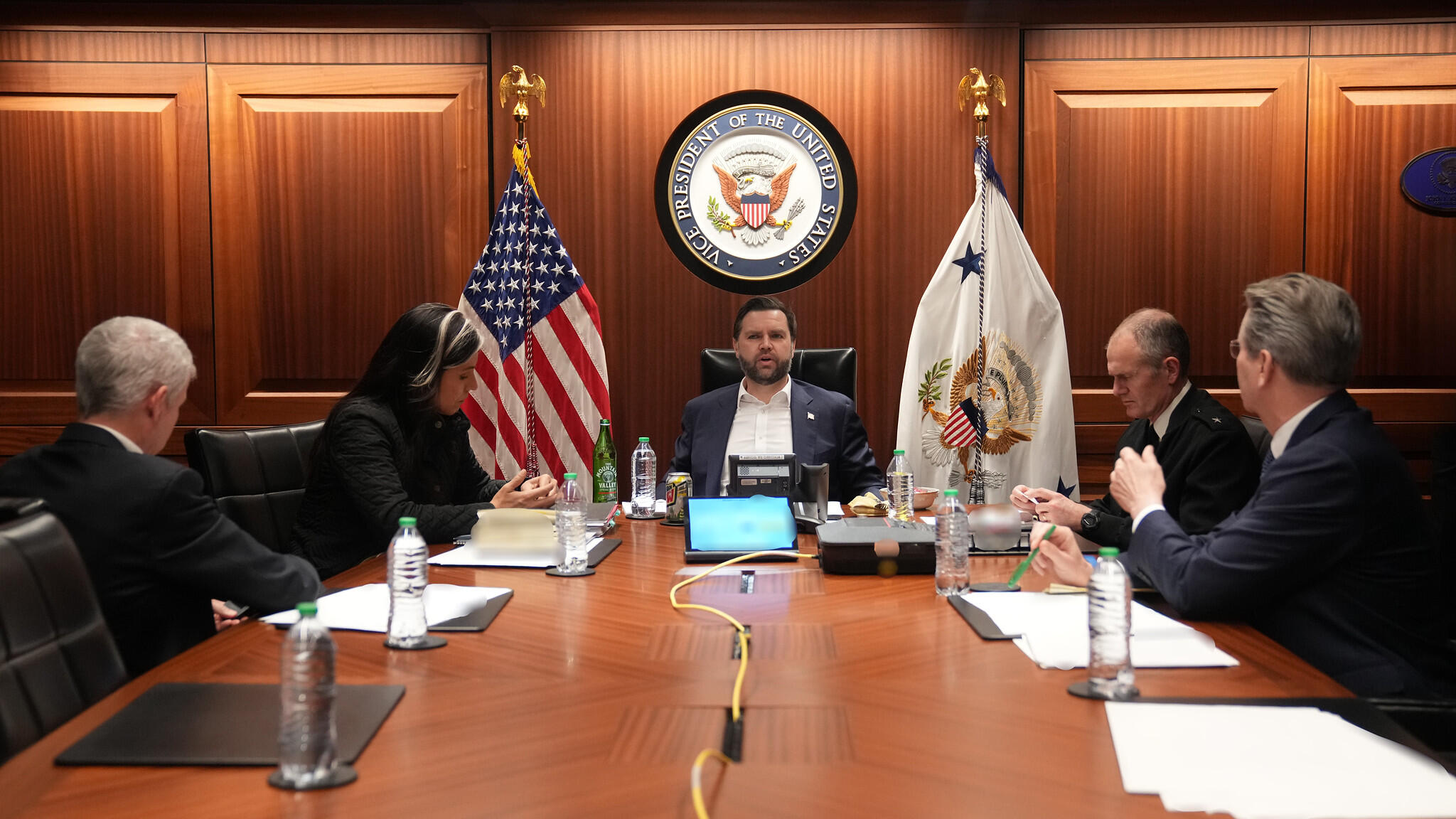
U.S. Vice President JD Vance, who led the American delegation alongside envoys Steve Witkoff and Jared Kushner, said the next move rests with Iran.
“Whether we have further conversations, whether we ultimately get to a deal, I really think the ball is in the Iranian court, because we put a lot on the table,” Vance said.
Iranian officials, however, pushed back strongly following the talks. Foreign Minister Abbas Araghchi said Tehran’s delegation encountered “maximalism, shifting goalposts, and blockade”, while parliamentary speaker Mohammad Bagher Ghalibaf accused Washington of failing to build trust.
In response to the breakdown in negotiations, Trump announced a blockade of the Strait of Hormuz, a critical global energy corridor that typically handles around 20% of the world’s oil shipments.
The U.S. military’s United States Central Command (CENTCOM) later clarified that the blockade applies to vessels entering or departing Iranian ports, including those along the Arabian Gulf and Gulf of Oman.
More than 10,000 U.S. personnel, including sailors, Marines and airmen, have been deployed to enforce the blockade, supported by over a dozen warships and dozens of aircraft.
“During the first 24 hours, no ships made it past the U.S. blockade and 6 merchant vessels complied with direction from U.S. forces to turn around to re-enter an Iranian port on the Gulf of Oman,” CENTCOM said.
The move has further restricted traffic through the Strait of Hormuz, where shipping volumes had already fallen sharply despite Trump’s earlier assertion on April 7 that a ceasefire agreement would depend on the full reopening of the route.
The current ceasefire is set to expire on 21 April, placing increased urgency on diplomatic efforts as both sides consider whether renewed talks can avert further escalation.