The United States and Iran remained divided on key issues as negotiations continued on Thursday, despite officials from both sides reporting limited progress in talks aimed at ending the conflict between Tehran, Washington and Israel.
U.S. Secretary of State Marco Rubio told reporters there had been "some good signs" in discussions with Iran, though significant obstacles remained over Tehran’s uranium stockpile and control of the Strait of Hormuz.
"There’s some good signs," Rubio said. "I don't want to be overly optimistic ... So, let's see what happens over the next few days."
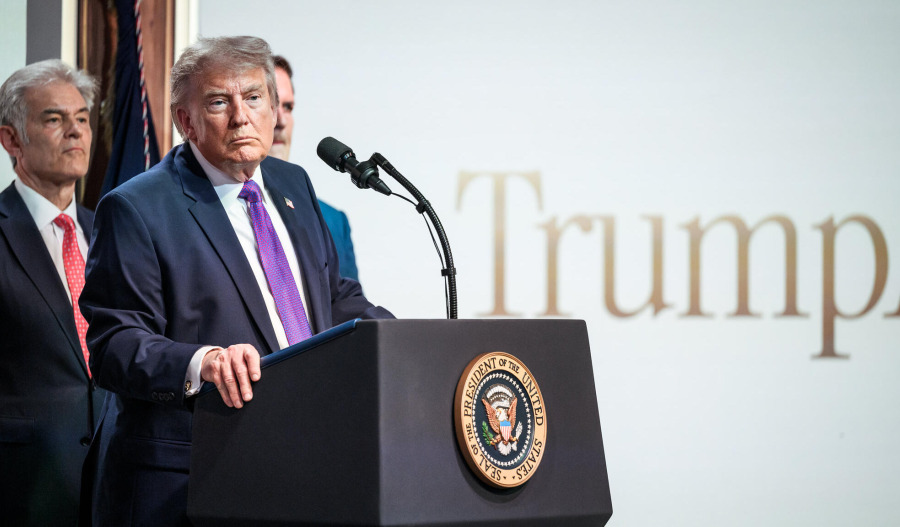
U.S. President Donald Trump reiterated Washington’s demand that Iran surrender its stockpile of highly enriched uranium, which Western nations say could be used to produce nuclear weapons.
Tehran maintains its nuclear program is solely for peaceful purposes.
"We will get it. We don't need it, we don't want it. We'll probably destroy it after we get it, but we're not going to let them have it," Trump told reporters at the White House.
Trump also criticised Iran’s proposal to charge fees for passage through the Strait of Hormuz, one of the world’s most strategically important shipping lanes for oil and gas exports.
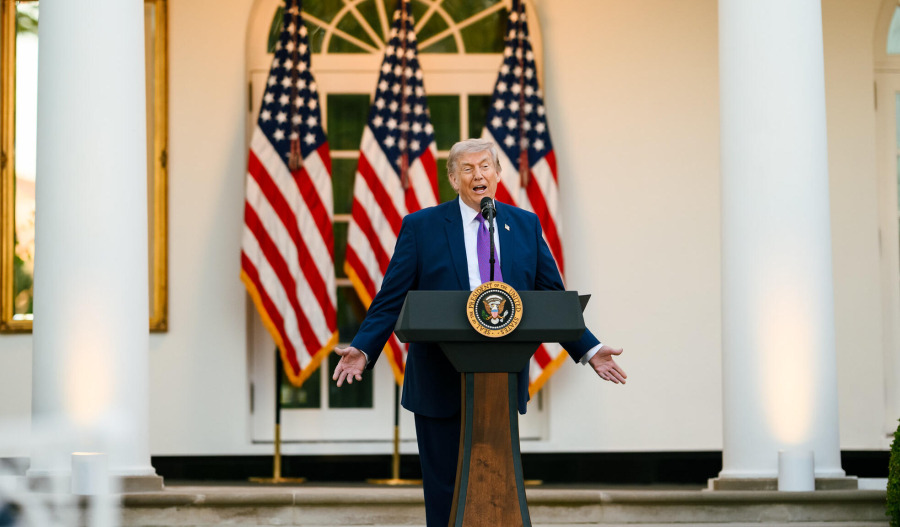
"We want it open, we want it free. We don't want tolls," he said. "It's an international waterway."
Rubio separately warned that a diplomatic solution would be impossible if Tehran implemented a tolling system in the strait.
Meanwhile, a senior Iranian source told Reuters that no agreement had yet been reached, although negotiating gaps had narrowed.
The source said Iran’s uranium enrichment activities and sovereignty over the Strait of Hormuz remained among the main sticking points.
Iranian sources also told Reuters that Iran’s Supreme Leader Ayatollah Mojtaba Khamenei had ordered that the country’s stockpile of near-weapons-grade uranium must not be sent abroad, hardening Tehran’s position on one of Washington’s primary demands.
"The Supreme Leader’s directive, and the consensus within the establishment, is that the stockpile of enriched uranium should not leave the country,” one of the Iranian sources said.

Iranian officials believe transferring the uranium overseas would leave the country exposed to future military strikes by the United States or Israel, according to the sources.
Israeli Prime Minister Benjamin Netanyahu has repeatedly stated the conflict cannot end until Iran’s enriched uranium is removed, Tehran ceases support for proxy militias, and its ballistic missile program is dismantled.
Israeli officials have also told Reuters that Trump assured Israel any peace agreement would include provisions requiring Iran’s uranium stockpile to leave the country.
Trump has threatened renewed military action if Iran fails to provide what he called the "right answers" in negotiations.
Iran’s Revolutionary Guards have warned that any renewed strikes would trigger retaliation beyond the region.
Diplomatic efforts to end the conflict have shown limited progress in the six weeks since a fragile ceasefire took effect. Pakistan’s Army Chief Asim Munir was reportedly expected in Tehran for further talks.
"We're speaking to all the various groups in Iran to streamline communication and so things pick up pace," one source told Reuters. "Trump's patience running thin is a concern, but we're working on the pace at which messages are relayed from each side."
The ongoing impasse has continued to weigh on the global economy through elevated oil prices and inflationary pressures.
Iran recently submitted a revised proposal to Washington, though Tehran’s demands reportedly continue to include control over the Strait of Hormuz, compensation for war damages, sanctions relief, the release of frozen assets and the withdrawal of U.S. troops from the region.
Before the conflict escalated, Iran had indicated a willingness to export half of its uranium enriched to 60%, but sources said that position hardened following repeated threats from Trump to attack Iranian facilities.
One Iranian source said there were still "feasible formulas" available to resolve the uranium dispute.
"There are solutions like diluting the stockpile under the supervision of the International Atomic Energy Agency," the source said.
According to the International Atomic Energy Agency (IAEA), Iran possessed 440.9 kilograms of uranium enriched to 60% before Israeli and U.S. strikes on Iranian nuclear facilities in June 2025, though the current status of that material remains unclear.
IAEA chief Rafael Grossi said in March the agency believed slightly more than 200 kilograms remained stored at a tunnel complex in Iran’s Isfahan nuclear facility, while additional quantities were believed to be located at the Natanz nuclear complex.