United States President Donald Trump said the U.S. may strike Iran again within days if Tehran fails to reach an agreement with Washington, warning that he had come close to authorising military action before delaying the decision.
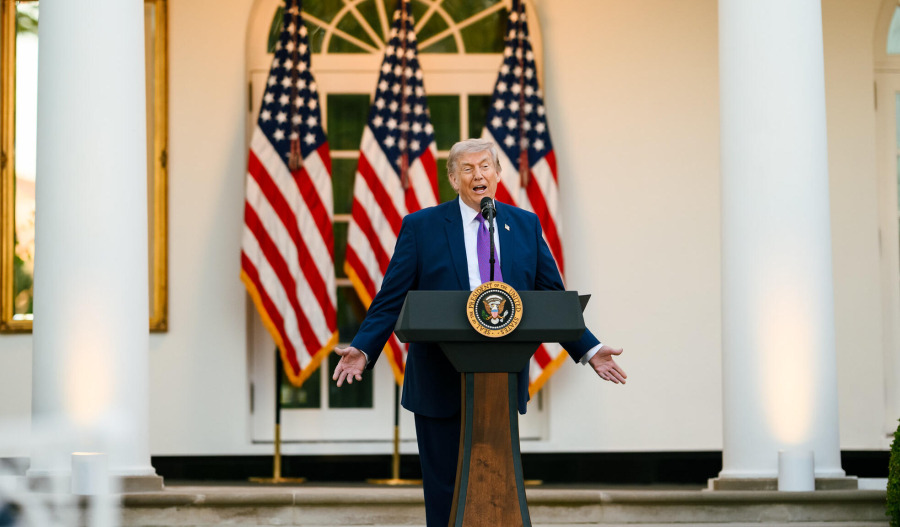
Speaking to reporters at the White House on Tuesday, Trump said, "I was an hour away from making the decision to go today," adding that Iran’s leaders were “begging" for a deal.
The remarks came one day after Trump said he had paused a planned resumption of hostilities following a new proposal from Tehran aimed at ending the conflict, which began nearly three months ago.
Trump has repeatedly warned Iran of further military action if it fails to agree to terms preventing it from obtaining a nuclear weapon.
The administration also faces mounting domestic pressure to secure stability in the Strait of Hormuz, a critical global oil shipping route, as elevated fuel prices weigh on consumers ahead of November congressional elections.
Vice President JD Vance said negotiations between Washington and Tehran had made significant progress and that neither side wanted to resume military operations.
"We're in a pretty good spot here - but there's an option B, and that option B is that we could restart the military campaign," Vance was quoted as saying during a White House briefing. “We're locked and loaded.”
Vance acknowledged challenges in negotiating with Iran’s divided leadership, stating: "It's not sometimes totally clear what the negotiating position of the team is."
He added that a key objective of the administration’s strategy was to prevent a broader nuclear arms race in the Middle East.
In Tehran, Iranian officials warned they would retaliate against any renewed U.S. military action.
Ebrahim Azizi, head of the Iranian parliament’s national security committee, said in a post on X that Trump’s pause reflected an understanding that any attack would trigger a “decisive military response”.
According to Al Jazeera, Iranian state media reported that Tehran’s latest proposal included ending hostilities across all fronts, including Lebanon, the withdrawal of U.S. forces from areas near Iran, reparations for war-related destruction, the lifting of sanctions, and the release of frozen Iranian funds.
Deputy Foreign Minister Kazem Gharibabadi, cited by IRNA news agency, also said Tehran wanted an end to the U.S. marine blockade.
The reported terms appeared largely unchanged from an earlier Iranian proposal that Trump dismissed last week as “garbage”.
A Pakistani source told Reuters that Islamabad had relayed Iran’s proposal to Washington after facilitating communications between the two sides following peace talks last month.

"The sides keep changing their goalposts," the source said. "We don't have much time."
Although a ceasefire has largely held, regional tensions remain elevated following reports of drones launched from Iraq towards Gulf states, including Saudi Arabia and Kuwait.
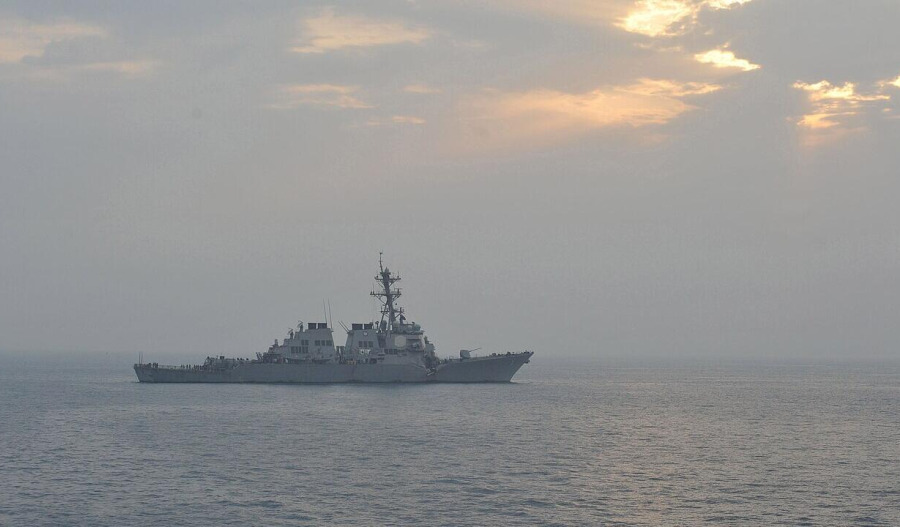
The Wall Street Journal reported that the U.S. seized an Iran-linked oil tanker, the Skywave, in the Indian Ocean overnight. The tanker had been sanctioned by Washington in March for transporting Iranian oil.
Separately, the Trump administration announced a fresh round of sanctions targeting Iran’s financial and shipping networks.
The U.S. Treasury Department imposed sanctions on Iran-based Amin Exchange, also known as Ebrahimi and Associates Partnership Company, accusing it of operating an extensive network of front companies in jurisdictions including the United Arab Emirates, Turkey and Hong Kong.
Washington also sanctioned 19 vessels allegedly involved in transporting Iranian petroleum and petrochemical products.
Treasury Secretary Scott Bessent said the measures were part of a broader campaign to dismantle Iran’s financial infrastructure.
"Iran’s shadow banking system facilitates the illicit transfer of funding for terrorist purposes," Bessent said in the media release.
"As Treasury systematically dismantles Tehran’s shadow banking system and shadow fleet under Economic Fury, financial institutions must be alert to how the regime manipulates the international financial system to wreak havoc."
The Office of Foreign Assets Control also designated several companies it alleged were assisting Amin Exchange, including firms based in China, Hong Kong and the United Arab Emirates (UAE).
The sanctions freeze any U.S.-based assets linked to the designated entities and prohibit Americans from conducting business with them.
Meanwhile, speaking at the “No Money for Terror” conference in Paris, Bessent urged allies to strengthen cooperation with Washington’s sanctions campaign against Iran.
“Crushing the threat of terrorism compels all of you to step up and join us,” Bessent said.
He added that the United States had intensified efforts to disrupt Iran’s oil revenues, banking systems and cryptocurrency-linked financial flows under the administration’s “Operation Economic Fury”.
“No adversary has felt the force of America’s economic statecraft more ruinously than Iran,” Bessent said.
The Treasury secretary also called on European nations to join the United States in targeting Iranian financiers, front companies and proxy organisations as part of broader efforts to isolate Tehran economically.