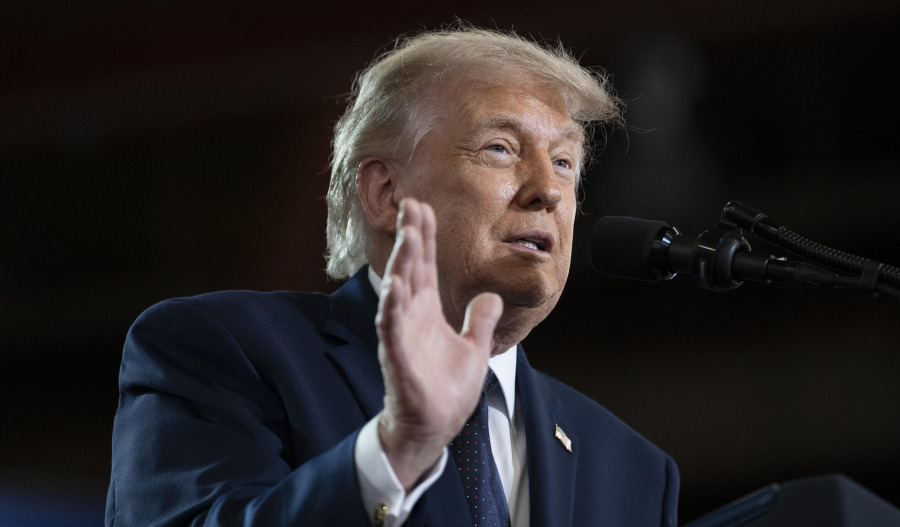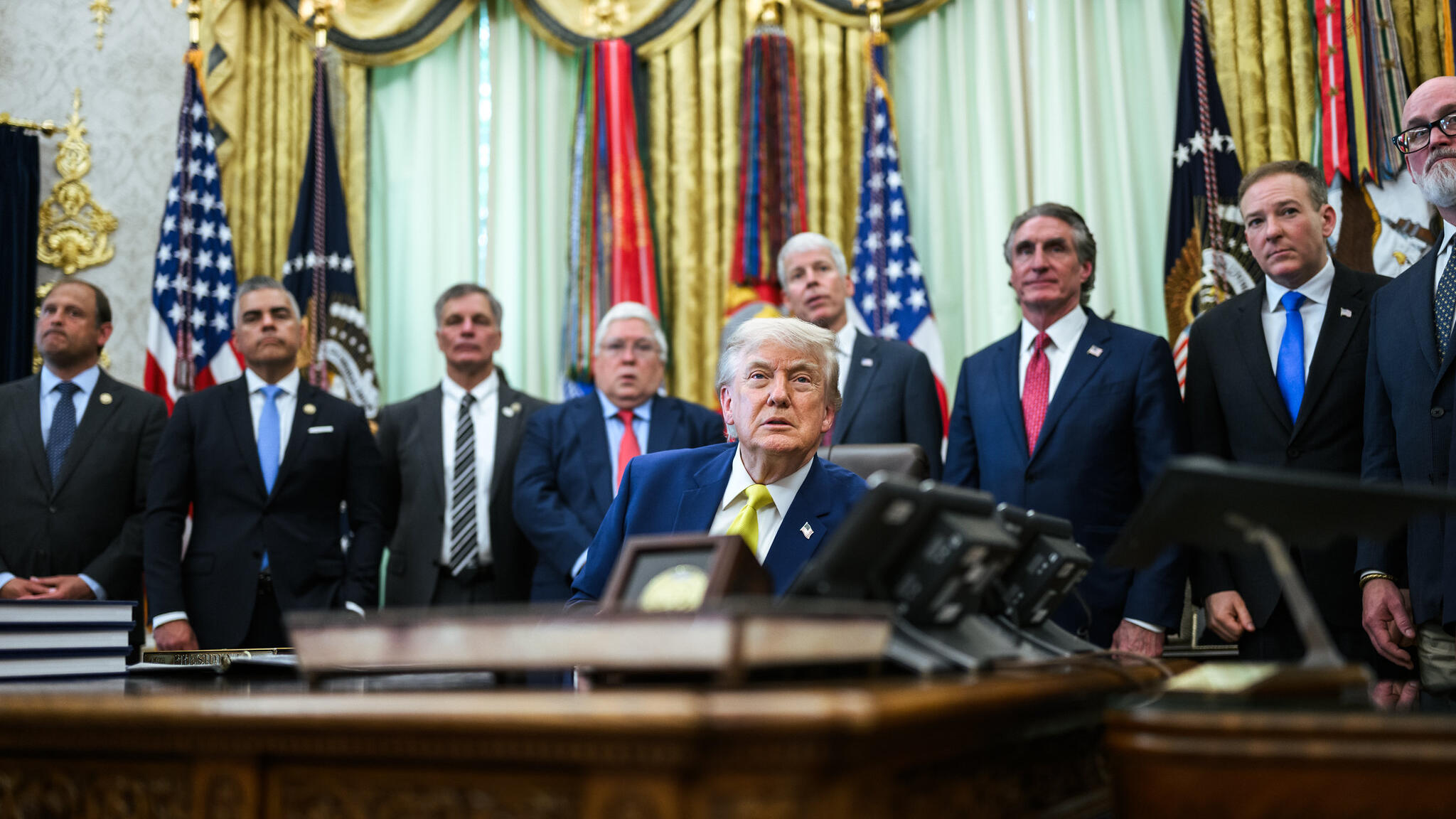
United States President Donald Trump said on Monday that a preliminary agreement to end the Gulf conflict had been signed by the U.S. and Iran, although key details of the arrangement have yet to be disclosed publicly.
Speaking after arriving in France for the G7 summit, Trump said the agreement was complete and indicated that Vice President JD Vance would participate in a formal signing ceremony scheduled for Geneva on Friday.
"The deal's all signed," Trump said.
Under the preliminary framework, the Strait of Hormuz would reopen after months of disruption, and a 60-day ceasefire would be extended, creating an opportunity for negotiators to address more contentious issues, including the future of Iran's nuclear programme.
The announcement helped push oil prices to their lowest level since 10 March, reversing some of the market disruption caused when the conflict interrupted roughly one-fifth of global oil supplies.
The agreement represents the most significant diplomatic breakthrough since fighting erupted, a conflict that has reportedly claimed at least 7,000 lives, primarily in Iran and Lebanon, while sending shockwaves through global energy markets.
However, significant uncertainty remains over the final terms of the accord.
Officials from both Washington and Tehran have indicated that the deal could eventually provide major economic benefits for Iran, including sanctions relief, the release of frozen foreign assets and access to a proposed US$300 billion reconstruction fund financed by neighbouring Gulf states.
U.S. officials speaking on condition of anonymity told Reuters that those benefits would be contingent on Iran meeting American demands that it permanently abandon any pursuit of nuclear weapons and cease support for regional proxy groups, including Hezbollah.
The officials said further details of the agreement are expected to be released within the next two days.
Vice President JD Vance acknowledged that substantial negotiations remain ahead despite the preliminary breakthrough.

Vance told CNBC's "Squawk Box" that “a lot” of details remain to be ironed out, but he expressed confidence that America has “all the cards” in subsequent talks.
He said Iranian Foreign Minister Abbas Araghchi is expected to play a central role in upcoming negotiations, alongside parliamentary speaker Mohammad Bagher Ghalibaf. Vance suggested Ghalibaf's involvement could indicate support for the agreement among Iran's conservative political factions.
Vance described the agreement as having two primary objectives: Reopening the Strait of Hormuz and securing a long-term commitment from Iran never to develop a nuclear weapon.
Trump has repeatedly argued that preventing Iran from acquiring nuclear weapons was the central justification for the military campaign launched alongside Israel on 28 February.
Vance also indicated that Iran could receive substantial economic incentives if it complies with the terms of the agreement, including the easing of sanctions and other restrictions that currently limit its participation in the global economy.
He said such measures could allow Tehran “to be reinvited into the world economy”.
Despite the diplomatic breakthrough, questions remain over how much the United States has achieved relative to its original war aims.
Iran's ruling theocratic government remains in power, while Washington has yet to secure commitments from Tehran to dismantle its ballistic missile programme or permanently end support for regional militant organisations such as Hezbollah.
The agreement also leaves unresolved the issue of Iran's uranium stockpile.
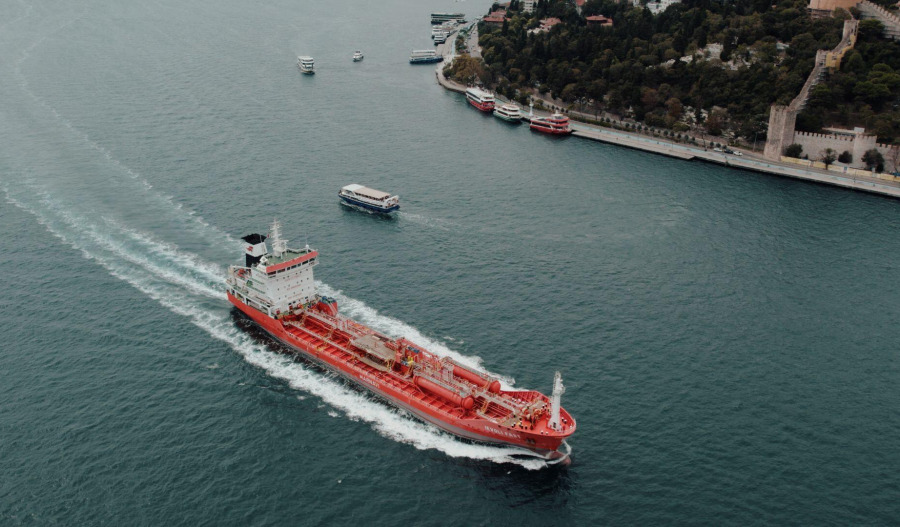
Shipping industry participants have also cautioned that commercial navigation through the Strait of Hormuz is unlikely to resume immediately. While the agreement removes Iran's blockade of the waterway, operators have said vessel traffic will only normalise once safety concerns are fully addressed.
Iran has indicated it intends to continue jointly overseeing the strait with Oman, while the United States has stated the passage will remain open toll-free for 60 days.
Washington has also said it expects that provision to be incorporated into any final comprehensive agreement reached between the two sides.