Unites States major benchmark averages closed higher on Monday (Tuesday AEST), with the Dow Jones Industrial Average closing at a record high and the Nasdaq posting its strongest gain in weeks after the U.S. and Iran reached a preliminary agreement aimed at ending the Middle East conflict and reopening the Strait of Hormuz.
The Dow Jones Industrial Average rose 468.8 points, or 0.9%, to finish at a record 51,671.0. The S&P 500 advanced 122.8 points, or 1.7%, to 7,554.3, while the Nasdaq Composite climbed 795.1 points, or 3.1%, to 26,683.9.
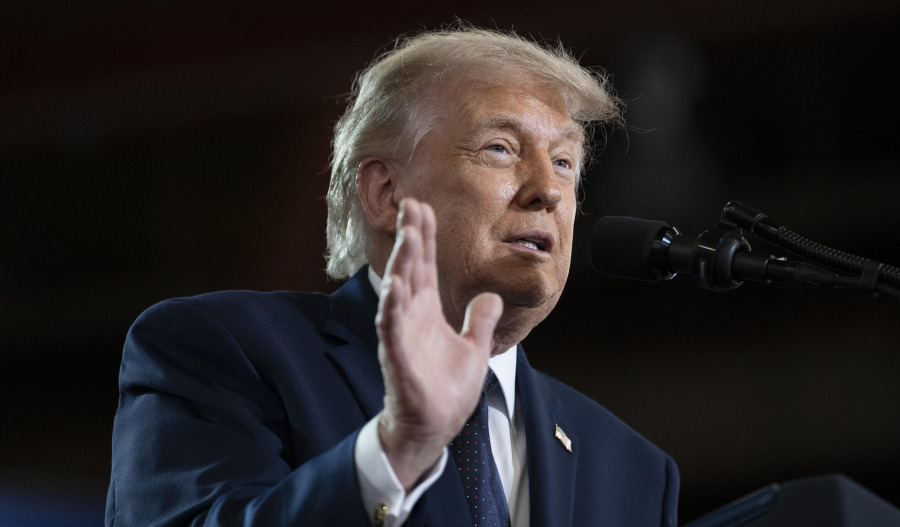
Investor sentiment improved significantly after U.S. President Donald Trump announced on Truth Social late Sunday (Monday AEST) that a deal with Iran was "now complete".
Pakistan Prime Minister Shehbaz Sharif said the memorandum of understanding would be formally signed in Switzerland on Friday.
Although the framework leaves unresolved issues, including Iran's nuclear programme and the Israel-Lebanon conflict, markets welcomed the prospect of reduced geopolitical tensions and the restoration of oil flows through the Strait of Hormuz.
The agreement triggered a sharp decline in energy prices, with U.S. crude futures settling 4.9% lower and touching their lowest level since March. Falling oil prices eased concerns about inflation and supported sectors that benefit from lower fuel costs, while weighing on energy stocks.
Technology shares led the market higher as investors shifted back into growth stocks, with Nvidia gaining 3.5%, while Micron Technology surged 10.5%.
Lower oil prices helped reduce concerns that inflationary pressures could force the Federal Reserve to tighten monetary policy further.
Monday's gains marked the third consecutive positive session for all three major indexes, extending a recovery that began after Middle East tensions and a pullback in artificial intelligence-related stocks interrupted Wall Street's record-setting advance earlier this month.

Investors are increasingly hopeful that easing energy costs could provide the Federal Reserve with greater flexibility to maintain current interest rate settings rather than implementing additional increases.
Attention is now turning to the Federal Reserve's policy decision due on Wednesday (Thursday AEST), which will be the first meeting chaired by Kevin Warsh since he succeeded Jerome Powell last month.
The meeting follows May inflation data that indicated higher energy costs had continued to filter through to consumer prices.
According to the CME Group FedWatch Tool, traders widely expect the Federal Reserve to leave rates unchanged this week. However, markets continue to price in a 41.9% chance of a 25 basis point (bps) rate increase before the end of the year, and a 13.7% chance of a 50 bp hike.
Among individual companies, SpaceX extended its strong post-listing performance, rallying 19.6% in its second day of trading. The Elon Musk-led company's blockbuster initial public offering (IPO) has lifted its valuation above US$2 trillion.
The successful debut has fuelled optimism that forthcoming listings from OpenAI and Anthropic could also attract strong investor demand later this year.
Transport stocks also benefited from lower oil prices. United Airlines rose 3.9% as investors anticipated reduced fuel costs, while cruise operators gained ground, with Norwegian Cruise Line Holdings adding 3.7% and Carnival Corp advancing 3.2%.
The CBOE Volatility Index, commonly known as Wall Street's fear gauge, declined for a third straight session after reaching a more than two-month high during the previous week.
Elsewhere, Fox shares plunged 16.8% after the media company announced a US$22 billion acquisition of Roku. Roku shares also fell, losing 1.9%.
On the bond markets, U.S. Treasury yields edged lower, with the benchmark 10-year yield slipping 0.2% to 4.473% and the two-year yield falling 0.4% to 4.070%.