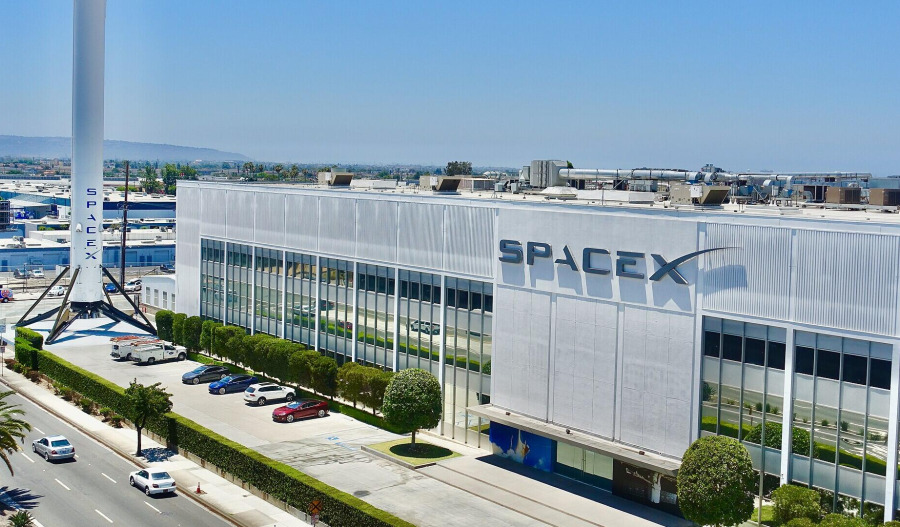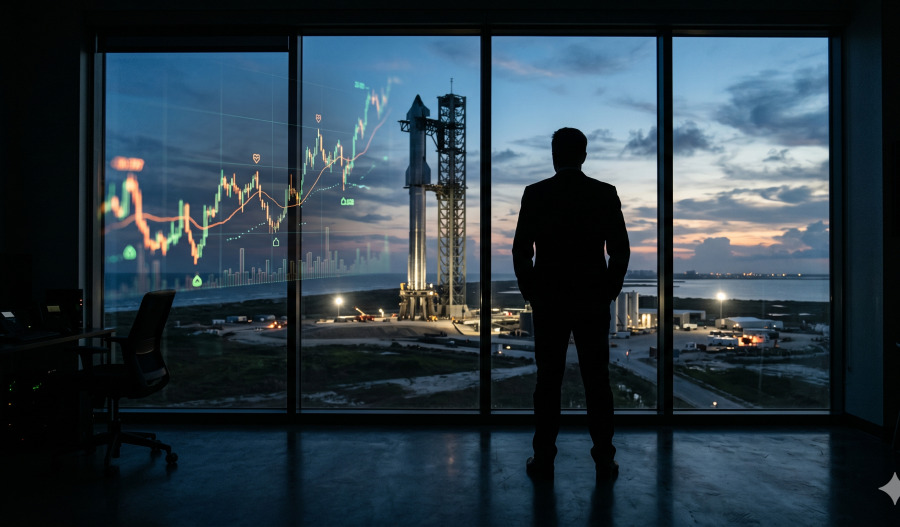
SpaceX shares surged 19% in their debut trading session on the Nasdaq on Friday (Saturday AEST), propelling the aerospace and satellite communications company to a valuation exceeding US$2 trillion and cementing chief executive Elon Musk's position as the world's first trillionaire.
Trading under the ticker SPCX, SpaceX opened at $150 a share after raising $75 billion in what became the largest initial public offering on record.
The stock climbed as high as $176.52 during the session before closing at $160.95, attracting intense investor interest.
More than 500 million shares changed hands on the first day of trading, approaching the volume recorded during the initial public offering of Facebook in 2012, when approximately 580 million shares were traded.
Musk and SpaceX President and Chief Operating Officer Gwynne Shotwell marked the occasion by ringing the opening bell, with Musk participating from Texas while Shotwell attended the ceremony at Nasdaq's headquarters in New York.
Speaking on a JPMorgan Chase livestream ahead of the listing, Musk said SpaceX had generated positive cash flow since around 2015. He said the company was entering a "significant growth phase" and was seeking additional capital to support ambitious expansion plans.
Among those plans are the deployment of more than 100,000 satellites to expand global communications coverage and the construction of artificial intelligence data centres in space.

The listing further boosted Musk's personal fortune, driven largely by his holdings in SpaceX and electric vehicle manufacturer Tesla.
The entrepreneur founded SpaceX as a reusable rocket company, though the group's most profitable business today is its Starlink satellite internet division.
SpaceX expanded its technology footprint earlier this year through the acquisition of Musk's artificial intelligence venture xAI in February 2026. The deal brought xAI's data centres, Grok artificial intelligence models, chatbot and image-generation technologies, as well as social media platform X, formerly known as Twitter, under the SpaceX umbrella.
Despite the strong market reception, SpaceX disclosed in its prospectus that it has accumulated total losses of $41.3 billion since its founding in 2002, reflecting the substantial capital investment required to develop its launch, satellite and technology businesses.
Investors appeared willing to look beyond those losses, focusing instead on the company's dominant position in commercial spaceflight, growing satellite communications operations and long-term artificial intelligence ambitions.
"For many investors, SpaceX is the closest thing to investing in the railroads during the Industrial Revolution and they are willing to pay the Elon Musk premium for that opportunity," Seth Hickle, chief investment officer at Mindset Wealth Management in Indianapolis told Reuters.
Tesla shares also benefited from the positive sentiment surrounding Musk's business empire, rising 1.8% on Friday to close at $406.43. The electric vehicle maker now carries a market capitalisation of approximately $1.5 trillion.