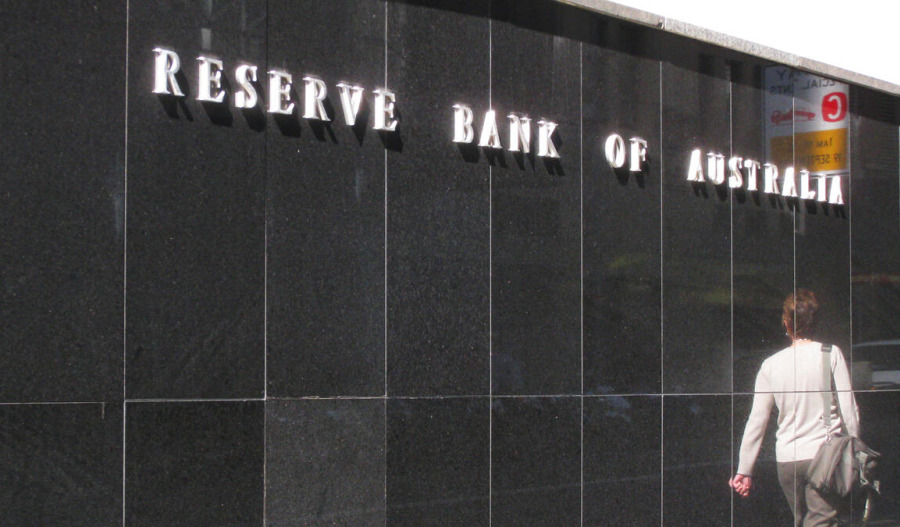
The nine-member policy board of Australia's central bank was divided over whether to raise interest rates at its August meeting, with minutes showing some policymakers believed the current cash rate of 4.35% was sufficiently restrictive to bring inflation down while allowing time to assess how the economy evolves.
The Reserve Bank of Australia's (RBA) board unanimously decided to keep rates unchanged after considering the case for a fourth increase this year.
The minutes cautioned that incoming data would need to show further progress towards returning inflation to the RBA's 2% to 3% target within a reasonable timeframe.
On the global policy outlook, policymakers noted that markets expected interest rates in many advanced economies to rise over the next 18 months, amid concerns about persistent underlying inflation pressures.
"Members noted that expected increases in policy rates were larger where monetary policy was more accommodative, such as in New Zealand, Canada and Japan, and smaller elsewhere, such as in Australia, the United States and the United Kingdom.
"In the United States, resilient demand and persistent inflation had supported a higher expected path for policy rates over time, although the most recent Federal Reserve communication had been interpreted by market participants as reducing the likelihood of a policy rate increase in the near term."
Policymakers also said financial markets had remained relatively calm despite geopolitical uncertainty, although AI-related stocks and bonds had experienced increased volatility.
"Global equity prices had generally risen and corporate bond spreads had remained low over preceding months, supported by strong earnings and apparently limited concern among market participants about the effects of the conflict on global economic activity.
"Nonetheless, the equity prices of companies linked to the provision of artificial intelligence (AI) had been volatile and spreads on bonds issued by some of these companies had widened.
"This reflected significant fundraising for investment in AI, a reassessment of the prospective returns from investment in data centres (given broader developments in the market for AI services) and the unwinding of some highly leveraged positions in certain AI-related equities."
In Australia, the board said financial conditions had tightened following three rate increases in 2026 and were now judged by the staff as “somewhat restrictive”.
"Banks had passed through these cash rate increases to deposit and lending rates. The current cash rate target was at the top of the range of model- and market-based central estimates of the nominal neutral rate. Medium- and long-term real interest rates derived from inflation-linked bonds were also around their highest level in over 15 years, though short-term real yields were significantly lower than long-term yields because of higher short-term inflation expectations."
Other indicators also pointed to tighter financial conditions, with demand for new housing loans falling significantly, particularly among investors.
The board also warned that higher energy costs and strong demand for AI infrastructure could create additional inflationary pressures globally and eventually push up Australian import and consumer prices.

Turning to considerations for monetary policy, the board said economic conditions were continuing to move towards its objectives, with inflation easing from its March peak and some labour market tightness diminishing.
"Inflation had eased from its peak in March and the quarterly rate of underlying inflation was slightly lower than it had been in late 2025. A little more of the tightness in the labour market had abated and the output gap was forecast to close slightly earlier than envisaged in May.
"On some metrics, this progress had occurred a touch more rapidly than had been expected. Nonetheless, members observed that inflation was still too high and that the economy continued to operate with excess demand."
The board said weaker housing momentum was another sign that monetary conditions were becoming restrictive, although business credit remained strong.
Members “observed that momentum in the housing market had shifted over preceding months”.
"Housing prices were falling in some capital cities, though this followed a long period of strong housing price growth and was being driven by factors other than monetary policy.
"The softening in housing demand had flowed into weaker demand for new housing loans, although growth in business credit continued to be strong."
The decision to hold rates was based on the view that monetary policy was sufficiently restrictive to return inflation to target while giving policymakers additional time to assess incoming data.
"The case to leave the cash rate target unchanged at this meeting relied on forming a judgement that, following the increases in the cash target earlier in the year, monetary policy appeared sufficiently restrictive to bring inflation back to target within a reasonable timeframe, and that there was still some time to assess the accuracy of that judgement."
However, several policymakers believed further tightening could be necessary if upside inflation risks materialised.
"Several members judged that it was quite possible that the upside risks to the inflation forecast would crystallise, requiring some further tightening.
"Other members noted the potential for downside risks to offset them. All members agreed that, given prevailing uncertainties, upcoming decisions would benefit from additional information that could strengthen their conviction about the outlook for inflation.
"Members agreed that further progress in delivering the outcomes envisaged in the central projection would be needed before they could be confident that inflation would return to target with the current monetary policy setting.
"They re-confirmed their commitment to returning inflation to target in a timely way."