Australia's unemployment rate rose to 4.5% in July, exceeding market expectations, as employment declined and the number of unemployed people increased.
The seasonally adjusted unemployment rate climbed from 4.4% in June according to fresh data from the Australian Bureau of Statistics (ABS), above expectations for the rate to remain unchanged.
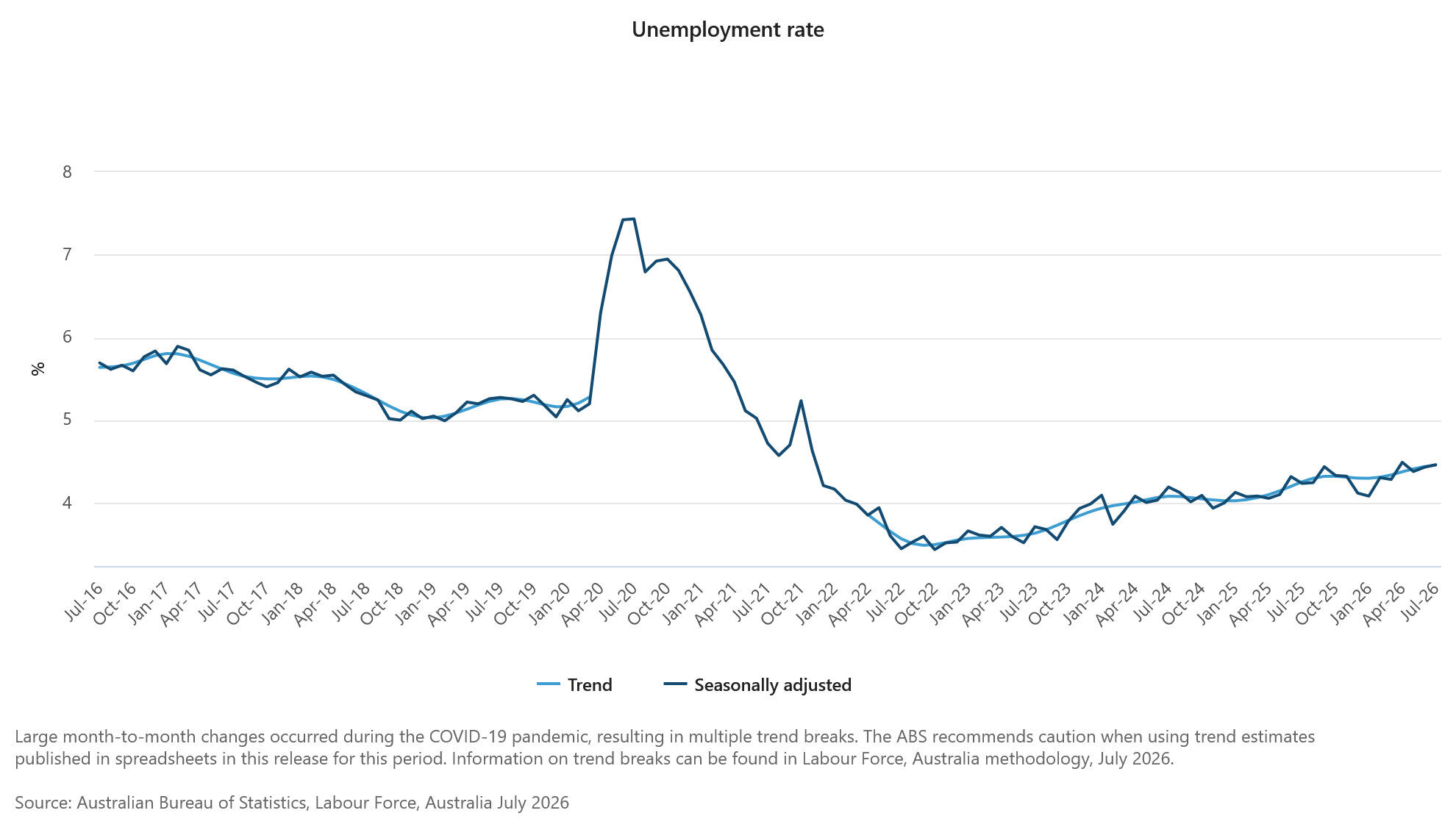
The number of employed people fell by 15,800 in July, driven by a sharp decline in part-time employment, while unemployment increased by 4,200 people.
Sean Crick, ABS head of labour statistics, said: “In July, we recorded a 16,000 person fall in employment, whilst the number of unemployed people rose by 4,000.
“The majority of the fall in employment came from males, which fell by 11,000 people. There were 10,000 fewer males employed part-time, and 1,000 fewer in full-time employment in July.
“Female employment recorded a smaller fall of 5,000, with females employed part-time falling by 22,000 but full-time rising by 17,000.”
“There were 12 million less hours worked this month, with those employed full-time working 7 million less hours, and those employed part-time working 5 million less hours”, Mr Crick said.

New South Wales and Western Australia were the main contributors to the decline, with hours worked falling by eight million in each state.
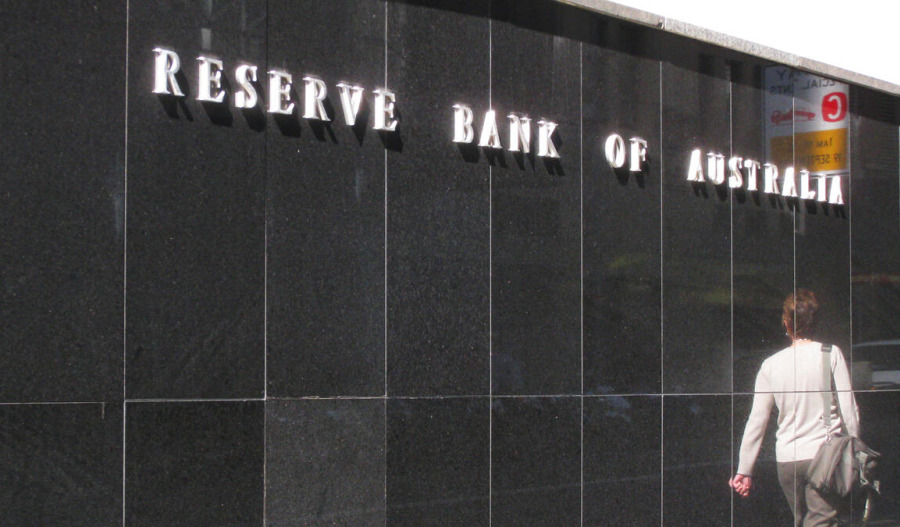
The rise in unemployment comes alongside signs of softer housing and inflation pressures, potentially reducing the need for further interest rate increases from the Reserve Bank of Australia.
"Along with slowing house prices, and the recent lower-than-expected June quarter inflation result, it's another reason to expect the RBA to remain benched at the upcoming late-September policy meeting," David Bassanese, chief economist at BetaShares, was quoted as saying in an ABC story.
ANZ analysts said the latest data were unlikely to change the RBA's assessment of the labour market.
"We do not think the data will change the RBA’s thinking around the labour market. In the statement accompanying last week’s monetary policy decision, the RBA noted that labour market conditions had eased ‘by a little more than expected in recent months’.
"In the August Statement on Monetary Policy, the RBA forecast the unemployment rate to average at 4.5% in the second half of 2026 before lifting to 4.7% in the second half of 2027 and 4.8% in 2028.
"The softening in the labour market is consistent with the signal in yesterday's Q2 WPI data, which showed steady overall wages growth, but with private sector wages growing at 0.7% q/q – the slowest pace since 2021.
"This suggests that the labour market and wages will not be a source of upside inflation risk for the RBA. This is also consistent with our preferred labour market measure – FTE-POP (an hours adjusted employment-to-population ratio), which has gradually drifted lower and is now at the low end of what is historically consistent with inflation staying in the RBA’s target band.
"Looking ahead, we continue to expect a gradual easing in the labour market as GDP growth falls below potential over the rest of 2026 and into 2027. But the translation of economic activity into the unemployment rate has diminished over time, so the additional increase in the unemployment rate will be modest."