Australian employment jumped by more than expected in June while the unemployment rate remained steady, signalling continued resilience in the labour market and strengthening expectations that the Reserve Bank of Australia may need to keep interest rates higher for longer.
The seasonally adjusted unemployment rate held at 4.4% in June, according to data released by the Australian Bureau of Statistics (ABS), matching market expectations.
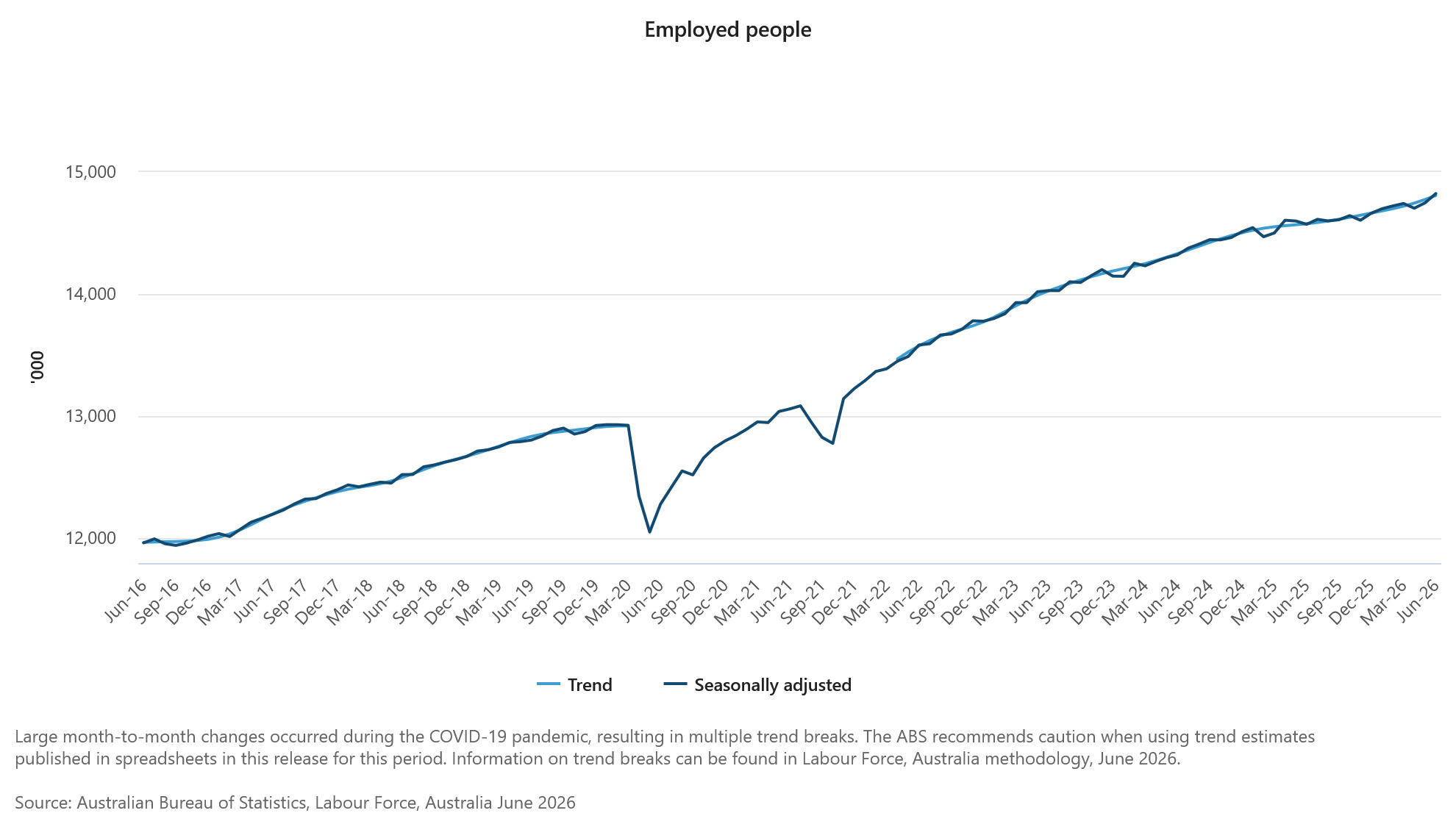
Employment increased by 76,300 people during the month, the strongest gain since April last year and far exceeding market forecasts for a 15,000 increase.
The rise was driven largely by part-time employment, which increased by 47,000 people.
ABS head of labour statistics Sean Crick noted:
“In June, we recorded a 76,000 person rise in employment, driven by a 47,000 person rise in part-time employment.
“Part of the growth in employment this month came from those who were waiting to start a job in May. This represents a stronger June movement than has been observed in recent years."

He added that employment conditions remained elevated compared with recent months.
“We also continued to see higher numbers of people remaining employed this June, following elevated levels in the recent few months.”
The number of unemployed people increased by 13,000 in June, while the participation rate climbed 0.3 percentage points to 67.0%, reaching a one-year high as more Australians entered the workforce.
The underemployment rate increased 0.2 percentage points to 6.5%, suggesting some spare capacity remained in the labour market.
Workers aged 55 to 64 recorded the largest annual increase in participation, rising 0.8 percentage points to 70.6%, according to the ABS.
Despite the stronger labour market figures, average hours worked increased only slightly, rising 0.2% after declining in May.
The stronger employment data could reinforce expectations that the Reserve Bank of Australia will continue tightening monetary policy to contain inflation pressures.
The central bank has warned that further tightening may still be required as higher energy prices continue filtering through the economy.