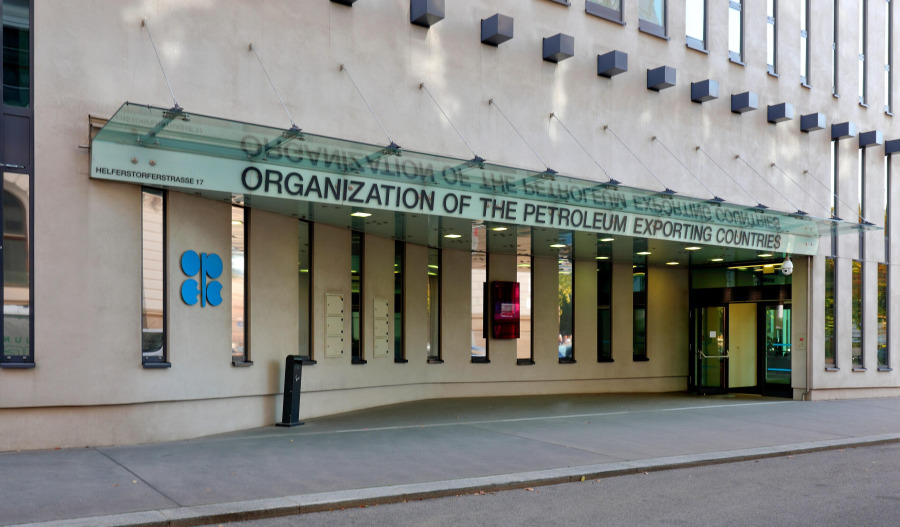
The Organization of the Petroleum Exporting Countries and allies (OPEC+) agreed on Sunday to raise oil production quotas by around 188,000 barrels per day from September, completing the phased rollback of a layer of voluntary output cuts introduced in 2023.
According to the group's statement:
"In their collective commitment to support oil market stability, the seven participating countries decided to implement a production adjustment of 188 thousand barrels per day from the additional voluntary adjustments announced in April 2023. This adjustment will be implemented in September 2026 as detailed in the table below."
Despite a series of monthly production increases this year, export disruptions caused by the wars involving Iran and Ukraine have meant much of the additional supply has remained on paper, with limited impact on global oil markets.
The latest increase by Saudi Arabia, Russia, Iraq, Kuwait, Algeria, Kazakhstan and Oman completes the unwinding of a 1.65 million barrels-per-day voluntary production cut first agreed in 2023, when the United Arab Emirates was still part of the group before leaving OPEC in May.

Although OPEC+ sources had indicated before the meeting that production increases were likely to pause during the fourth quarter, the official statement made no mention of output policy for the final three months of 2026.
A separate meeting of OPEC+'s Joint Ministerial Monitoring Committee also took place on Sunday. The committee reiterated concerns about attacks on energy infrastructure during the U.S.-Israeli conflict with Iran, warning that damaged facilities are costly and time-consuming to repair, with implications for global oil supply.
While the September increase completes one round of voluntary cuts, OPEC+ continues to maintain another layer of production reductions of roughly 2 million barrels per day affecting most members. Those cuts, introduced in 2022, are scheduled to remain in place until the end of this year.
The producer group is also reviewing members' production capacity ahead of setting 2027 output baselines, which will determine future production quotas.
Negotiations over the new quotas are expected to be challenging, with several members, including Iraq, seeking higher allocations to reflect expanded production capacity.
The seven participating countries are scheduled to meet again on 6 September.