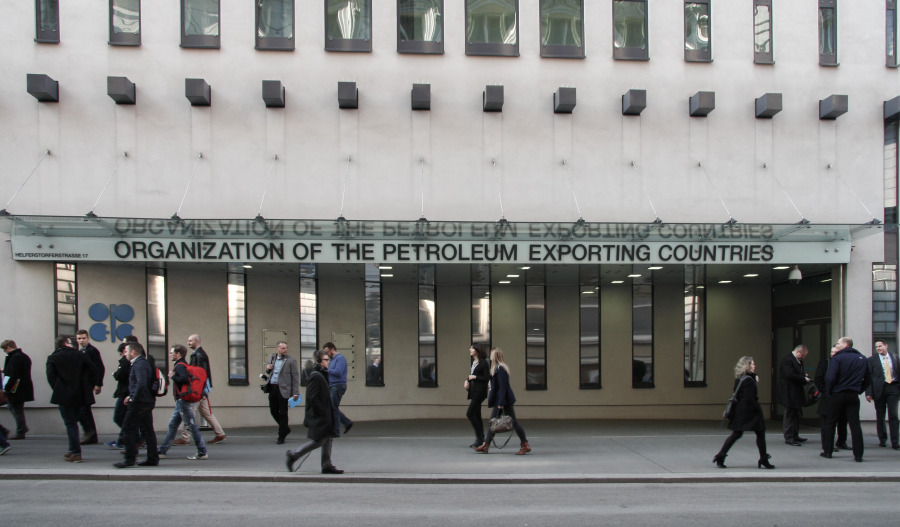
The Organization of Petroleum Exporting Countries (OPEC+) has approved a further increase in oil production targets from August, adding more supply to global markets as exports through the Strait of Hormuz gradually recover and crude prices remain under pressure.
The producer group announced the decision following its latest meeting on Sunday, saying the move reflects its ongoing commitment to maintaining stability in global oil markets.
"In their collective commitment to support oil market stability, the seven participating countries decided to implement a production adjustment of 188 thousand barrels per day from the additional voluntary adjustments announced in April 2023.
"The countries will continue to closely monitor and assess market conditions, and in their continuous efforts to support market stability, they reaffirmed the importance of adopting a cautious approach and retaining full flexibility to increase, pause or reverse the phase out of the voluntary production adjustments, including reversing the previously implemented voluntary adjustments announced in November 2023."
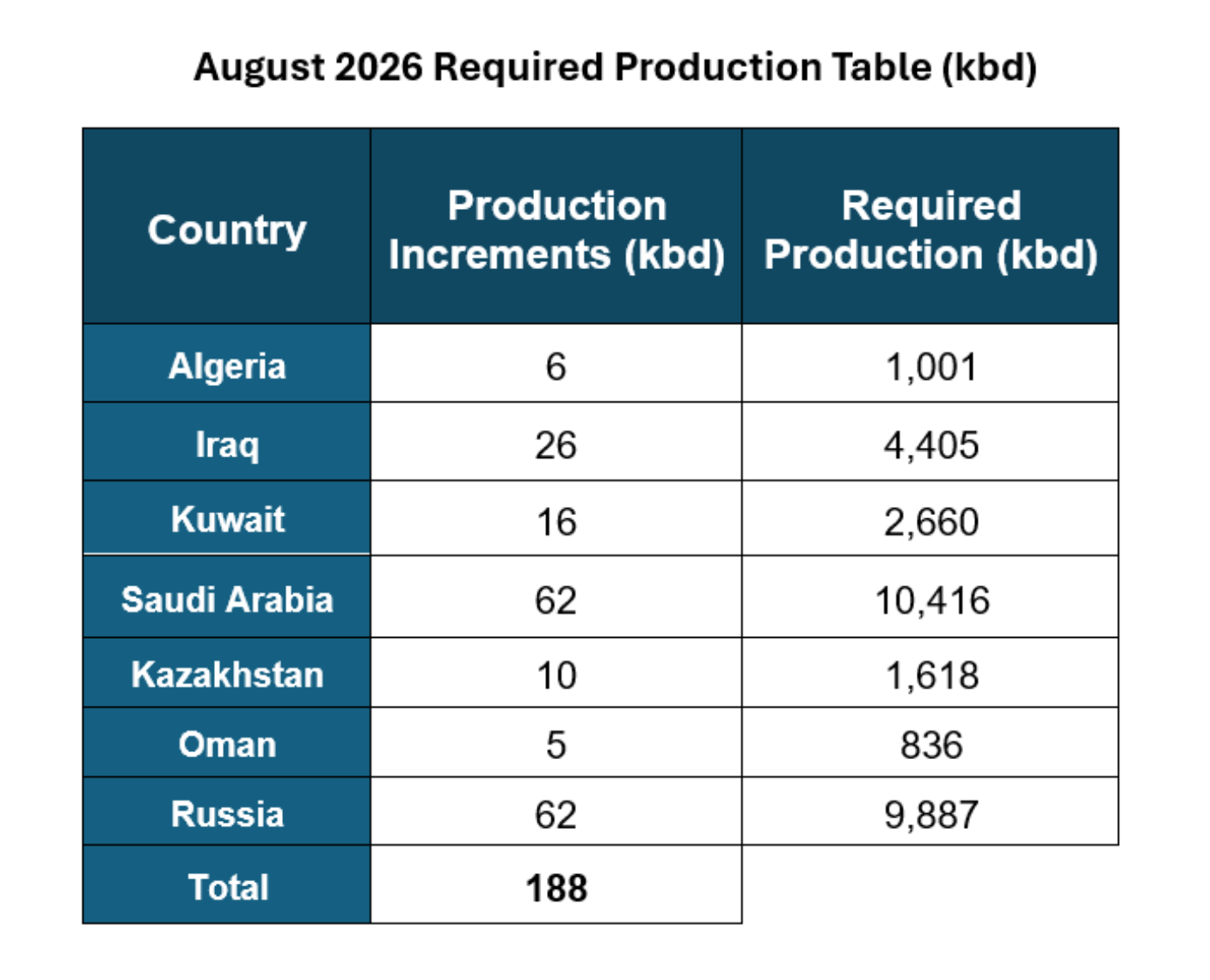
The seven core OPEC+ producers - Saudi Arabia, Russia, Iraq, Kuwait, Algeria, Kazakhstan and Oman - have increased their combined production quotas by almost 800,000 barrels per day between April and July.
However, much of that additional production has not reached international markets after the United States-Israeli conflict with Iran disrupted tanker traffic through the Strait of Hormuz. The closure affected several of OPEC+'s largest exporters, including Saudi Arabia, Kuwait and Iraq, significantly reducing shipments during the conflict.
Analysts at ANZ said logistical risks remain despite the reopening of the strategic waterway.
"Even amid reopening of the strait, members may struggle to utilise the additional capacity due to ongoing risks to their vessels."

According to OPEC data, the group's production fell to 33.13 million barrels per day in May from 42.77 million barrels per day in February. Output began recovering in June as United States efforts helped facilitate increased exports from the United Arab Emirates and other regional producers, although production remains below pre-war levels.
Oil prices have nevertheless retreated to levels seen before the conflict, weighed down by weaker Chinese import demand, stronger exports from producers outside the Middle East and a record release of strategic petroleum reserves coordinated by the International Energy Agency.
Investor sentiment has also improved following the memorandum of understanding signed by Washington and Tehran to end the conflict, with traders increasingly expecting oil supplies to normalise as negotiations continue.
The production increase comes as OPEC+ faces broader challenges following the United Arab Emirates' departure from the alliance and Iraq's calls for higher production quotas.
While OPEC+ comprises 21 member countries, only the seven core producers - and the United Arab Emirates before its exit - have been responsible for the alliance's monthly production management in recent years.
The seven producers are continuing the phased reversal of a 1.65 million barrels per day voluntary production cut agreed in 2023, when the United Arab Emirates was still a member of the group.
The UAE formally left the alliance in late April, saying it wanted greater flexibility to align production with its available capacity rather than operate under OPEC+ production restraints.
Taking the UAE's departure into account from 1 May, the remaining seven producers still have approximately 379,000 barrels per day of the original production cut left to restore, according to Reuters calculations.
If the group approves another increase of a similar size at its next meeting on 2 August, the remaining members will have fully unwound the voluntary production cuts agreed in 2023.