Oil prices resumed their climb during Thursday's Asian trade as uncertainty surrounding a fragile Middle East ceasefire renewed concerns over supply disruptions through the critical Strait of Hormuz.
By 2:50 pm AEST (4:50 am GMT), Brent crude futures climbed $2.35, or 2.5%, to US$97.10 per barrel, while U.S. West Texas Intermediate (WTI) crude gained $3.10, or 3.4%, to $97.59 per barrel.
The rebound followed a sharp sell-off in the previous session, when both benchmarks fell below $100 per barrel. WTI posted its steepest decline since April 2020, as initial optimism around the ceasefire raised expectations that shipping through the Strait would resume.
However, markets are seemingly reluctant to fully unwind geopolitical risk premiums, given the lack of clarity surrounding negotiations between Washington and Tehran and their implications for global oil flows.
The durability of the ceasefire has been called into question after continued Israeli strikes on Lebanon on Wednesday, reportedly killing over 250 people in the deadliest attacks since the conflict began.
The escalation prompted Iran to signal that it would be unreasonable to continue negotiations toward a permanent agreement under current conditions.
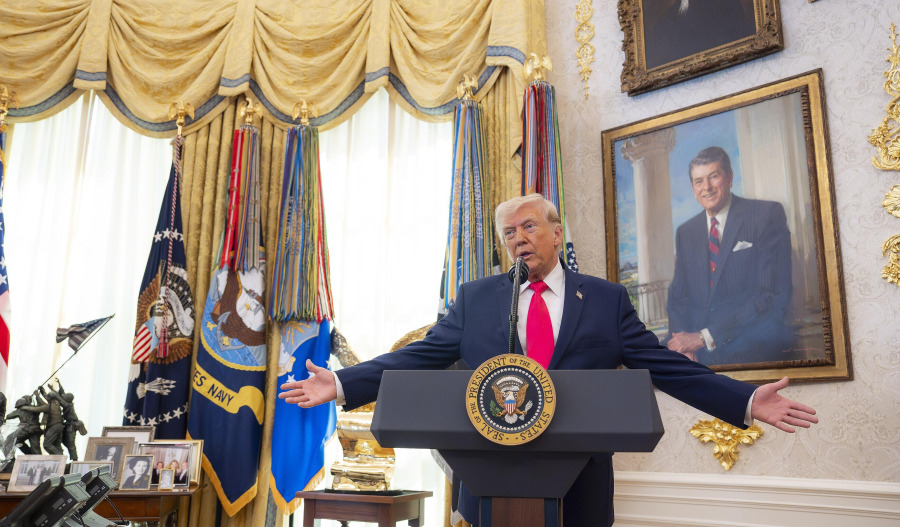
United States President Donald Trump reinforced a firm stance on the situation in a post on Truth Social:
"All U.S. Ships, Aircraft, and Military Personnel, with additional Ammunition, Weaponry, and anything else that is appropriate and necessary for the lethal prosecution and destruction of an already substantially degraded Enemy, will remain in place in, and around, Iran, until such time as the REAL AGREEMENT reached is fully complied with.
"If for any reason it is not, which is highly unlikely, then the “Shootin’ Starts,” bigger, and better, and stronger than anyone has ever seen before. It was agreed, a long time ago, and despite all of the fake rhetoric to the contrary - NO NUCLEAR WEAPONS and, the Strait of Hormuz WILL BE OPEN & SAFE.
"In the meantime our great Military is Loading Up and Resting, looking forward, actually, to its next Conquest. AMERICA IS BACK!"

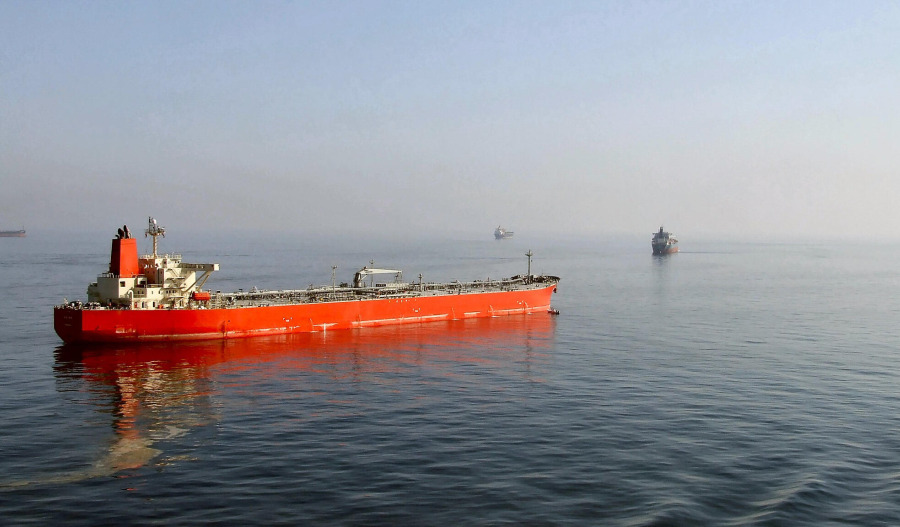
Shipping activity through the Strait of Hormuz remains constrained, with vessel operators seeking further clarity on ceasefire conditions before resuming transit.
Analysts at ANZ said in a note:
"Iran’s semi-official Fars news agency said the passage of oil tankers through the strait has been halted following Israeli attacks on Lebanon. Sporadic fighting has also continued in the region.
"Concerns the ceasefire will fail to hold are likely to see reluctance by oil exporters and ship owners to put their vessels back into the region in the near term."
At the same time, regional energy infrastructure remains under threat. Iran has reportedly struck facilities in neighbouring countries following the ceasefire, including a pipeline in Saudi Arabia used to bypass the Strait of Hormuz, according to industry sources.
Kuwait, Bahrain and the United Arab Emirates have also reported missile and drone attacks.
Despite the heightened risks, Goldman Sachs maintained its oil price forecasts for the second half of the year, projecting Brent crude at $82 in the third quarter and $80 in the fourth, while WTI is seen at $77 and $75 respectively.
The bank did, however, lower its second-quarter forecasts for Brent to $90 and WTI to $87, “given the reduction in risk premium at the front of the curve”, noting that oil flows through the Strait of Hormuz were already beginning to edge higher.
On the supply side, the U.S. Energy Information Administration (EIA) reported that commercial crude oil inventories, excluding the Strategic Petroleum Reserve, rose by 3.1 million barrels in the latest week to 464.7 million barrels.
The increase exceeded market expectations for a build of around 700,000 barrels and leaves inventories approximately 2% above the five-year average for this time of year.