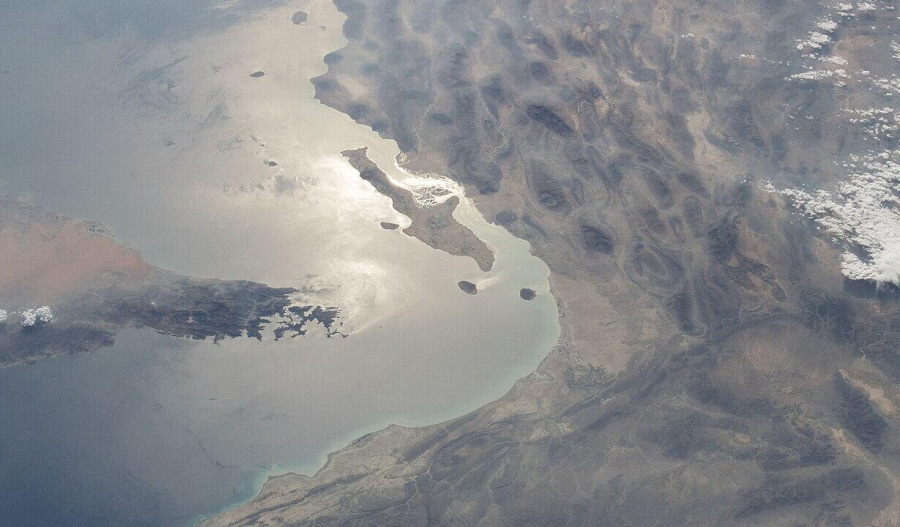
Oil prices fell on Thursday, extending recent losses, as hopes for an agreement involving Iran and Oman raised expectations that the Strait of Hormuz could reopen and ease supply disruptions stemming from the Middle East conflict.
By 3:35 pm AEST (5:20 am GMT), Brent crude futures for November delivery were down 51 cents, or 0.6%, at $86.43 a barrel, while West Texas Intermediate crude futures fell 47 cents, or 0.6%, to $81.76.
Iran and Oman are working to finalise details of an agreement covering the Strait of Hormuz, a senior Iranian source told Reuters, after Iran's Revolutionary Guards said the two countries had reached an agreement on sharing revenue from the key waterway.
The strait transported oil and natural gas equivalent to about one-fifth of global fuel consumption before the US-Israeli war with Iran began on 28 February.
Since Iran moved to close the waterway in response, oil flows have fallen to about one-quarter of pre-war levels, according to ship-tracking data.
ANZ analysts commented in a note to clients:
"Crude oil edged lower as the prospect of the Strait of Hormuz reopening improved amid ongoing talks. Iran and Oman have been conferring in recent days around the management of the waterway.
"The Islamic Republic’s military said that the two sides had reached a revenue-sharing agreement, although officials reiterated that a deal on navigation would not equate to an immediate reopening.

"That would most certainly require the U.S. to lift its blockade of Iranian ports, a point Iran has stood by. The deal comes as further reports of oil flowing through the strait. President Trump claimed 10mbbl had exited Hormuz on Tuesday.
"Satellite imagery shows Saudi Arabia’s oil loadings inside the Persian Gulf are rising. About 7mbbl of shipping capacity was loading at the Ras Tanura terminal. Saudi Aramco is said to be offering crude in Asia for September loading at locations outside the Strait of Hormuz.
"Nevertheless, concerns over shortages in the oil market persist. Reports suggest that President Putin is planning an escalation in Ukraine as peace talks stall. This could spark further attacks on energy infrastructure in the region.
"Ukraine has been striking key refineries and ports that have prevented Russia from exporting to the international market. These attacks have also tightened the diesel market. The reliance on inventories reduced US stockpiles of distillate to 103.4mbbl last week, their lowest ever on a seasonal basis according to U.S. government data.
"Gasoline inventories also recorded a large drawdown last week (-2,536kbbl), while the U.S. strategic reserve saw 3.7mbbl withdrawn."
Among economic data, the US Energy Information Administration (EIA) reported on Wednesday (Thursday AEST) that U.S. commercial crude oil inventories, excluding the Strategic Petroleum Reserve, increased by 0.1 million barrels from the previous week.
Markets had expected an inventory build of 600,000 barrels.
At 428.9 million barrels, U.S. crude inventories were 1% above the five-year average for this time of year.