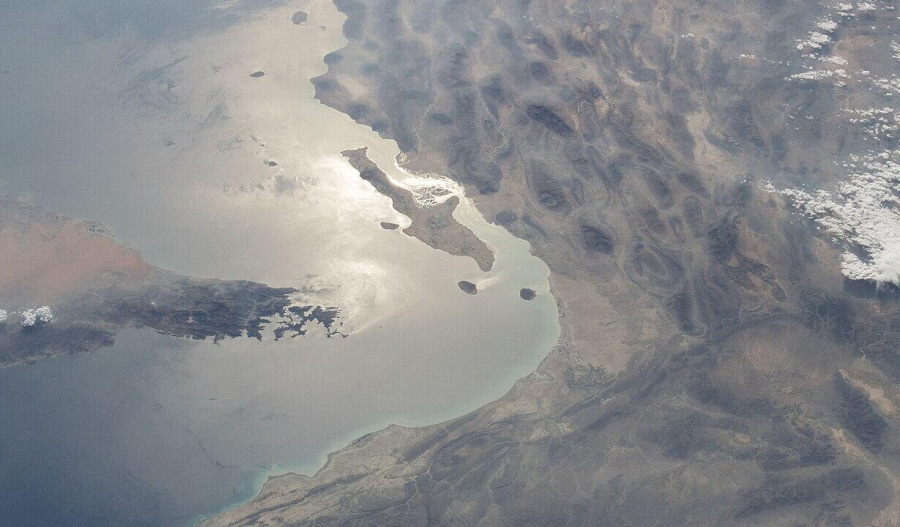
Oil prices fell during Asian trading on Wednesday, extending the previous session's losses, as hopes grew that the Strait of Hormuz could reopen after Iran said it had resumed talks with Oman on managing the strategic waterway.
By 3:25 pm AEST (5:25 am GMT), Brent crude futures for November delivery had fallen $1.62, or 1.9%, to US$85.65 a barrel, while United States West Texas Intermediate (WTI) crude futures declined $1.49, or 1.8%, to $80.87. Both benchmarks fell more than 3% on Tuesday.
ING commodities strategists said in 'The Commodities Feed':
"The catalyst appears to be positive signals from Persian Gulf talks. Following a visit to Tehran, Pakistani officials say they have made significant progress on ending the war.
"Meanwhile, Iran and Oman appear closer to an agreement on shipping routes through the Strait of Hormuz.
"However, any agreement between these two parties does not mean we will see normalisation in oil flows through the key chokepoint.
"We would likely need to see the U.S. lift its blockade on Iranian ports and ease sanctions on Iran before we see any move towards normalisation.

"Oil-flow surveillance has quietly become one of the market’s most critical risk metrics. Tankers are increasingly transiting the Strait of Hormuz with transponders switched off, complicating visibility just as there’s been a noticeable pickup in shuttle movements moving crude out of the Persian Gulf.
"Together, these trends make real-time tracking of Hormuz flows a far more consequential and challenging task for traders.
"The U.S. claims that an average of 8-9m b/d of oil is flowing through the Strait of Hormuz, which may be achievable over short time periods.
"However, over a longer time frame, this number seems aggressive. Several ship-tracking estimates are coming in much lower, ranging from 2m b/d to around 6m b/d."
Iran and Oman reportedly said on Tuesday that they had discussed "a joint temporary navigational corridor" through the Strait and agreed to clear the waterway of mines.
Washington on Monday expanded sanctions targeting Iran's economic lifelines and threatened to penalise countries that continue to do business with Tehran, although it said the measures would not be imposed immediately.
In the U.S., the American Petroleum Institute (API) reported crude oil inventories increased by about 4.2 million barrels in the week ended 21 August.
Official inventory data from the U.S. Energy Information Administration (EIA), the statistical arm of the U.S. Department of Energy, are due later in the U.S. session (Thursday AEST).