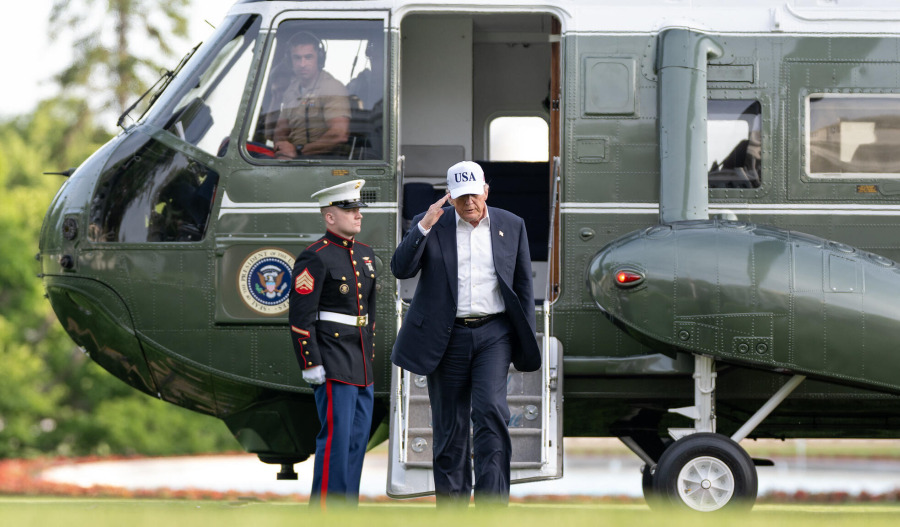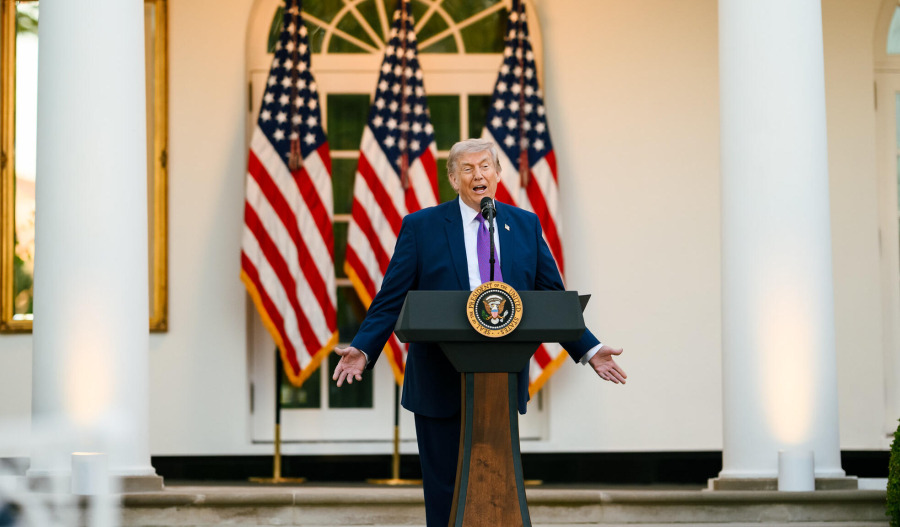
Oil prices eased during Wednesday's Asian trade after United States President Donald Trump said the conflict with Iran would end “very quickly”, although investors remained cautious over the outlook for Middle East oil supplies amid ongoing geopolitical tensions.
By 2:45 pm AEST (4:45 am GMT), Brent crude futures were down US$0.71, or 0.6%, at US$110.57 per barrel, while U.S. West Texas Intermediate crude futures fell US$0.42, or 0.4%, to US$103.73 per barrel.
The decline followed comments from Trump late Tuesday in which he suggested the war with Iran could soon conclude, despite earlier warnings that the United States may need to launch fresh strikes against Tehran.
The U.S. president said he had been “an hour away” from ordering another attack before postponing the decision.
Trump’s latest remarks came after he earlier paused a planned resumption of hostilities following a new proposal from Tehran aimed at ending the conflict.
Analysts at ANZ said investors continued to price in the risk of prolonged disruptions to Middle East oil supplies.
"Investors are increasingly pricing in an indefinite closure. A recent Goldman Sachs poll found that 43% of surveyed investors don’t expect shipping to return to normal until after July.
"In the meantime, pressure from the U.S. and Iran continues to weigh on oil supplies. The U.S. naval blockade of Iranian ports has left Iran’s Kharg Island oil terminal idle for at least 10 days. Media reported that the U.S. has seized another Iran-linked vessel.

"Iran’s Supreme National Security Council is said to have established the Persian Gulf Strait Authority and reiterated that full transit would await resolution of its conflict with the U.S. and Israel."
Both oil benchmarks had already fallen 0.7% and 0.2% respectively on Tuesday after U.S. Vice President JD Vance said Washington and Tehran had made progress in negotiations and neither side wanted to resume military action.
Despite the recent pullback, analysts warned the market may still be underestimating the risk of a prolonged supply shock.
According to Reuters, Citi said on Tuesday it expected Brent crude to rise to $120 per barrel in the near term, arguing that oil markets were under-pricing the possibility of extended supply disruptions and broader geopolitical risks.
Global oil consumers have increasingly relied on commercial and strategic inventories to offset supply shortages caused by the conflict.
Meanwhile, U.S. inventory data pointed to tightening crude supplies.
Data from the American Petroleum Institute (API) showed U.S. crude oil inventories fell by 9.1 million barrels last week, marking a fifth consecutive weekly decline and significantly exceeding expectations for a 3.4 million barrel drawdown.
Official figures from the U.S. Energy Information Administration (EIA) are expected later on Wednesday in the United States (Thursday AEST), with markets expecting a further decline of 2.5 million barrels in crude stockpiles for the week to May 15.