Oil prices climbed to their highest levels in a month during Tuesday's Asian session as the United States reinstated its naval blockade of Iran and both countries intensified military action around the Strait of Hormuz, fuelling concerns over global energy supplies.
By 3:05 pm AEST (5:05 am GMT), Brent crude futures had risen US$1.66, or 2.0%, to $84.98 a barrel, while U.S. West Texas Intermediate (WTI) crude gained $1.75, or 2.2%, to $79.89 a barrel.
Brent had surged 9.6% on Monday, marking its biggest one-day advance since May 2020.
ING commodity strategists said in The Commodities Feed that the renewed U.S. action had significantly increased the geopolitical risk premium in oil markets.
"The return of the U.S. blockade is much more impactful for markets than the previous suspension of the sanction waiver on Iranian oil.
"The Memorandum of Understanding is starting to look well and truly dead. The consensus says neither side wants an escalation - yet their recent moves tell a different story. Clearly, oil prices simply aren’t high enough yet to compel Washington to push harder for de-escalation.

"The U.S. continues to say that the Strait of Hormuz is open. But given the growing risk of attack, these comments will offer little comfort to ships. This is reflected in ship tracking data, which shows that vessel crossings yesterday fell to just a trickle.
"There will likely be additional vessels navigating in the dark given increased hostilities. But clearly, the trend in vessel movements is downward."
The U.S. military carried out a third consecutive night of strikes against Iran on Monday after President Donald Trump reinstated a blockade on Iranian shipping and proposed charging a 20% fee to protect commercial vessels transiting the Strait of Hormuz.
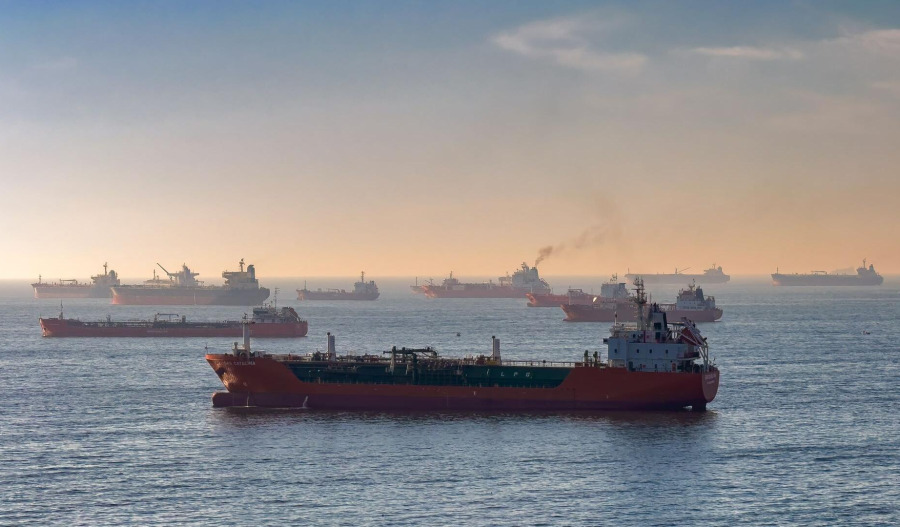
The conflict also affected commercial shipping. The United Arab Emirates (UAE) Ministry of Defence said two UAE oil tankers were struck by Iranian cruise missiles in the southern shipping lane of the Strait of Hormuz, within Omani territorial waters.
One Indian crew member was killed, and eight others were injured.
Meanwhile, the Organization of the Petroleum Exporting Countries (OPEC) reported in its latest monthly market report that crude production rose by 1.4 million barrels per day month-on-month to 18.2 million barrels per day.
The increase was led by Kuwait and Iraq, which boosted production by 880,000 barrels per day and 446,000 barrels per day, respectively. The United Arab Emirates, which recently exited OPEC, increased output by 1.64 million barrels per day from the previous month to 3.8 million barrels per day.