Oil prices surged during Monday's Asian deals as renewed military strikes between the United States and Iran threatened energy shipments through the Strait of Hormuz, raising fresh concerns over global crude supplies.
By 3:05 pm AEST (5:05 am GMT), Brent crude futures had risen US$3.23, or 4.3%, to $79.24 a barrel, while U.S. West Texas Intermediate crude gained $3.10, or 4.3%, to $74.51 a barrel.
ING commodities strategists said in The Commodities Feed:
"Iran claims that the Strait of Hormuz is shut until further notice. The U.S. pushed back, saying that it will ensure freedom of navigation.
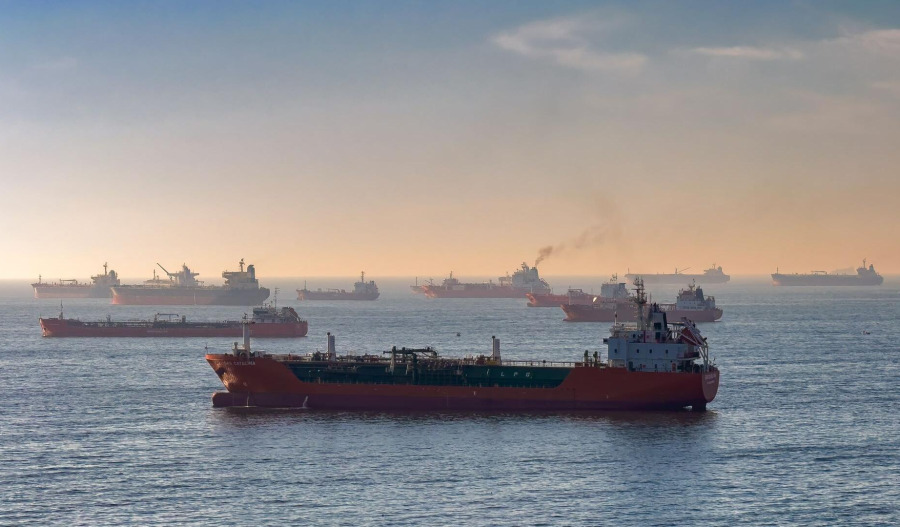
Escalation has slowed vessels transiting the strait to a trickle, renewing concerns over oil supply tightness through the third quarter.
"Despite the renewed hostilities between the U.S. and Iran, the latest positioning data shows that speculators are still reluctant to jump into the oil market. Speculators reduced their net long in ICE Brent by 547 lots over the last reporting week to 55,087 lots as of last Tuesday.
"The uncertainty over the recent flare-up in tensions - whether it will be short-lived or more sustained - seems to be keeping a large share of market participants on the sidelines."
The gains came after U.S. forces carried out another wave of strikes against Iran on Sunday, hitting dozens of targets across multiple locations with precision-guided munitions, according to U.S. Central Command.

Meanwhile, at least six short-range ballistic missiles were reportedly launched from Iran's Bushehr Province towards Bahrain, further heightening fears of a broader regional conflict.
U.S. President Donald Trump said on Sunday that the Strait of Hormuz remained open to commercial traffic, despite Iran's earlier declaration that it had closed the waterway after a vessel travelling on what it described as an unauthorised route was struck.
According to Reuters, citing ship-tracking data from Kpler, just six vessels transited the strait on Sunday, the lowest daily total in five weeks.
Open Source Intelligence Monitor also posted on X, citing shipping data from MarineTraffic.com:
"Traffic through the Strait of Hormuz remains extremely limited. Over the past 24 hours, fewer than five merchant vessels have completed the transit, all via the Iranian (northern) traffic separation scheme, following yesterday's Islamic Revolutionary Guard Corps Navy (IRGC-N) declaration that the Strait is closed.
"It is likely the actual number of transits is somewhat higher, as some vessels are operating with their Automatic Identification System (AIS) transponders disabled and therefore do not appear in publicly available tracking data."
The latest escalation has cast further doubt over the future of the interim U.S.-Iran agreement signed last month, which sought to reopen the strait and end the conflict following a further 60 days of negotiations.
Despite ongoing tensions, the International Energy Agency (IEA) said in its monthly report on Friday that global oil supply increased by 4.1 million barrels per day in June following the agreement, although production remained 9.4 million barrels per day below pre-war levels.