Regardless of whether you believe the Trump administration’s unprovoked attack on Iran was a lurch towards peace in the region, or a distraction from [US] voter preoccupation with the Epstein files, there are material impacts for investors everywhere.
While President Trump has signalled that Operation Epic Fury – now on day five - could be over in four to five weeks, markets are already speculating on the implications of it being a much more protracted affair.
The declared objective is to drastically degrade Iran’s military capabilities and potentially trigger a change of regime.
Iran’s initial reaction has included wide-ranging attacks on other countries in the region, including not just U.S. military bases but also civilian targets and oil facilities in Saudi Arabia, the United Arab Emirates, Bahrain, Kuwait, Jordan and Qatar.
Black swan fallout
That’s not great news for investors or the capital market, both of whom want to make investment decisions based on as much certainty as possible.
In anyone’s language, the U.S war with Iran is what analysts call a black swan event; rare and unpredictable with widespread, or potentially catastrophic consequences.
While they’re bad for investors in the short term, these black swan events also allow long-term investors to purchase assets at lower prices.
Based on her initial observations, Monica Defend, head of Amundi Institute, thinks the latest Iran situation highlights a structural shift with geopolitics again surfacing as a recurring macro driver.

Rotation and dispersion
Defend is witnessing a lean by markets further into what she calls a “controlled disorder” environment, where shocks generate rotation and dispersion rather than create a uniform market direction.
Without a Strait of Hormuz disruption, she believes sustained oil prices above US$100/barrel are unlikely.
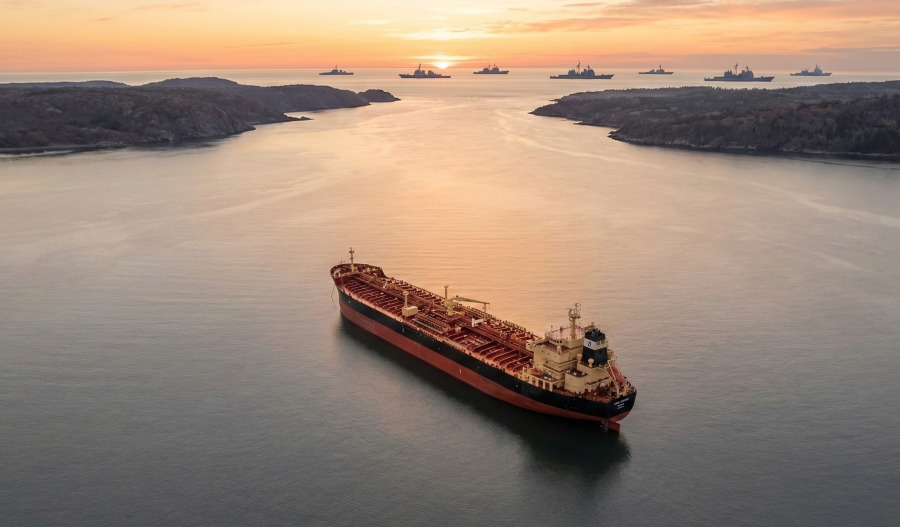
However, the latest Marine tracking data shows a drastic reduction in the movement of large oil tankers through the Strait of Hormuz, with traffic having dropped from a typical 50 tankers over 100 metres travelling in both directions every day, down to zero.
Whether Trump’s promise of insurance to oil tankers and escorts across the Strait of Hormuz gets tankers moving any time soon remains to be seen.
However, Defend reminds investors that the downside impact of oil flows drying up is the likelihood of this volatility event morphing into a systemic one.
Defining market features
While that too remains to be seen, Defend also reminds investors that geopolitics is now structurally embedded in the investment cycle.
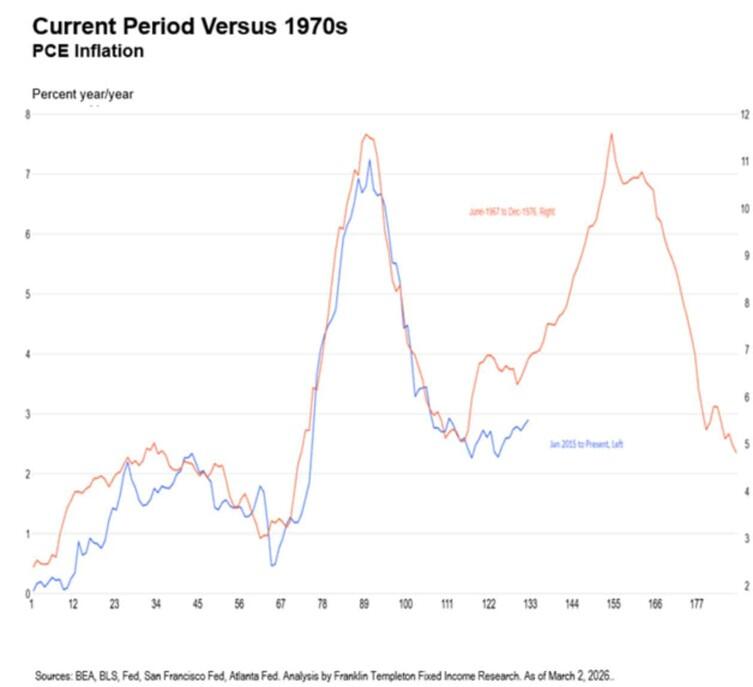
The net effect is that energy volatility, inflation uncertainty, and regional dispersion are returning as defining market features.
“In the short term, it feeds inflation risk, US$ strength, and asset-class dispersion,” she notes.
While the U.S. remains relatively insulated - benefiting from its energy exporter status and safe-haven flows - Asia and EM oil importers face tighter financial conditions and weaker external balances.
In terms of an asset class perspective, Defend noted:
- Gold is the clearest winner across scenarios.
- U.S. assets remain relatively resilient.
- EM assets and oil importers are most vulnerable.
- Commodity currencies benefit from terms-of-trade improvement.
- Credit risks remain contained but skewed to lower-quality borrowers.
Risks to global growth
While Sonal Desai, CIO with Franklin Templeton Fixed Income, agrees that emerging markets are likely to be tested - with oil importers especially vulnerable – she also expects risks to global growth to intensify the longer the U.S. conflict with Iran goes on.
“How this evolves will shape the economic fallout and the impact on financial markets,” said Desai, who believes it would take a substantial and prolonged shock to oil supply and prices to trigger a global recession.
“In the near term, higher oil prices should raise inflation expectations and lead investors to anticipate a less dovish stance by the Fed, the ECB and other major central banks.”
Like Defend, Desai also expects the US$ to temporarily strengthen, reflecting A) a retrenchment in Fed rate cut expectations and B) the U.S. economy’s limited exposure to an oil price shock relative to the rest of the world.
Admittedly, U.S. Treasury bills could see some safe-haven inflows; however, given the inflation risks, a sustained long-end rally is unlikely.
Economic and market impact
Whether the U.S. attacks escalate further or moderate remains to be seen.
Meantime, Desai's initial read of the economic and market impact includes:
1) Primary channel of impact will be through oil prices: Given that markets entered this crisis in a situation of oversupply, there’s some spare pipeline capacity that can compensate for lower tanker traffic.
Should the Strait of Hormuz remain closed for a month, commodity analysts’ estimates suggest oil prices would likely rise between US$10 and $20 per barrel or a sharper increase if Hormuz remains closed for longer, or if Iran destroys some of the oil infrastructure in the region.
2) The more immediate impact will be on inflation and inflation expectations: Two-year EUR inflation swaps have already jumped, and similar considerations should lead investors to price a less dovish stance by the Federal Reserve (Fed), the European Central Bank and other major central banks.
3) The U.S. dollar is likely to strengthen in the near term: A less dovish Fed and an energy-rich U.S. economy, together with risk aversion, are likely to temporarily halt, if not reverse, the previous outlook of a structurally weaker US$.
Other currencies likely to benefit from safe-haven buying include the Swiss Franc.
4) U.S. Treasuries could see some safe-haven inflows: But the impact of stronger safe-haven demand on yields should be balanced against fears of resurgent inflation and a less dovish Fed.
5) The resilience of emerging markets (EM) will now be tested: We might see the strongest impact after a very strong start to the year in EM assets.
This crisis will likely underline the divide between oil exporters and oil importers, with the latter in a much more vulnerable position.
EM assets will likely now feel the effects of US$ strength and potentially higher U.S. interest rates against the backdrop of higher oil prices.
6) Risks to global growth will intensify the longer the conflict goes on: But it would take a substantial and prolonged shock to oil supply and prices to trigger a global recession.
Russia’s invasion of Ukraine pushed crude oil prices above US$100 per barrel for about three months and tripled gas prices, but the global economy proved resilient.