Artificial intelligence's giants are funding each other and queuing to tap the public ledger, three of them floating inside a single year. Strip away the fluff and the glaring constraint isn't working capital - it's power.
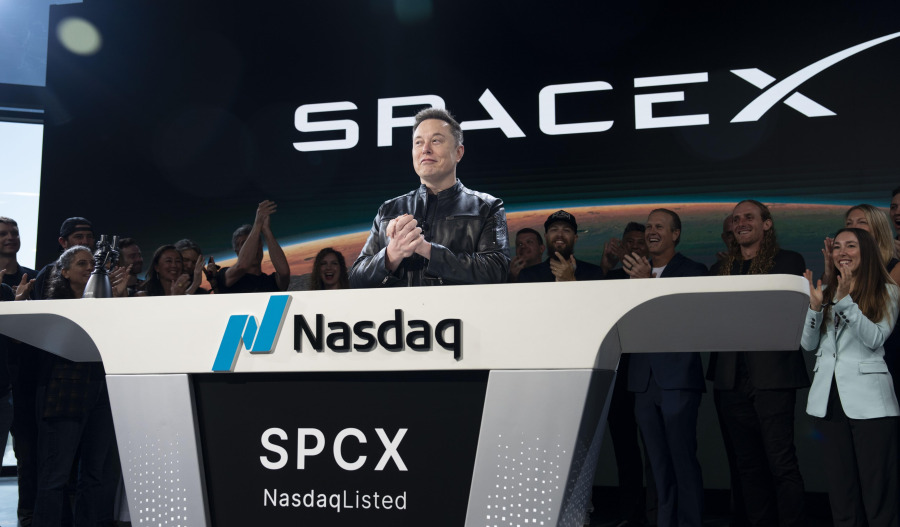
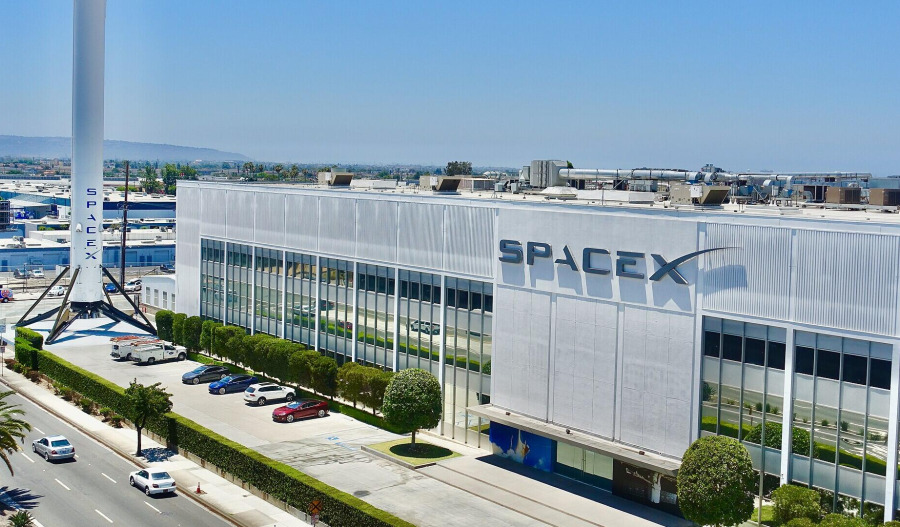
SpaceX currently has the headlines, but its float onto United States markets is only the first of three - each likely in the trillions of dollars.
Anthropic lodged confidential IPO paperwork on 1 June, and OpenAI followed a week later, each chasing a valuation near or above a trillion dollars, each leaning on the same two banks - Morgan Stanley and Goldman Sachs.
Behind the listings runs a stranger arrangement, where a small group of firms keep paying one another to build the same thing.
NVIDIA backs the AI labs, the labs commit hundreds of billions to the cloud providers, and the clouds spend it straight back on NVIDIA chips.
Analysts now tally more than US$800 billion sitting inside that loop, which is why the question beneath every float is whether this is demand or the same money going round in a circle.
Amazon, Google, Microsoft and Meta together plan around $725 billion of capex in 2026, most of it on data-centre hardware.
The trouble is that the spending runs well ahead of the revenue it chases, with OpenAI alone on track to lose roughly $14 billion this year, close to triple its 2025 loss.
Critics hear an echo of the late 1990s, when companies bought each other's services to make growth look real, and the same worry now shadows the AI loop.
Not quite a pawn shop
It is tempting to call this the end of an era, the moment the share-shrinking machine of the past two decades threw itself into reverse.
The data is less dramatic than the story.
Goldman Sachs reckons U.S. companies will issue about $700 billion of equity this year, roughly 1% of the market and in line with the 2015 to 2019 average, while buying back close to $1 trillion of their own stock.
On those numbers, the float is still shrinking on balance, and the roughly 100 listings expected this year sit well below the 250-odd of 2021 and the near-400 of the dot-com peak.
The genuine wall of supply is not this year's floats but the lockups behind them, with shares due to unlock through 2027 towering over any year since 1998.

Bubble or build-out
That leaves the question everyone keeps circling, which is whether this is a bubble.
The honest answer is that it carries the classic symptoms and an unusual defence at once.
Valuations look stretched, the financing loops back on itself, and a growing camp expects a correction of 20 to 30% in AI-heavy names, spread across 2026 and 2027 rather than landing in a single crash.
Against that, these firms earn real revenue, and corporate cash flow runs at about three times its 1999 level, a buffer the dot-com crowd never had.
"Someone is going to lose a phenomenal amount of money," OpenAI's Sam Altman has conceded, even while he keeps raising capital at higher prices.
Jeff Bezos has the tidier label, an industrial bubble, in which money is wasted and companies fail but the infrastructure that survives reshapes the economy.
Follow the power
If a constraint finally bites, it will not be money but megawatts.
NVIDIA's Jensen Huang and Elon Musk now agree on one point: that the limiting factor for AI is electricity rather than chips, with Musk warning the industry will soon make more processors than it can switch on.
Close to half the U.S. data centres planned for this year already face delays waiting on grid connections, while operators auction emergency capacity and data-centre power bills climb.
American utilities are lining up something like $1.4 trillion of investment, reactors at Three Mile Island are being restarted to feed a single tech firm, and the nuclear revival rests on small modular designs whose economics remain unproven.
The durable money may sit in the picks and shovels - the grid, the gas, the reactors and the batteries that the whole build-out runs on.
It is the same wall SpaceX wants to vault by putting its data centres in orbit.
Where it leaves you
So, where does this leave anyone trying to play it rather than watch it?
The base case is a noisy, rotating market that swallows the floats without breaking, as the smart money shifts from the model-makers to the power and hardware beneath them.
The bull case is that AI earns its keep, the capex turns into profit, and today's spending looks early rather than reckless.
The bear case is the plainest; the circle runs on belief, and the moment one big buyer blinks or the 2027 lockups arrive, the whole thing reprices at once.
Whichever lands, the tell will be in the boring numbers, in power prices, interconnection queues and the first cash-flow statements these companies are finally forced to publish.