SpaceX sold investors on a US$45 billion, three-year AI contract. Then Musk's own posts shrank it to a few months - and the lawyers wanted to know why.
Missed the first instalment? Read here: Compute Economy Pt 1: SpaceX a data centre wearing a rocket
SpaceX's AI arm loses money at speed, and the only way the sums work is if outside customers pay to use the data centres it owns.
Two large ones have signed up, and between them they turned company into something it never set out to be.
Anthropic agreed to rent the full capacity of the Colossus 1 site in Memphis for $1.25 billion a month, taking more than 300 megawatts and over 220,000 Nvidia chips.
Google followed weeks later, committing $920 million a month from October for a slab of compute, with cancellation rights from the end of 2026.
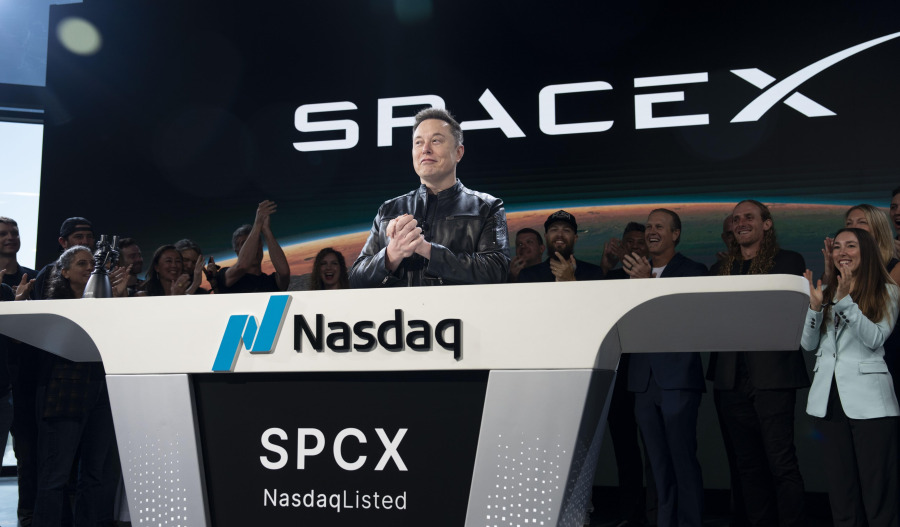
On the page, the Anthropic deal ran through May 2029 and totted up to about $45 billion, the sort of marquee revenue line that helps carry a $1.8 trillion valuation.
Then Musk went on X and made that number a good deal smaller.
The deal shrunk
The prospectus had Anthropic's payments running through May 2029, reading like a multi-year arrangement.
Days later, Musk posted that SpaceX had not committed to anything long-term, describing it as a 180-day lease with a 90-day mutual cancellation right after that.
On his telling, the committed floor is nearer $7.5 billion than $45 billion, a gap of some $37.5 billion that investors had been asked to take largely on trust.
His explanation was blunt - the short stay was SpaceX's own request, and it might want the compute back if things got tight.
SpaceX then filed an amended prospectus noting that, after an initial three-month period, either side could walk on 90 days' notice.

Enter the lawyers
A founder rewriting the terms of his flagship contract on a social network, during the quiet period before a float, is the kind of thing governance scholars tend to notice.
Columbia Law's Eric Talley put the bind plainly - either Musk is right, and the filing is materially misleading, or the filing is right, and Musk is freelancing.
Either way, working out whether Anthropic pays $15 billion a year for three years or far less over a few months is central to putting any value on the company.
Those posts also sit awkwardly with the rules limiting what executives may say in the run-up to a listing, though enforcement looks improbable.
"The SEC shows no apparent interest in enforcing quiet periods," John Coates, a former acting director of the regulator now at Harvard Law, told Reuters.
Built for Grok
The reason all that capacity was sitting spare is the part SpaceX would rather skate past.
Colossus 1 was built to train Grok, xAI's chatbot, which has been losing users fast.
Monthly app downloads slid from more than 20 million in January to about 8.3 million by April, the service kept falling over, and every co-founder bar Musk has now left.
With its own training moved to the newer Colossus 2, SpaceX is letting the idle cluster to a direct rival and, in the filing's own phrasing, monetising unused compute.
The AI segment still lost $2.5 billion last quarter on $818 million of revenue, so the rent is not unwelcome.
Real demand
None of this means the contracts are hollow, and the sceptical read can be pushed too far.
Anthropic is not a minnow being kept alive: its run-rate revenue has passed $30 billion, it's closing on its first operating profit, and it buys compute from Amazon, Microsoft and Google too, so SpaceX is one supplier among several.
Google, meanwhile, is reckoned to own more AI compute than any rival, and it is renting from a rocket company only because demand for its Gemini Enterprise tool ran hotter than even it had planned for.
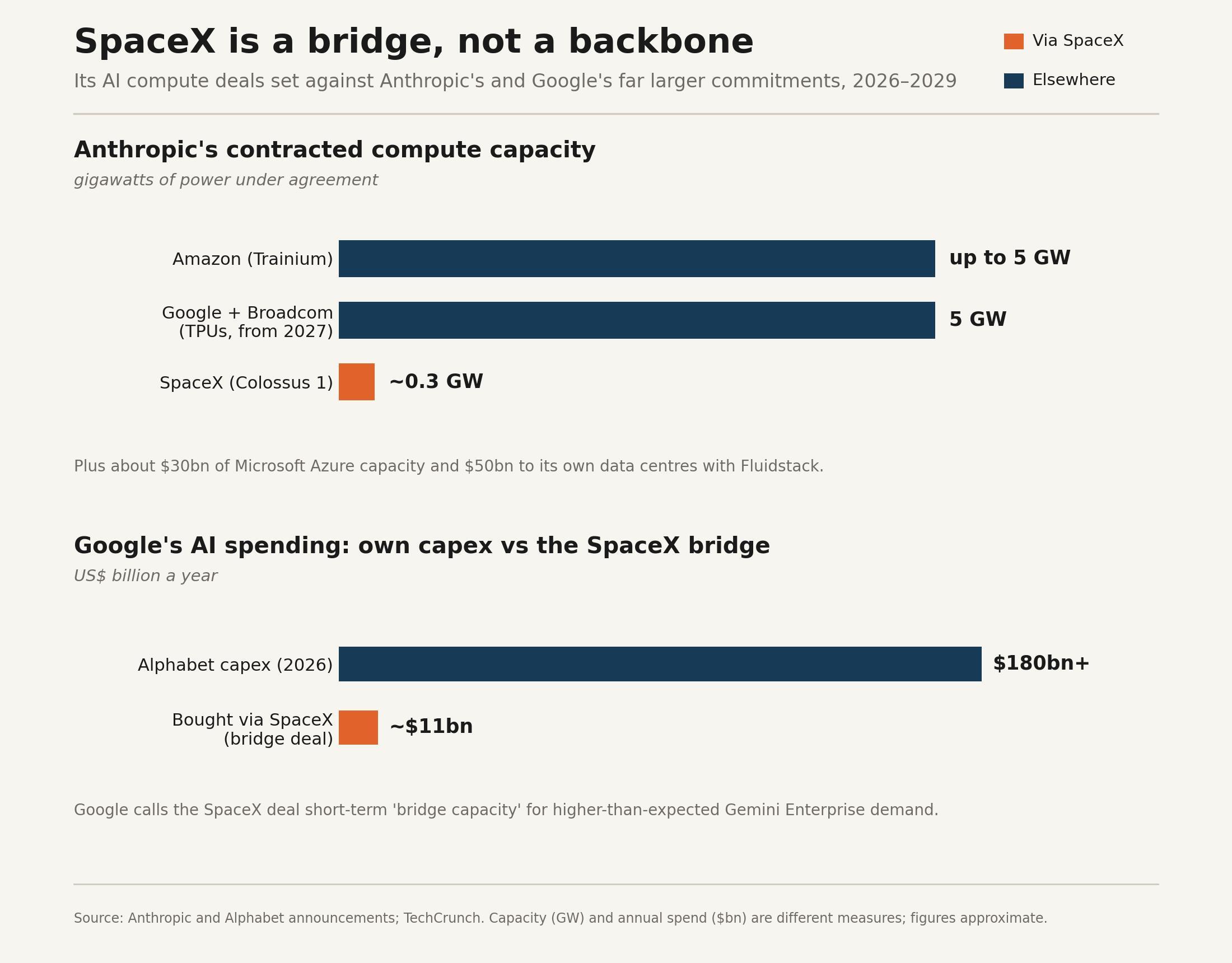
So the appetite underneath these deals looks genuine - what's unsettled is how durable SpaceX's share of it proves, and how cleanly the company set it out.
Where to next?
The upshot is a $1.8 trillion company moonlighting as a data-centre landlord in a crowded market that already holds CoreWeave and Nebius, both of which wobbled the day the Google deal landed.
It's a fair distance from Mars, and a pivot for a unit built to win the AI race rather than rent out the racks.
The wider is, both Anthropic and OpenAI are lining up their own IPO's this year, each chasing money from the same pool of investors.
That circle - AI firms paying each other while they queue to tap the public - is where this series turns next.