The biggest float in history sold investors a space story. Read the prospectus, and 93% of the pitch is artificial intelligence.
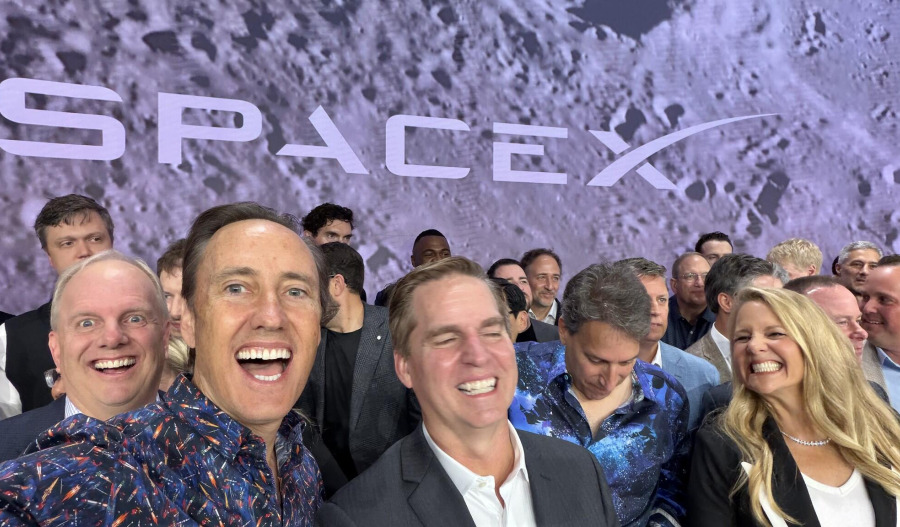
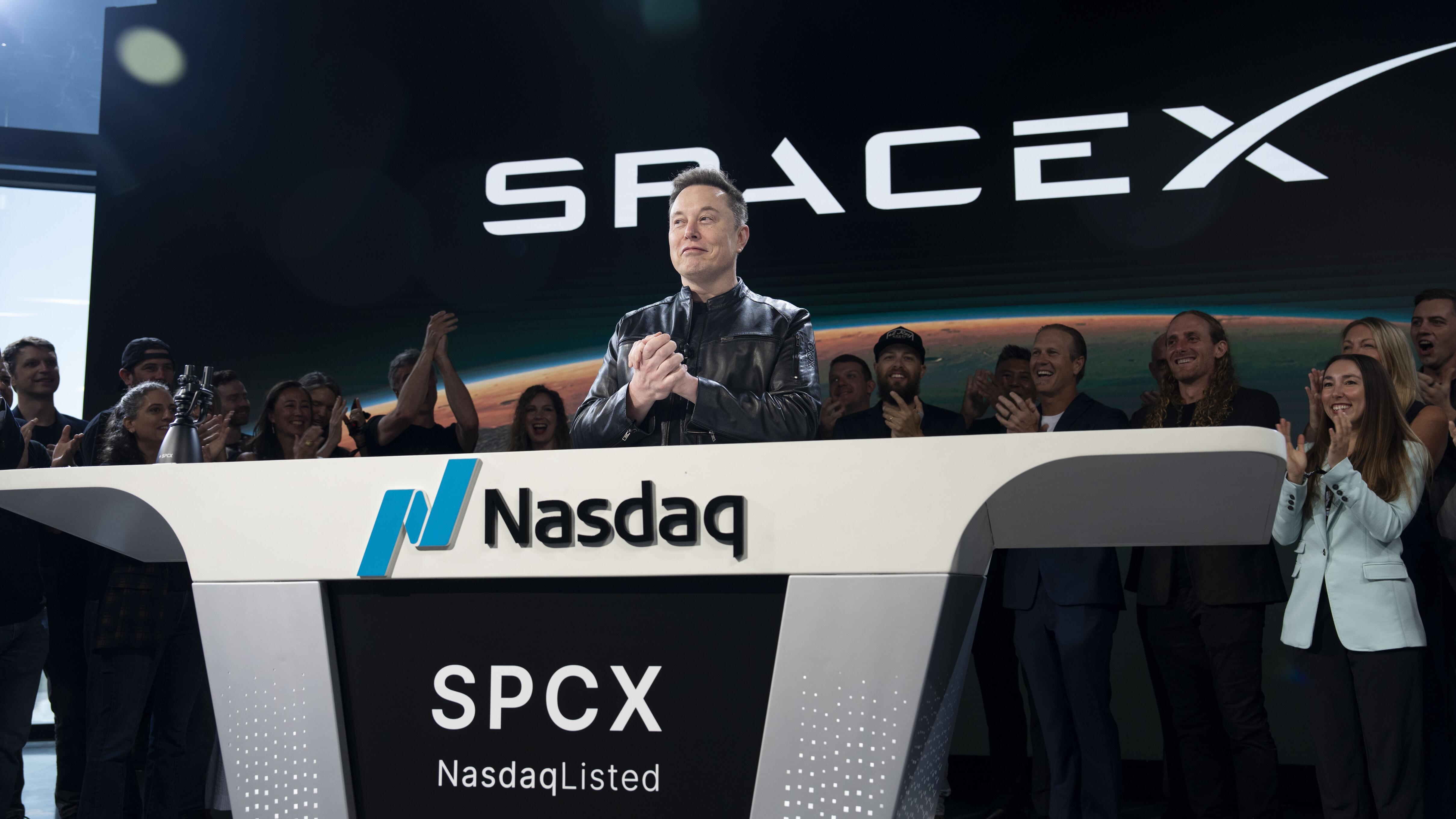
Elon Musk rang the Nasdaq opening bell from Starbase on Friday, and the biggest initial public offering in history began trading under the ticker SPCX.
SpaceX priced at US$135 a share, raised roughly $75 billion, and closed its first session 19.34% higher at $161.11, lifting it to around $2.1 trillion.
That ranks the group sixth among all listed U.S. companies, ahead of both Meta and Tesla, and makes Musk the world's first trillionaire on paper.
No firm had ever pulled this much out of public markets in a single listing, and the scramble to get in suggested few buyers stopped to ask what they were actually holding.
"SpaceX wants to be able to take you to the Moon, take you to Mars and ultimately beyond," Musk told the crowd at his Starbase headquarters on launch day.
The people who bought a slice of that Mars dream picked up something rather different, though, and the prospectus admits as much in plain text.
Read the small print
Every company filing to go public picks an industry code, and rocket makers such as Boeing and Virgin Galactic sit under the headings for spacecraft and aeronautics.
SpaceX filed under code 7370, the slot kept for computer programming and data processing, which is a strange home for an outfit that lands boosters on floating barges.
The classification is the company's own pick, and filing as a software firm rather than an aerospace one is a statement of intent.
Add to that SpaceX's total addressable market estimate of $28.5 trillion presented to investors, about the size of the entire U.S. economy, and only around 7% of that figure touches space at all.
The rest, some $26.5 trillion of claimed opportunity, is artificial intelligence, advertising and enterprise software.
A launch company, in other words, has told the market that its real prize is selling AI to most of the working world.

Follow the money
The pivot doesn't stop at the paperwork, because the cash flows say the same thing far more bluntly.
SpaceX merged with Musk's AI venture xAI in February, folding the Grok chatbot and a sprawl of data centres onto the same books as Falcon and Starlink.
Capital spending shot up from 42% of revenue in 2023 to 215% in the first quarter of this year, with $7.7 billion of a $10.1 billion quarterly outlay heading straight into AI.
In a single year the AI arm outspent the launch and satellite operations that built the company, combined, and then kept right on going.
That division lost about $6.4 billion last year while still burning close to $28 million a day, against revenue that barely moved the needle.
Propping the whole thing up is Starlink, the satellite-internet unit that booked $4.4 billion in operating profit and now bankrolls the furnace next door.
Strip xAI out, and what remains is a profitable, near-monopoly satellite operator that has run cash-flow positive since about 2015, exactly the business the bulls keep pointing to.
Priced for the stars
None of this comes cheap, and that is where the valuation question really starts.
At $135 a share the group was worth more than 90 times its trailing revenue, given it has no profits to speak of.
SpaceX lost around $5 billion in 2025 even as sales climbed 33% to $18.7 billion, leaving an accumulated deficit nudging $41 billion.
To grow into that price, it has to win a real chunk of the $22.7 trillion enterprise-AI market its filing points to, one it has barely begun to touch.
Cisco, the great picks-and-shovels stock of the dot-com boom, took 25 years to climb back to the peak it hit in 2000.
Where it goes next
So is SPCX really a rocket stock, or an AI company using a launch business to fund itself?
The question matters, because the AI half of this group only holds together if someone other than Musk is willing to foot the compute bill.
As it happens, two of the biggest names in technology have just agreed to do exactly that, on terms worth a much closer look.
That is where this series heads next.