
It has been an active week across the global commodities complex and the headline is the resurgence in the crude oil market, driven by geopolitical frictions in the Middle East. Meanwhile, the base metals space is witnessing structural shifts, with copper rising on the back of widening supply deficits and data centre infrastructure demand.
Crude Oil (Brent US$88.60/bbl; WTI US$83.62/bbl)
The international oil market has reversed its recent decline.
Brent crude futures climbed to US$88.60 per barrel, representing their highest trading levels in more than a month.
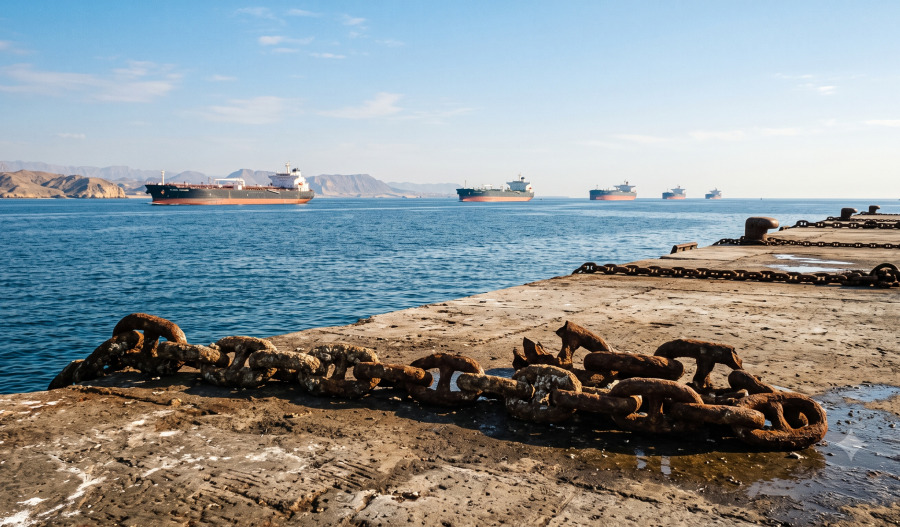
Renewed conflict involving the U.S. and Iran has increased concerns over shipments navigating the Strait of Hormuz.
Reduced vessel traffic and rising tanker insurance costs are adding a geopolitical risk premium to the market.
Further escalation near production facilities or export terminals could remove crucial barrels before producers can replace them.

Natural Gas (US$2.85/MMBtu)
U.S. Henry Hub futures softened to settle at US$2.85/MMBtu.
Broader Northern Hemisphere summer cooling demand should continue to provide a solid baseline of fundamental support.
This demand impulse is vital, particularly as Chinese imports fall due to milder regional weather conditions.
Infrastructure operators continue to balance robust domestic production against seasonal power consumption trends.
LNG (US$16.50/MMBtu)
The seaborne LNG market remains elevated, with Japanese benchmarks sitting disconnected from Western hubs.
These spot prices remain around fifty percent above pre-conflict levels, trading between US$16.00 and US$17.00/MMBtu.
The supply premium is entrenched, with prices unlikely to return to their normal structural baselines until 2028.
This long-term constraint is prompting institutional buyers to manage their physical contract exposures.
Coal (US$143.20/t)
Newcastle high-calorific thermal coal contracts recorded an increase, jumping by 10.4% over the month.
The metallurgical coal sector is experiencing tightness following the Shanxi mining disaster in China, which compressed global steelmaker margins.
Despite this near-term price strength, long-term demand from key Asian importers is expected to moderate as they prioritise regional decarbonisation targets.
Gold (US$4,017.30/oz)
Spot gold traded lower this week, with the price settling at US$4,017.30 per ounce.
The precious metal slid by over seven percent over the month as sources of price support faded.
However, a period of lower volatility and easing real yields would provide scope for prices to stabilise.
Physical sovereign allocation by global central banks remains intact, providing a long-cycle floor.
Silver (US$56.32/oz)
Silver futures mirrored the broader precious metals complex by settling back to US$56.32/oz.
The current gold-silver ratio stands at an elevated 71.3:1, signalling that silver is historically undervalued relative to gold.
Analysts expect the metal to fluctuate around current levels for the foreseeable future, tethered to central bank rate decisions.
Supply-side fundamentals remain constrained, as most physical silver is mined as a base metal byproduct.
Copper (US$13,525.50/t [US$6.13/lb])
Copper experienced a slight pullback, with contracts holding at US$13,525.50/t.
Forecasts have been hiked due to converging supply-side pressures and data centre infrastructure optimism.
Mine-end supply variables remain constrained, with the physical market exposed to further geopolitical volatility.
The global electrification push and data centre expansion are providing a long-term demand floor.
Aluminium (US$3,150.50/t)
Aluminium contracts on the London Metal Exchange settled lower at US$3,150.50/t.
Prices had previously fallen during a broader June sell-off, but tight structural supply conditions have kept baseline values elevated.
Primary smelting firms continue to manage their regional refinery configurations to protect operating margins.
This operational strategy isolates corporate balance sheets from elevated regional energy tariffs.
Nickel (US$16,961.00/t)
The nickel complex gained traction, logging a second consecutive weekly gain to trade at US$16,961.00/t.
Market participants credit the recent increases to expectations tied to pending Indonesian mining quotas and rising oil prices.
However, downstream demand remains weak, pointing to continued short-term price volatility across the exchange.
Producers are throttling their high-cost Western mine infrastructure to preserve capital expenditure.
Lithium (US$19,428.26/t)
Battery-grade lithium prices have recovered from recent lows amid strong demand from energy storage applications.
The projected global supply deficit is set to persist through 2035, even as new processing projects slowly advance.
Australia's hard-rock output is expanding, but it remains a challenge to keep pace with global battery supply chain requirements.
This consumption profile is fuelled by electric vehicle adoption and grid-scale deployments.
Iron Ore (US$98.88/t)
Iron ore prices dipped below the US$100/t threshold to print at US$98.88/t.
Downward pressure is building as several sources of temporary fundamental price support begin to fade.
Higher freight costs linked to the energy shock have started to unwind, while global ore supply remains ample from Australia and Brazil.
New Pilbara mines and infrastructure expansions will largely serve to replace exhausted brownfield operations over the next decade.
Uranium (US$85.00/lb)
Yellowcake spot indices continue to reflect a tight and illiquid market at US$85.00/lb.
Over the longer term, prices are expected to rise as ongoing demand outpaces supply growth.
Mine depletion, strict regulatory hurdles, and financing constraints are limiting new capacity development, particularly in Australia.
The rapid global rollout of new nuclear reactors will strain existing supply chains as tech utilities seek carbon-free baseload power.