
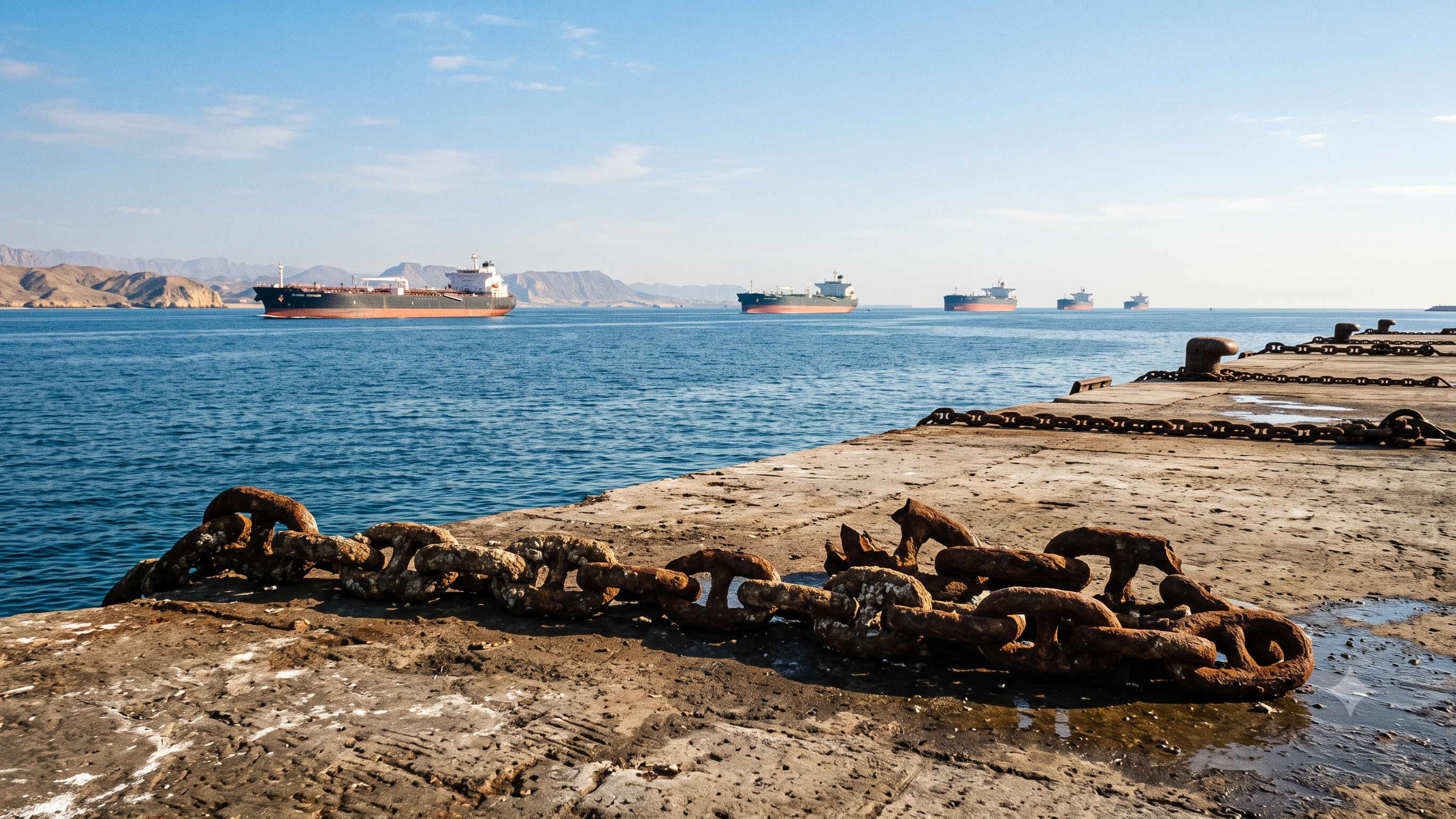
Evolving trade barriers and geopolitical shifts in the Middle East impacted price levels across primary energy infrastructure and industrial metal supply chains.
Primary market movements were driven by a realignment of crude logistics as commercial shippers adjusted transit routing around the Strait of Hormuz, alongside changes in battery metal spot markets following downstream manufacturing adjustments.
Crude oil (Brent US$72.30/bbl; WTI US$69.23/bbl)
The international oil tape recorded a substantial downward recalibration, with Brent crude falling 23.87% over the month to trade at US$72.30/bbl. The price reduction followed a peace agreement signed by United States President Donald Trump and Iranian President Masoud Pezeshkian, which reopened the Strait of Hormuz and halted regional military operations.
Wood Mackenzie subsequently cut its Brent oil price forecast to US$78 per barrel for the next year. Upstream operators including ExxonMobil and Chevron sustained production rates to capture seasonal summer product demand.

Natural gas & LNG (US$3.28/MMBtu)
U.S. Henry Hub futures maintained a baseline of US$3.28/MMBtu. U.S. infrastructure operators maximised cross-border pipeline and liquefaction flows to absorb subterranean storage surpluses.
Midstream players like Cheniere Energy continue to advance long-term offtake commitments as institutional industrial consumers expand dedicated gas generation backup capacity to secure electricity baseload networks.
Coal (US$143.20/t)
Newcastle high-calorific thermal coal contracts traded within a narrow band as utilities balanced near-term generation burn rates against structural shifts in the broader power grid.
Immediate upside momentum for seaborne thermal shipments was capped as increased clean electricity output across Chinese grids curtailed absolute coal consumption volumes. Major producers such as BHP focused on domestic rail logistics to maintain delivery schedules into key Asian import terminals.
Gold (US$4,016.90/oz)
The gold spot market traded at US$4,016.90 an ounce, dipping below US$4,000 midweek for the first time since November 2025—a 25% correction from its peak.
Downward pressure was driven by a stronger U.S. dollar, higher-for-longer rate expectations from the Federal Reserve, and cooling Middle East tensions. Goldman Sachs adjusted its year-end target to US$4,900, though central banks remain active buyers, purchasing 244 tonnes in the first quarter of 2026.
Silver (US$58.78/oz)
Silver futures faced liquidating pressure as institutional macro funds scaled back exposure to silver-backed exchange-traded funds. Physical consumption fundamentals within the solar photovoltaic and consumer electronics manufacturing segments remained stable, though prompt paper contracts disconnected from the physical floor.
The prominent silver-to-Dow ratio hit a fresh five-month low during the weekly session, underlining silver’s near-term underperformance against general equity benchmarks.
Copper (US$13,302.50/t [US$6.03/lb])
LME copper cash-settlement reached US$13,302.50/t. The U.S.-Iran peace agreement eased geopolitical tensions, improving the demand outlook for industrial metals.
Top-tier producers Anglo American and Codelco formalised a joint operational plan for Los Bronces and Andina, expected to unlock around 2.7 million tonnes of additional copper over 21 years. Concurrently, a Chilean court annulled a key environmental permit tied to the Collahuasi expansion's desalination infrastructure, maintaining constraints on regional supply.
Aluminium (US$3,164.50/t)
Aluminium contracts on the London Metal Exchange experienced a mild technical liquidation phase as total exchange warehouse reporting indicated a steady influx of uncommitted metal units. Near-term price softness was partially insulated by a persistent cash backwardation structure across North American delivery points.
Primary smelters like Alcoa continued to adjust regional operating capacities to counter elevated energy input costs across their smelter networks.
Nickel (US$16,824/t)
The nickel complex remained in its current technical channel as an accumulation of high-grade refined units in LME warehouses weighed on prompt delivery prices. Downstream stainless steel mills remained insulated from supply squeezes due to persistent global supply overhangs of low-grade intermediate feedstocks originating from Indonesian operations.
Diversified miners like Glencore and BHP continue to enforce corporate asset reviews, scaling back uncompetitive high-cost Western operations.
Lithium (US$21,380/t [154,800 CNY/t])
Lithium carbonate prices in Northeast Asia reached US$21.38/kg. Pricing in Europe sat lower at US$12.66/kg, while North American prices were recorded at US$10.50/kg.
Processing networks adjusted their procurement margins as widespread market chatter suggested EV battery manufacturer CATL was preparing to advance preliminary land assessments at its suspended Jianxiawo clay project.
Analytical firm Fastmarkets expects the lithium market to move into a deficit as demand growth outpaces supply additions, revising its short-term lithium carbonate price forecast for the year upward to US$23.80/kg.
Iron ore (US$99.50/t)
Iron ore futures slipped below US$100/t as blast furnace utilization rates and domestic steel mill margins across Chinese industrial zones saw a cyclical contraction. Portside iron ore inventories remained elevated, prompting procurement managers to demand steeper discounts on lower-grade fines.
The overall price floor remained supported after international ratings agency Fitch raised its forecast baseline to three digits, reflecting expected capital discipline across major Pilbara infrastructure expansions.
Uranium (US$85.25/lb)
Yellowcake spot indices consolidated near their multi-month floor, shedding speculative premium as near-term commercial utility procurement slowed. Mid-tier extraction companies including Energy Fuels updated operational schedules, temporarily pausing active ore processing at key mills to rebuild raw material stockpiles before restarting.
Long-cycle fundamentals remain constrained as global nuclear utilities compete for long-term term volumes, further complicated by direct offtake discussions from technology developers seeking dedicated baseload power.