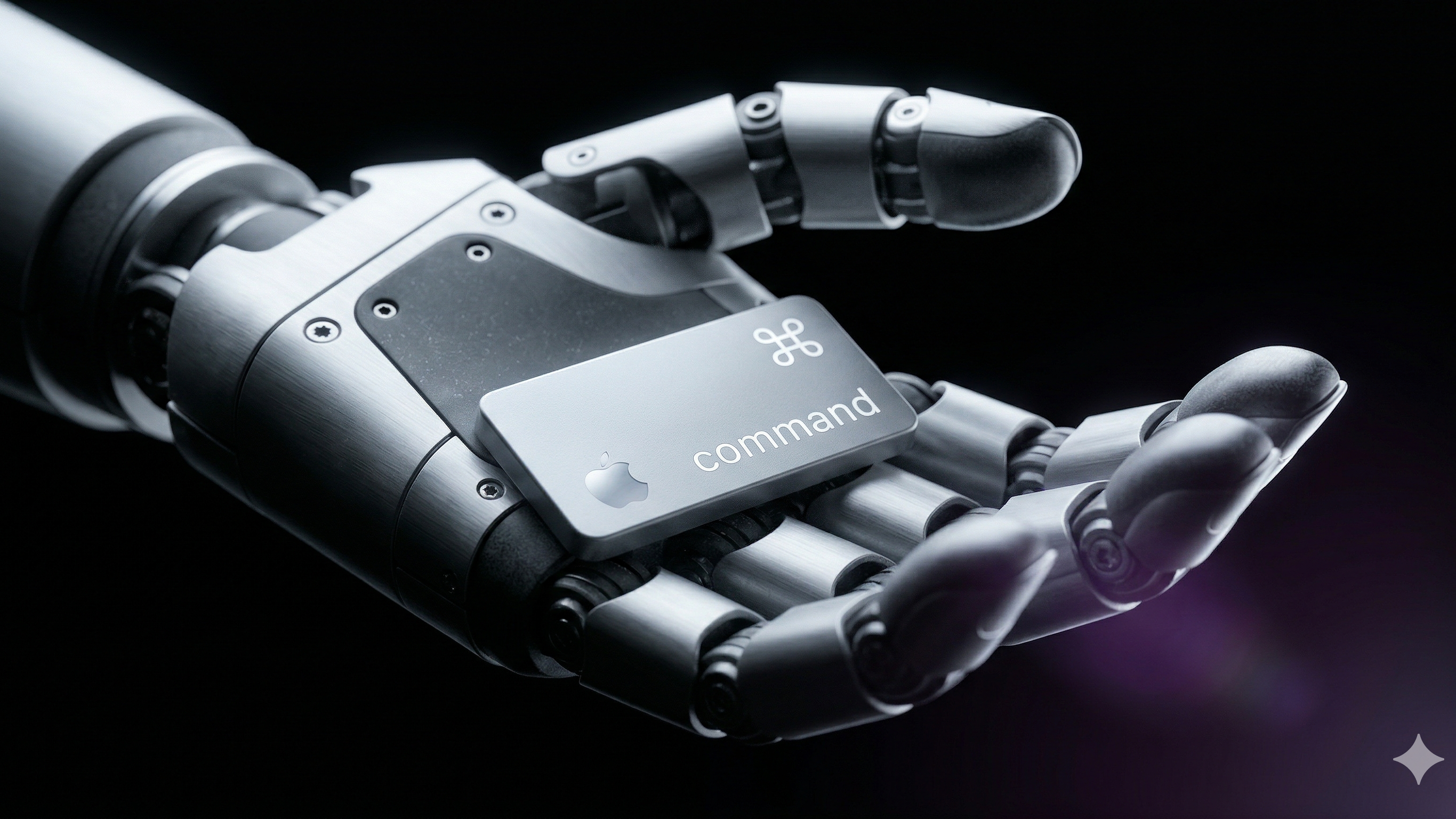
Anthropic on Monday rolled out computer-use capabilities for its Claude AI assistant, allowing the system to click, scroll and navigate applications on a user's Mac.
The move is a direct response to the viral open-source agent OpenClaw, which has reshaped the competitive landscape in a matter of weeks.
The feature is available as a research preview for Claude Pro (US$20/month) and Claude Max ($200/month) subscribers on macOS, works through the company's Cowork and Code products.
When Claude lacks a direct connector to a supported service such as Google Calendar or Slack, it falls back to controlling the screen the way a human would - pointing, clicking and typing its way through tasks.
The update pairs with Dispatch, a mobile tool Anthropic released last week that creates a persistent conversation thread between a user's phone and desktop, letting someone message Claude a task from an iPhone, walk away, and come back to finished work.
In one demo, a user running late for a meeting prompted Claude to export a pitch deck as a PDF and attach it to a calendar invite, and the agent handled the entire workflow without further instruction.
Vercept fills the gap
Anthropic has been laying the groundwork for months, and the acquisition trail tells the story of a company that decided to buy what it could not build fast enough on its own.
In February, the San Francisco-based firm acquired Seattle startup Vercept, which specialised in vision-based computer automation, for undisclosed terms - its second deal in three months following the purchase of coding engine Bun in December.
Vercept's flagship product Vy, could remotely operate a MacBook using AI-driven screen perception, precisely the kind of capability now shipping inside Claude's computer-use feature.
The firm's Sonnet 4.6 model now scores 72.5% on OSWorld, a widely used benchmark for AI computer use, up from below 15% when Anthropic first released the feature in late 2024 - a trajectory that suggests the technology is approaching practical reliability faster than most observers expected.

OpenClaw sets the pace
The timing of Monday's announcement is no coincidence, arriving barely a week after OpenClaw dominated the conversation at Nvidia's annual GTC developer conference.
OpenClaw, the open-source agent framework created by Austrian developer Peter Steinberger, has become what NVIDIA CEO Jensen Huang called "definitely the next ChatGPT", with the project letting users message autonomous AI agents through WhatsApp or Telegram to carry out tasks on local devices.
NVIDIA responded by building NemoClaw, an enterprise-grade security wrapper layered on top of the framework, while OpenAI hired Steinberger himself in February to lead work on personal agents.
Crowded much?
The field is crowding fast, with Meta launching its Manus desktop agent in March, Perplexity shipping its cloud-based Computer product, and the Mac minis powering many of these local AI setups are perpetually sold out.
Anthropic's entry is more cautious than most - Claude must request permission before accessing new applications, and the company has been upfront about limitations.
"Computer use is still early compared to Claude's ability to code or interact with text," Anthropic said, adding that "Claude can make mistakes, and while we continue to improve our safeguards, threats are constantly evolving".
For now, the feature is Mac-only with no announced timeline for Windows support, and the security concerns are not trivial - granting an AI system access to a desktop's file system, browser history and applications is functionally equivalent to handing a stranger your laptop password.