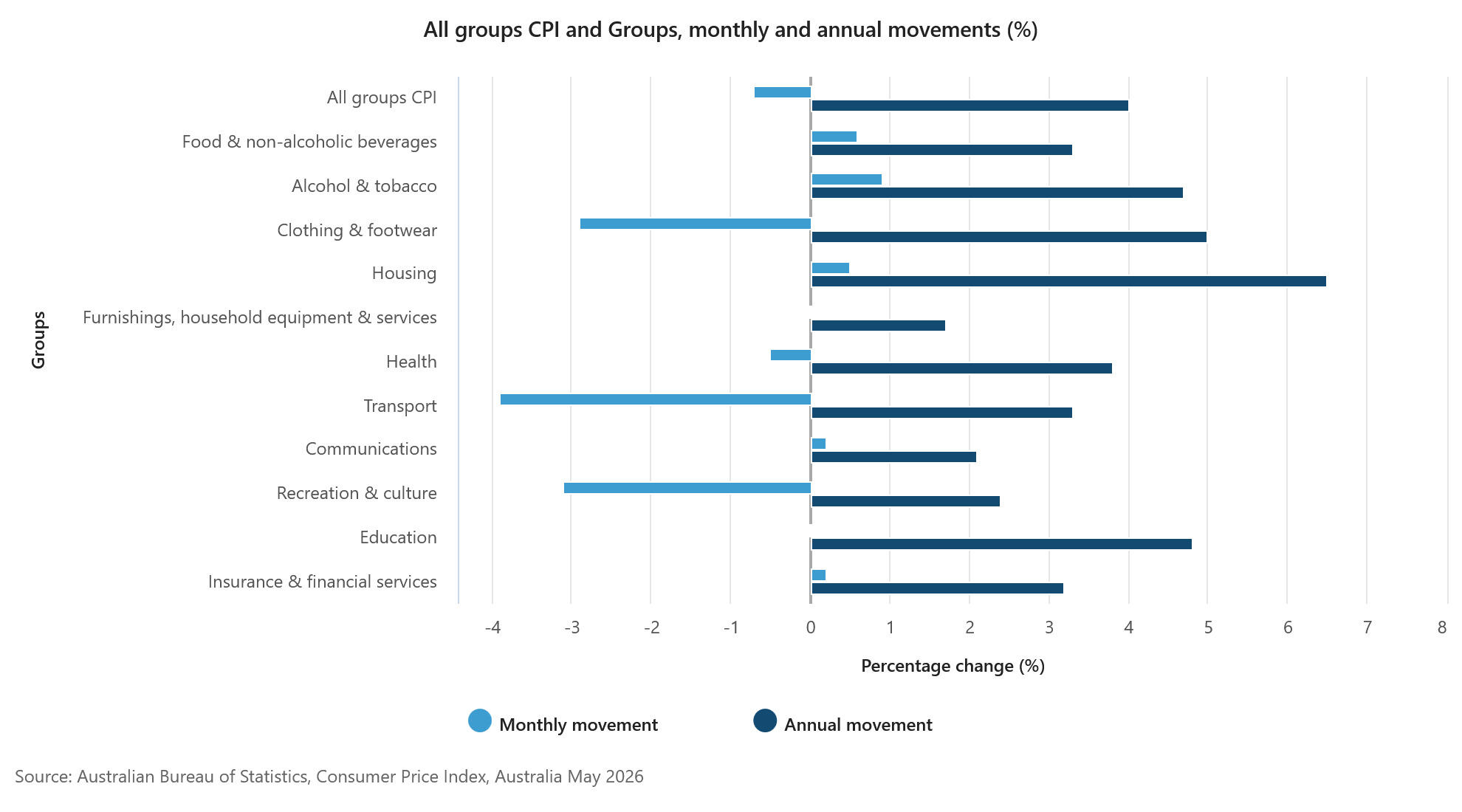
Australia's Consumer Price Index (CPI), which measures household inflation and tracks changes in the prices of goods and services across categories of household expenditure, rose 4.0% in the 12 months to May 2026, according to fresh data from the Australian Bureau of Statistics (ABS), easing from a 4.2% increase in the previous period and coming in below market expectations of 4.4%.
The largest contributors to annual inflation were Housing, which rose 6.5%, Food and non-alcoholic beverages, up 3.3%, and Transport, also up 3.3%.
Trimmed mean inflation, a key measure of underlying price pressures, rose to 3.6% in the year to May, up from 3.4% in the previous month and slightly above market expectations of 3.5%.
On a monthly basis, the CPI fell 0.7% in original terms and declined 0.1% in seasonally adjusted terms in May.
Rachael McCririck, ABS head of prices statistics, said: “Annual CPI inflation in May was 4.0 per cent, down from 4.2 per cent in the year to April.”
Housing remained the dominant driver of annual inflation, rising 6.5% over the year, reflecting higher costs for electricity, new dwellings and rents.

“Electricity costs are 21.1 per cent higher than 12 months ago as Commonwealth and State government rebates that reduced electricity costs for households are no longer in place,” McCririck said.
Food and non-alcoholic beverages inflation rose 3.3%, up from 2.8% in April, driven largely by higher prices for meals out and takeaway food, which increased 4.0% over the year.
Transport inflation eased significantly, rising 3.3% annually compared with 6.6% in April. Within the category, automotive fuel prices fell 11.9% in May after a 7.0% decline in April.
“These monthly falls include the impacts of the halving of the fuel excise on 1 April and lower world oil prices in recent weeks,” McCririck said.
Underlying inflation measures suggest persistent price pressures remain in parts of the economy, even as headline CPI moderates.
Automotive fuel was excluded from the trimmed mean calculation in March, April and May 2026 due to volatility.